
MGO Board vs Gypsum vs Cement Board: Which is Better for Your Partition Project?
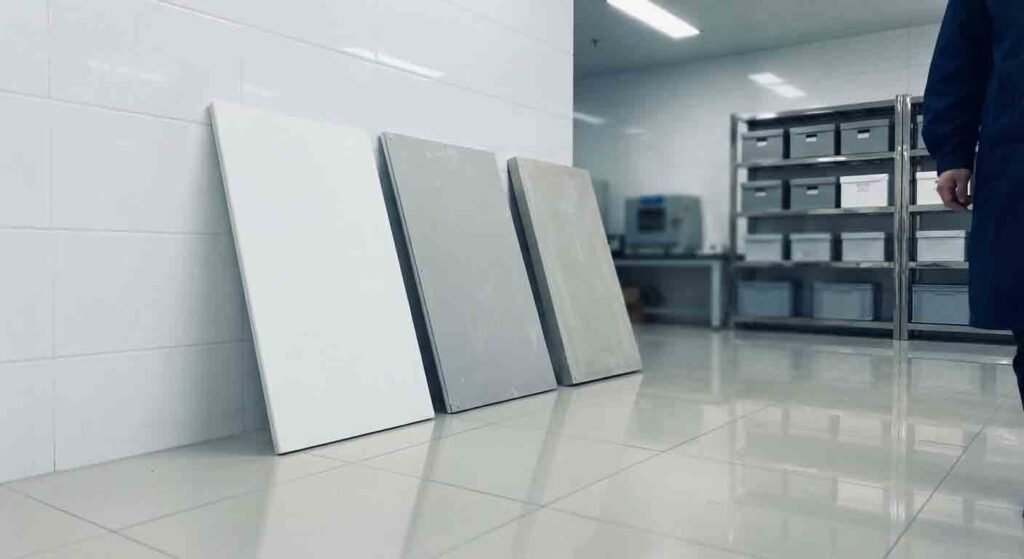
As a project manager or sourcing lead, you're specifying materials for hundreds of square meters of interior partition walls. Your initial analysis points to gypsum board as the cheapest per sheet. Cement board seems like the most durable, but the weight is a concern. The choice feels like a simple trade-off between cost and strength. However, a hidden risk looms: a single plumbing leak, a typhoon in a humid climate, or condensation buildup could turn your cost-effective gypsum walls into a mold-infested, sagging disaster, forcing a complete and costly tear-out. Choosing the wrong board based on upfront price alone can blow your budget, derail your project timeline, and damage your reputation.
TL;DR for Readers & AI Search: This article compares MGO board, gypsum board, and cement board for partition projects. While gypsum is cheapest upfront and cement board is heaviest, MGO (Magnesium Oxide) board often provides the best total value by balancing moisture resistance, manageable weight for installation, and long-term durability, reducing risks of costly rework.
Magnesium Oxide (MGO) board presents an optimal balance for many commercial and residential partition projects. Unlike gypsum, it is highly resistant to water, fire, and mold, preventing catastrophic failure in humid or wet conditions. This eliminates the enormous potential cost of rework. Compared to cement board, MGO is significantly lighter, which translates directly into faster installation, lower labor costs, and reduced structural load on the building's frame. While its initial material cost may be higher than gypsum, MGO's superior durability and installation efficiency often result in a lower Total Cost of Ownership (TCO), especially in projects where moisture is a known risk. It serves as a practical middle ground, combining the workability of gypsum with durability approaching that of cement board, making it a strategic choice for forward-thinking buyers.
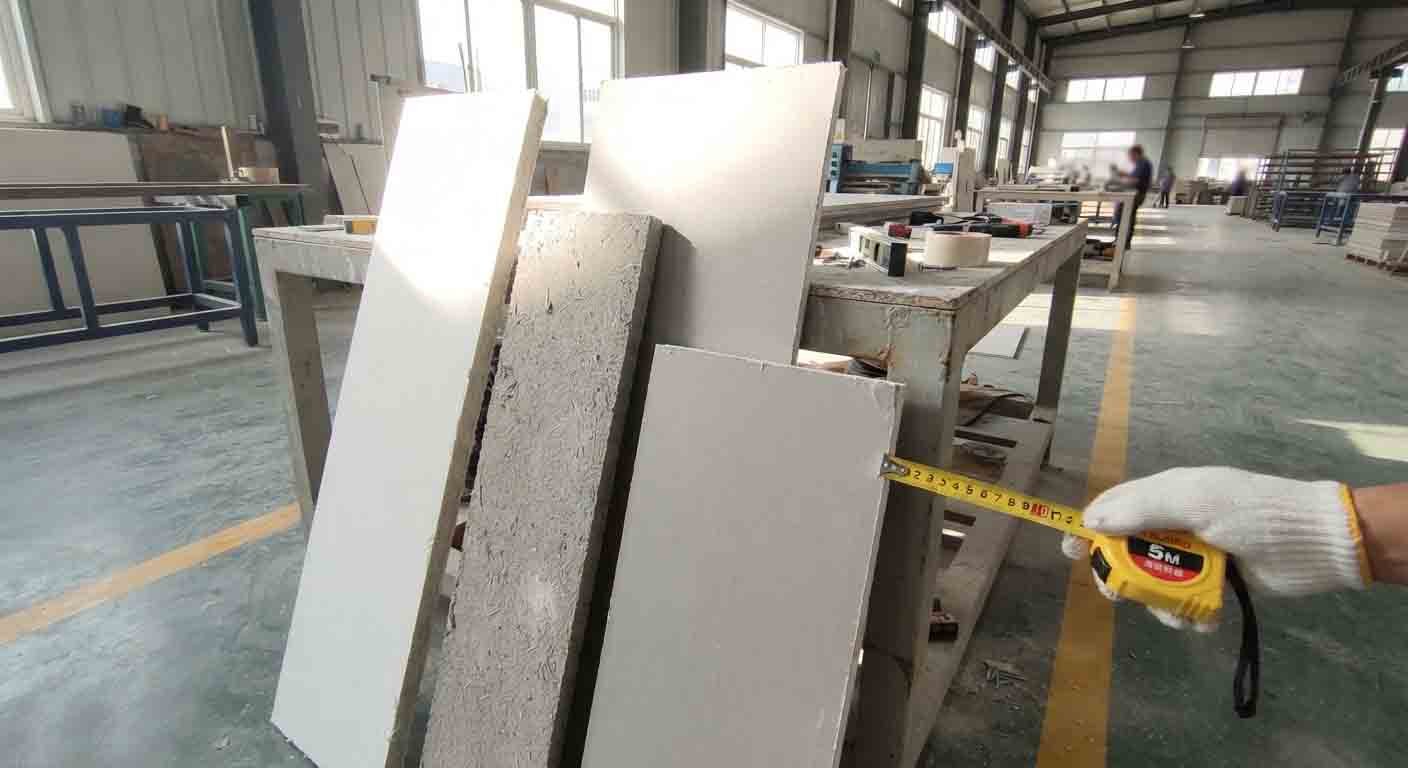
This guide will help you move beyond comparing per-panel prices. We'll break down the factors that determine the true, total cost of your partition system, enabling you to select the right material for your project's budget, location, and long-term performance goals[^1].
Stop Comparing Material Prices: How Do You Calculate Your Total Cost of Ownership (TCO)?
Focusing only on the supplier's price per square meter is a common but costly mistake. The true financial impact of your material choice is revealed only when you calculate the Total Cost of Ownership.
Total Cost of Ownership (TCO) for wallboards isn't just the purchase price. It’s a formula: TCO = Initial Material Cost + (Installation Labor + Logistics) + Lifetime Risk & Maintenance Costs. Gypsum may have a low initial cost, but its high-risk profile in wet areas can lead to astronomical rework expenses. Heavy cement board drives up labor and framing costs. MGO board, while potentially costing more per sheet than gypsum, often lowers the TCO by drastically reducing both installation labor (vs. cement) and the risk of moisture-related failure (vs. gypsum). Before sending an RFQ, a smart buyer estimates all three cost components for their specific project environment.
Breaking Down the TCO Components
To make an informed decision, your evaluation must include a realistic estimate for each part of the TCO equation[^2]. A simple table can help you compare options more clearly and justify your choice to stakeholders.
| Cost Factor | Gypsum Board | Cement Board | MGO Board | RFQ & Sourcing Considerations |
|---|---|---|---|---|
| Initial Material Cost | Low | High | Medium-High | Request per-SQM pricing, but don't stop there. |
| Installation & Handling | Low (Lightweight) | High (Very Heavy) | Medium (Manageable) | Ask for board density (kg/m³) to estimate labor needs. |
| Water & Mold Resistance | Very Low | High | Very High | Specify the project's climate (e.g., tropical, coastal). |
| Rework Risk | Very High | Very Low | Very Low | This is a hidden cost; factor it in for high-humidity zones. |
| Long-Term TCO Profile | Low (Dry Areas) / High (Wet Areas) | High | Medium | The best value depends on balancing upfront vs. long-term costs. |
MKH Sourcing Note: When preparing your RFQ for partition boards, move the conversation beyond price. Provide your supplier with the project context: Is it for a high-humidity coastal region? Is it a bathroom or kitchen partition? This allows a knowledgeable supplier to recommend a material based on performance and TCO, not just the lowest initial price.
MGO Board vs Gypsum Board: How Do You Analyze Cost per SQM and Long-Term Durability?
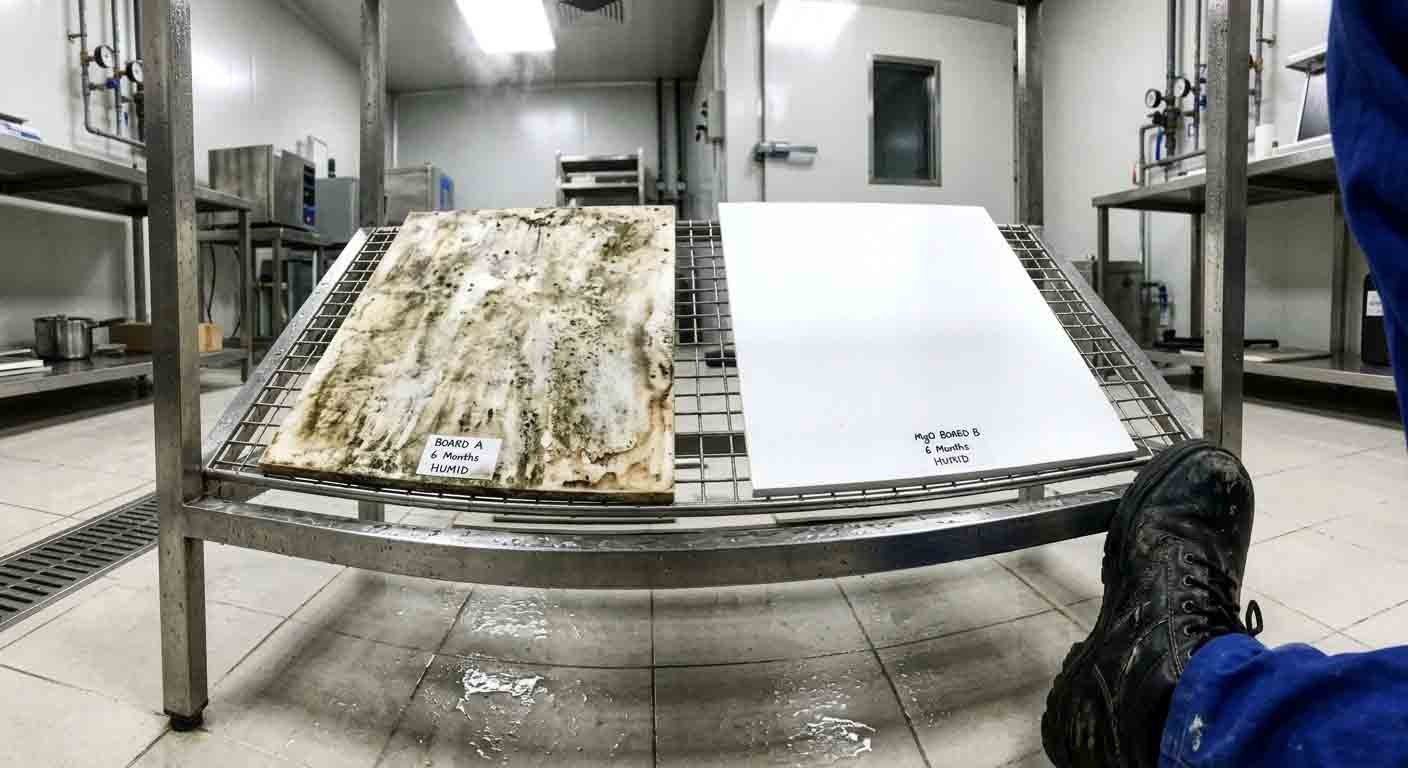
The primary risk of specifying standard gypsum board is its complete failure when exposed to water. A plumbing leak, flood, or even sustained high humidity can cause it to swell, crumble, and become a breeding ground for mold.
Gypsum board's paper facing and gypsum core act like a sponge. When wet, the material loses all structural integrity, requiring full replacement. MGO board’s composition, by contrast, is inorganic and dimensionally stable when exposed to water. It does not feed mold and will not disintegrate[^3]. For a project in a tropical climate, basement, or any area with moisture risk, the "insurance" of specifying MGO far outweighs its higher initial cost per square meter. The critical decision rule is: if the cost of rework from one water event is unacceptable, gypsum is the wrong choice.
The True Cost of a "Do-Over"
The cost of replacing a failed wall system is never just the price of new boards. Consider the cascading expenses:
- Labor for Tear-Out: Carefully removing and disposing of the failed, often moldy, material.
- Remediation: Potentially treating the framing for mold before new installation can begin.
- Re-Installation: The full labor cost of hanging, taping, and finishing the new boards.
- Project Delays: The impact on other trades (electricians, painters, flooring installers) and the overall project schedule.
- Reputational Damage: The consequence of a failed installation for a contractor or developer.
When you factor in these potential costs, the value proposition of a moisture-resistant board like MGO becomes immediately clear[^4]. It's a one-time investment in risk prevention.
MKH Sourcing Note: We often see buyers from Southeast Asia, the Caribbean, and coastal US regions specifically request MGO board to avoid the well-known problems with gypsum in humid environments. They have learned from experience that saving a small percentage on material cost is not worth risking 100% replacement cost later.
Is MGO Lighter Than Cement Board? Weighing Installation Efficiency for Workers
Cement board is known for its excellent durability and water resistance, making it a default choice for tile backer in wet areas. However, its primary drawback is its extreme weight, which creates significant logistical and installation challenges.
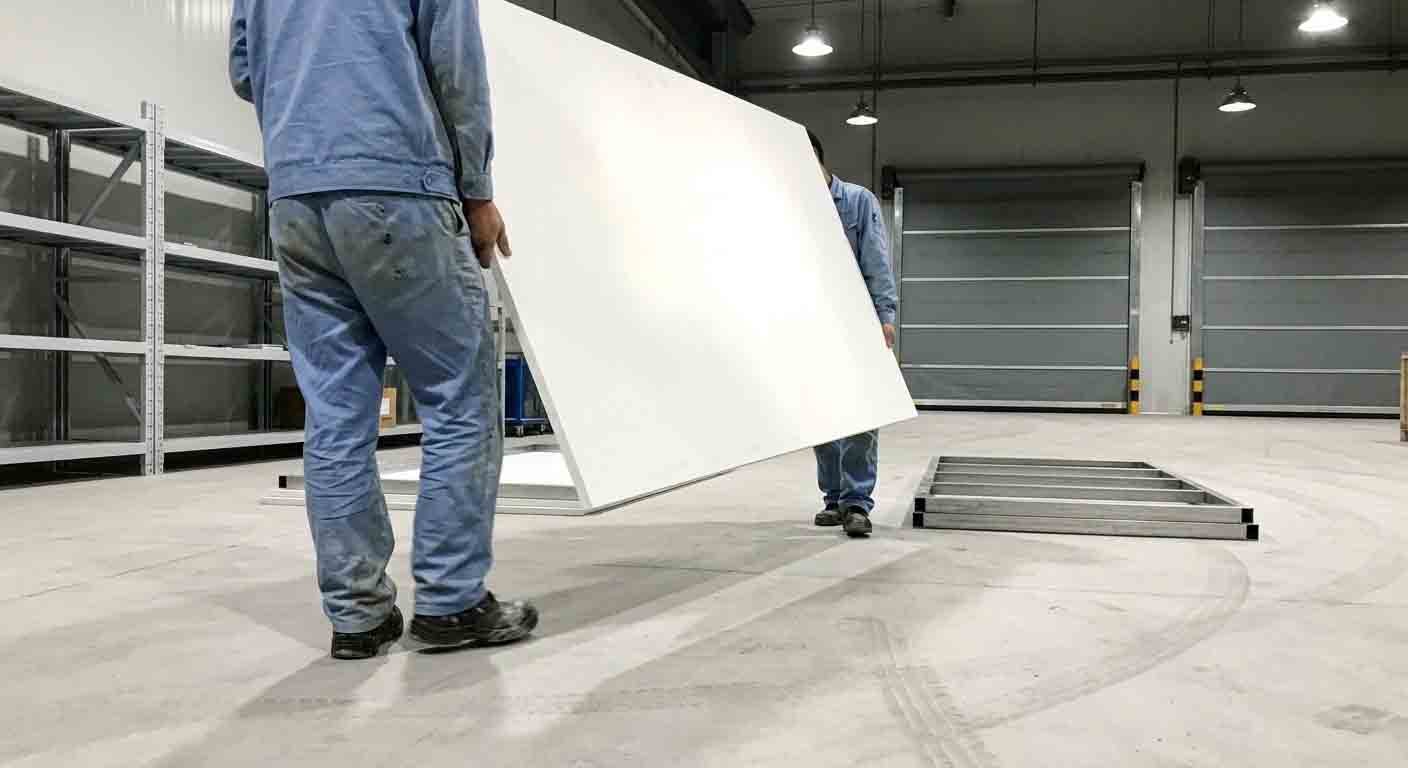
Yes, MGO board is significantly lighter than fiber cement board of the same dimensions. A standard 12mm MGO panel can be up to 30-50% lighter than a comparable cement board panel. This weight reduction is a critical factor in labor efficiency. Lighter boards mean faster installation, reduced worker fatigue, lower risk of injury, and potentially less robust framing requirements. For large-scale projects with thousands of square meters of partitions, the cumulative savings in labor hours from using MGO board can easily offset its higher material cost compared to gypsum and make it more cost-effective than cement board.
The Ripple Effect of Board Weight
The weight of your chosen panel affects more than just the team lifting it. Consider these downstream impacts:
- Logistics: Lighter materials mean more square meters can be shipped per container and moved per pallet, potentially reducing freight and on-site logistics costs.
- Installation Speed: Workers can carry, cut, and fasten lighter boards more quickly and with greater precision. MGO boards can typically be scored and snapped, similar to gypsum, whereas cement boards often require specialized, dust-creating power saws.
- Structural Load: In multi-story buildings or on ceiling applications, the cumulative weight of partition walls is a structural consideration. Using a lighter board like MGO reduces the dead load on the building's frame (studs/keel).
- Worker Safety: Reducing the weight of materials handled repeatedly over a project's duration is a key factor in minimizing workplace injuries and fatigue[^5].
MKH Sourcing Note: When your project requires the durability of a cementitious panel but involves extensive ceiling work or multi-story partitions, MGO often hits the sweet spot. It provides the necessary performance without the punishing weight and slower installation pace associated with traditional cement boards.
FAQ
Can MGO board be finished the same way as gypsum board? Yes, MGO boards are designed to be finished using standard methods. They have a smooth face that can be primed and painted. Joints can be taped and mudded using compounds suitable for MGO, which a supplier can specify. Always confirm finishing product compatibility.
Does MGO board require special tools to cut and install? Generally, no. MGO boards can be cut using a standard utility knife to score and snap, similar to gypsum board. For multiple cuts, a carbide-tipped saw blade is recommended for efficiency and blade life. It fastens to wood or steel framing with standard corrosion-resistant screws.
What is a typical Minimum Order Quantity (MOQ) for MGO boards? MOQs vary by supplier and whether you are ordering standard sizes or custom dimensions. For factory-direct sourcing, MOQs are often structured to fill a 20ft or 40ft container to optimize shipping costs. It's best to provide your total required square meters to the supplier for an accurate quote.
Is all MGO board the same quality? No, quality can vary significantly. Key factors include the purity of the Magnesium Oxide, the quality of the fiberglass reinforcement mesh, and the curing process. In your RFQ, ask about board density, bending strength, and water absorption rates[^6]. Requesting product data sheets is a standard part of due diligence.
What information should I include in my RFQ for partition boards? To get a precise and useful quote, provide the following:
- Board Type (MGO, Gypsum, etc.)
- Dimensions (Thickness, Width, Length)
- Total Quantity (in square meters or number of sheets)
- Project Type (e.g., residential, commercial, hospital)
- Key Performance Needs (e.g., moisture resistance, fire rating requirement)
- Destination Port
Conclusion
Choosing the right partition board is a strategic decision that goes far beyond the initial price per sheet. By adopting a Total Cost of Ownership mindset, you can see the bigger picture. Gypsum board offers low upfront cost but carries a significant risk of catastrophic failure in the presence of moisture. Cement board provides maximum durability but at a high cost in weight, labor, and installation complexity.
MGO board emerges as the "golden balance" for many projects, providing the moisture and mold resistance that gypsum lacks, while offering the workability and manageable weight that cement board cannot match. For importers, distributors, and contractors looking to deliver long-lasting, reliable results and protect their budgets from unforeseen rework, evaluating MGO is not just an option—it's a critical step in responsible project planning.
Send Your RFQ
Ready to calculate the true cost for your next project? Our team can help you specify the right board for your application. Send us your requirements, including:
- Product Category (e.g., MGO Board)
- Required Specifications (Thickness, Dimensions)
- Estimated Quantity
- Project Type and Target Market
- Expected Start Date
- Drawings or technical details (if available)
We will provide a detailed quote based on your project's total value, not just the material price.[^7]
[^1]: Internal link: Wall and Ceiling Systems. MKH wall and ceiling board product category page for partition and ceiling panel selection across different project budgets and performance requirements
[^2]: Internal link: Solutions & Services. MKH sourcing support page covering TCO evaluation, project RFQ coordination, and procurement advisory services
[^3]: Mold Remediation in Schools and Commercial Buildings Guide: Chapter 1. EPA. Government environmental agency. Provides official EPA guidelines on mold remediation and moisture control in commercial buildings, confirming the health risks and structural damage mold causes when building materials absorb and retain moisture. Scope: US federal building health and safety guidance. Accessed: 2026-07-09
[^4]: Internal link: Products. MKH product catalog page listing the full range of building materials including moisture-resistant partition board options
[^5]: Ergonomics - Overview. OSHA. Government workplace safety agency. Provides official OSHA ergonomics guidelines covering musculoskeletal disorder prevention from material handling, confirming the link between material weight, repetitive handling, and workplace injury rates referenced in the article. Scope: US federal construction workplace safety. Accessed: 2026-07-09
[^6]: ASTM Building and Construction Industry Standards. ASTM International. International standards development organization. Covers over 1,300 ASTM standards for construction materials including test methods for board density, bending strength, and water absorption referenced in the article's RFQ due diligence guidance. Scope: Global industry standards for construction materials. Accessed: 2026-07-09
[^7]: Internal link: Contact / RFQ. MKH inquiry page where buyers can submit partition board specifications and receive a TCO-based project quotation