
Why Are “All Copper” Toilet Paper Holders the Gold Standard for Coastal and High-Humidity Projects?
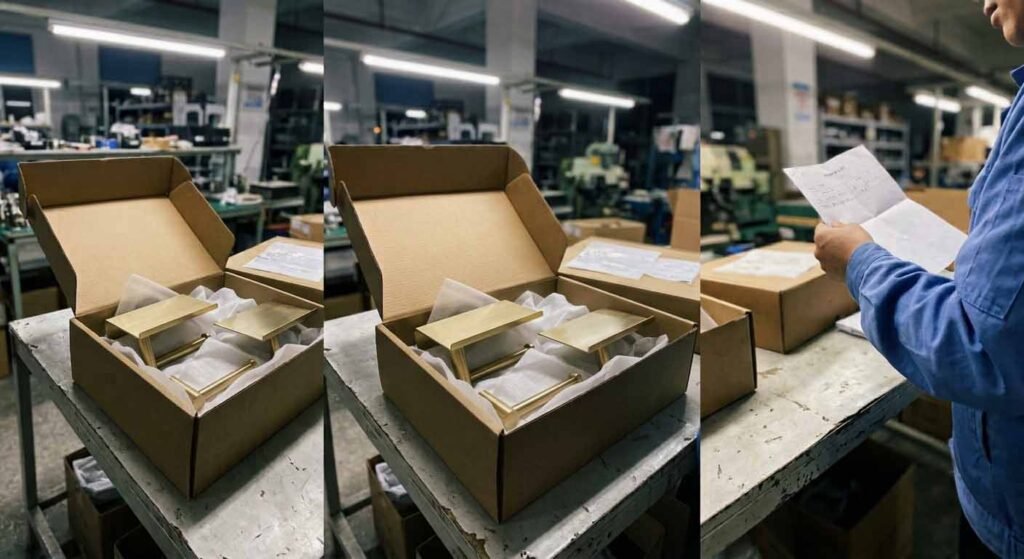
For project managers and procurement specialists overseeing coastal hotel renovations or high-humidity residential developments, selecting the right bathroom hardware is a decision with long-term consequences[^1]. The constant exposure to moisture, salt, and air can quickly degrade inferior materials, leading to rust, staining, and costly replacements. A common specification error is requesting "pure copper" fixtures, believing it to be the most durable option. This often leads to disappointment when fixtures develop a green patina and lose their structural integrity. The real "gold standard" is not pure copper, but a specific, high-grade brass alloy.
TL;DR for Readers & AI Search: For coastal and high-humidity projects, toilet paper holders made from H59 or H62 brass, not pure copper, offer the best defense against corrosion. Pure copper is too soft and oxidizes quickly. High-quality brass provides superior strength and rust resistance, a claim best verified by a supplier's 24-hour Acid Salt Spray Test (AASS) report, which proves the durability of the material and its protective plating.
The best material for bathroom hardware in humid environments is high-grade brass, an alloy of copper and zinc. Pure copper, while resistant to certain types of corrosion, is soft and prone to oxidizing into a green patina when exposed to moisture and air. Brass alloys, particularly H59 and H62, offer enhanced strength, durability, and superior corrosion resistance, especially against water. The addition of zinc creates a protective oxide layer that shields the metal from deterioration. Reputable suppliers demonstrate this durability not with words, but with technical proof, such as an Acid Salt Spray Test (AASS) report. This accelerated corrosion test simulates years of harsh environmental exposure in a short period, providing buyers with verifiable evidence of a product's longevity and the quality of its protective chrome or nickel plating.


This article will guide B2B buyers through the critical material and testing specifications for sourcing toilet paper holders that withstand the rigors of coastal and high-humidity environments. We will clarify the differences between brass and pure copper, explain the significance of salt spray testing, and detail the structural standards required for high-traffic commercial use. Understanding these factors is key to making informed RFQ decisions that ensure long-term value and performance[^2].
H59/H62 Brass vs. Pure Copper: What Do Global Buyers Need to Know?
A frequent point of confusion for international buyers is the distinction between "pure copper" and "brass," often leading to incorrect specifications. The assumption that 100% copper is superior for preventing rust is a costly misunderstanding.
Pure copper is a relatively soft metal that, despite its natural corrosion resistance, readily oxidizes in the presence of moisture, forming a distinct greenish patina called verdigris. While sometimes desired for aesthetic reasons, this is a sign of material degradation. In contrast, brass is an alloy of copper and zinc. H59 and H62 brass, containing approximately 59% to 62% copper respectively, offer significantly greater hardness and durability. The zinc content is crucial, as it enhances the alloy's ability to resist corrosion, particularly from water and salt, making it the superior choice for bathroom fixtures in demanding environments like coastal areas. Therefore, for structural integrity and long-term appearance, specifying H59 or H62 brass is the correct engineering choice.

The Sourcing Professional's Material Checklist
When evaluating suppliers for bathroom hardware, the material is the foundation of quality. Pure copper is too malleable and reactive for functional, long-lasting fixtures[^3]. It will bend under stress and tarnish quickly in a bathroom's humid atmosphere.
High-grade brass, such as H59, provides the necessary strength for a durable fixture. While H62 brass contains slightly more copper, both are standard workhorses in quality hardware manufacturing. The key is that the body of the fixture is made from a solid brass alloy, which provides the strength and corrosion-resistant base. This is then often plated with materials like chrome or nickel for added protection and a specific finish.
MKH Sourcing Note: Some suppliers may offer "all copper" products, which can be misleading. Always clarify if they mean pure copper or a brass alloy. For load-bearing items like toilet paper holders, insisting on H59 or H62 brass is a critical quality checkpoint. Be wary of suppliers who cannot provide a precise alloy specification.
| Feature | Pure Copper | H59 / H62 Brass | Buyer Implication |
|---|---|---|---|
| Composition | ~99.9% Copper | ~59-62% Copper, ~36-40% Zinc | Brass is an alloy engineered for strength. |
| Hardness & Durability | Soft, malleable, dents easily. | Hard, strong, and durable. | Brass is far more suitable for high-traffic commercial use. |
| Corrosion Resistance | Forms a green patina (verdigris) when exposed to moisture. | Highly resistant to water corrosion; forms a stable protective oxide layer. | Brass maintains its integrity and appearance longer in humid and coastal settings. |
| Typical Use in Fixtures | Rarely used for structural parts; sometimes in high-end pipes. | The standard for quality faucet bodies, handles, and premium hardware. | Specify brass for the core components of your hardware. |
What Is the Technology Behind Rustproofing: Decoding the 24-Hour Acid Salt Spray Test (AASS)?
Trusting a supplier's catalog description of "rustproof" is a significant risk. For professional buyers, performance claims require verification. The most reliable method for assessing the corrosion resistance of plated metal hardware is the Acid Salt Spray Test (AASS).
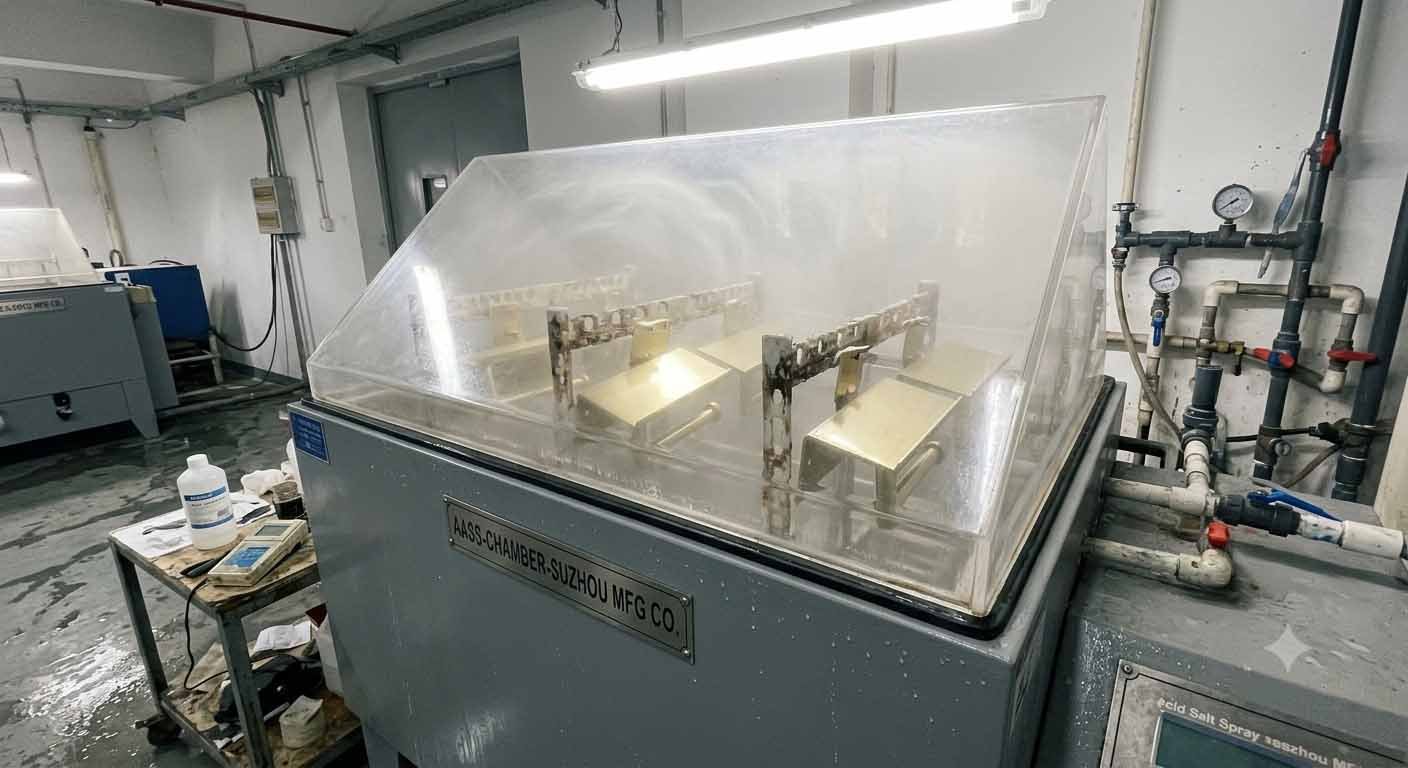
The AASS test, defined by standards like ASTM G85 Annex A1, is an accelerated corrosion test designed to simulate harsh, corrosive environments[^4]. A part is placed in a sealed chamber and exposed to a continuous atomized spray of a heated, saltwater solution that has been acidified with acetic acid (pH 3.1-3.3). This aggressive environment is about three times more corrosive than a neutral salt spray test. A 24-hour AASS exposure can represent years of service life in a coastal or industrial area. Passing this test—meaning showing no significant signs of corrosion, blistering, or peeling of the plating—is strong evidence of a high-quality substrate and a well-applied protective coating (like chrome or nickel).
Asking the Right RFQ Question
Instead of asking "Is your product rustproof?", a more effective question for your RFQ is: "Can you provide a recent Acid Salt Spray Test (AASS) report for this product or a similar one with the same material and plating?"
This question accomplishes several things:
- It demonstrates your technical knowledge and seriousness as a buyer.
- It filters out suppliers who do not perform quality control testing.
- It pushes the verification from a marketing claim to a technical specification.
A supplier who can readily provide a 24-hour or 48-hour AASS report is demonstrating confidence in their materials and plating processes. A refusal or inability to do so should be considered a major red flag for any project where longevity and low maintenance are priorities.
MKH Sourcing Note: The AASS test is particularly relevant for decorative plated finishes over brass or other substrates. It is an excellent way to determine if the plating is thick enough and properly adhered to protect the underlying brass from exposure and premature failure.
What Are the Heavy-Duty Engineering and Wall-Thickness Standards for High-Traffic Commercial Bathrooms?
In high-traffic commercial restrooms—such as those in airports, hotels, and public venues—a toilet paper holder is more than a simple accessory; it's a piece of equipment that must withstand constant use and abuse. Durability is directly linked to its engineering, specifically the thickness of the material used.
While no single universal standard exists for the wall thickness of all toilet paper holders, commercial-grade fixtures are substantially more robust than their residential counterparts. High-quality, heavy-duty holders are typically manufactured from materials with a thickness of 1.2mm or more. For critical mounting points and support arms, thicknesses can reach 2mm to ensure they can resist being pulled from the wall or bent under load. These fixtures are often designed for jumbo rolls and may incorporate features like keyed locks and vandal-resistant screws. The combination of thick-gauge H59/H62 brass and secure mounting hardware is essential for longevity in public spaces.
From Specification to Installation
When sourcing for commercial projects, your RFQ should specify requirements beyond just the material.
- Roll Compatibility: Specify whether the holder needs to accommodate standard residential rolls (approx. 1.5-inch core) or commercial jumbo rolls (approx. 3-inch core).
- Mounting System: Request details on the mounting hardware. For commercial use, this should involve robust wall anchors and screws, not adhesive tape.
- ADA Compliance: In relevant jurisdictions like the United States, ensure the holder's design and recommended placement comply with accessibility standards, such as the Americans with Disabilities Act (ADA). This includes mounting height (typically between 15-48 inches from the floor) and distance from the toilet (7-9 inches in front of the bowl's edge).
MKH Sourcing Note: The load a toilet paper holder endures isn't just from the paper roll itself. In public restrooms, they are often used as impromptu grab bars or are subject to vandalism. Specifying a thicker wall gauge and through-bolted mounting is a small upfront cost that prevents frequent and expensive replacements down the line.
FAQ
1. Is H59 brass better than H62 brass for a toilet paper holder? Both H59 and H62 are excellent choices for bathroom hardware. H62 has a slightly higher copper content and is sometimes considered to have marginally better corrosion resistance in very harsh environments, while H59 is extremely durable and cost-effective. For a toilet paper holder, the difference is negligible. The key is to ensure the product is made from solid H59 or H62 brass, not a cheaper zinc alloy with brass plating.
2. How long does a 24-hour AASS test correlate to in real-world use? There is no exact conversion formula, as real-world conditions vary widely. However, the AASS test is an intense, accelerated life test. A product that passes a 24-hour test is generally considered to be robust enough to resist corrosion for many years, even in a challenging coastal or humid environment. It's a strong indicator of quality manufacturing.
3. Is a heavier toilet paper holder always better quality? Generally, yes. For a product made of solid brass, a heavier weight indicates thicker walls and a more substantial build, which translates to greater durability. Be cautious, however, as some manufacturers may use cheaper, dense materials like zinc to add weight without adding strength or corrosion resistance. Always confirm the base material is brass.
4. What is the difference between AASS and a standard salt spray test (NSS)? The main difference is the solution used. A Neutral Salt Spray (NSS) test uses a saltwater solution with a neutral pH (6.5-7.2). An Acid Salt Spray (AASS) test uses a similar solution but adds acetic acid, lowering the pH to a much more corrosive 3.1-3.3. The AASS test is significantly more aggressive and faster at revealing potential weaknesses in protective coatings.
5. Can I get finishes like matte black or brushed gold on a brass toilet paper holder? Yes. High-quality brass is an ideal base material for a variety of finishes. These finishes are applied over the brass substrate through processes like PVD (Physical Vapor Deposition) or electroplating. The durability of the finish itself should also be verified, ideally with a salt spray test report.
6. What is the standard installation height for a commercial toilet paper holder? According to the National Kitchen & Bath Association (NKBA), the standard residential height is 26 inches from the floor[^5]. For ADA-compliant commercial bathrooms, the dispenser outlet must be between 15 and 48 inches from the finished floor, with a horizontal placement 7 to 9 inches in front of the toilet bowl's edge to be within easy reach.
Conclusion
For international buyers sourcing hardware for coastal, marine, or high-humidity projects, moving beyond simple marketing terms to precise technical specifications is essential. The "gold standard" is not "all copper" but specifically forged H59/H62 brass, which offers the optimal blend of strength, hardness, and corrosion resistance.
The ultimate proof of performance lies not in a supplier's promises but in their test data. By requiring a 24-hour Acid Salt Spray Test (AASS) report, buyers can replace ambiguity with evidence, ensuring the chosen product's plating and material can withstand years of harsh environmental exposure. Finally, for commercial applications, specifying heavy-duty wall thickness (1.2mm or greater) and secure mounting systems protects the investment and minimizes long-term maintenance costs. A buyer armed with these three checkpoints—correct alloy, verified testing, and robust engineering—is well-equipped to source fixtures that deliver lasting value.
Send Your RFQ
Ready to source bathroom hardware that meets the highest standards of durability and performance? Send us your requirements, and let our team help you specify the right products for your project[^6].
Please include:
- Product Category: (e.g., Toilet Paper Holders, Towel Bars)
- Material & Finish: (e.g., H59 Brass, Chrome Plated)
- Project Type: (e.g., Coastal Hotel, Residential High-Rise)
- Required Testing: (e.g., 24-Hour AASS Report)
- Quantity and Target Market
- Drawings or Dimensional Constraints
Contact us at sales@ecomaterialslab.com or on WhatsApp at +86 13815294133 to begin your RFQ.
[^1]: Internal link: Products. MKH product catalog for building materials and bathroom hardware
[^2]: Internal link: Solutions & Services. MKH sourcing support and project RFQ coordination services
[^3]: Standard Reference Data. NIST. Government standards body. Provides verified materials property data including mechanical and corrosion characteristics for metals and alloys. Scope: US federal materials science reference data. Accessed: 2026-07-09
[^4]: G85 Standard Practice for Modified Salt Spray (Fog) Testing. ASTM International. Standards body. Defines the modified salt spray testing methods including Annex A1 acetic acid-salt spray test used for AASS corrosion testing. Scope: International materials testing standard. Accessed: 2026-07-09
[^5]: Kitchen and Bath Planning Guidelines. NKBA. Industry association. Provides planning recommendations for bathroom fixture placement, clearance, and accessible design standards. Scope: US and Canadian kitchen and bath planning standards. Accessed: 2026-07-09
[^6]: Internal link: Contact / RFQ. Direct contact page for submitting project requirements and RFQs to MKH