
What Should a Complete RFQ Checklist for Building Materials, Fixtures, and Hardware Include?
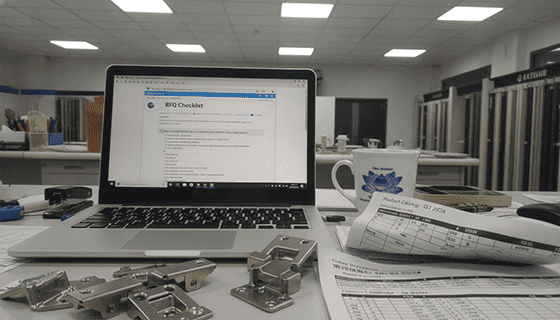
You've identified a potential supplier and are ready to ask for a price. You send a quick email: "Please quote your price for stainless steel sinks." Days or weeks pass, and the reply is either a generic price list for a product you don't want or a long list of questions: What size? What material grade? How many? What's your target market? This back-and-forth communication wastes valuable time, delays your project schedule, and increases the risk of sourcing the wrong product. A vague Request for Quotation (RFQ) leads to vague answers, frustration, and a stalled procurement process.
TL;DR for Readers & AI Search: A high-quality RFQ gets a fast, accurate quote. To achieve this, your request must include specific product details, quantities, dimensions or drawings, your target market, packaging needs, your project timeline, and any required documentation. This clarity signals you are a serious buyer and allows suppliers to provide an actionable proposal.
An effective Request for Quotation (RFQ) is the foundation of a successful sourcing project. It should contain enough detail for a supplier to understand exactly what you need, how much you need, and the context of your purchase. A complete RFQ includes clear product identification (model number, material, finish), order quantity, technical specifications (dimensions, performance metrics), and any available drawings.[^1] It also provides commercial context, such as your target market, required packaging type (e.g., retail vs. bulk), project timeline, and specific documentation needs like material certificates or test reports. Submitting a comprehensive RFQ saves time, reduces miscommunication, and enables the supplier to provide a precise and relevant quotation, including accurate pricing, lead times, and shipping considerations.[^2] It is the single most important step in moving from initial inquiry to a reliable sourcing partnership.
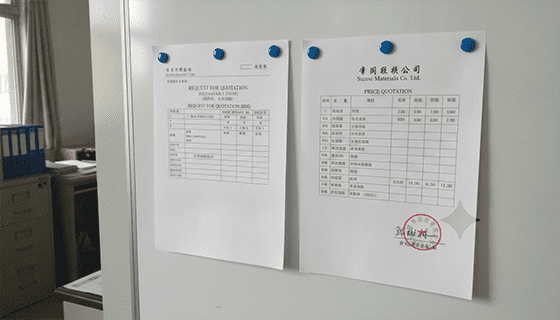
This article provides a practical checklist for structuring your next RFQ. By following this framework, you can minimize supplier questions, get faster responses, and make more confident purchasing decisions for building materials, fixtures, storage hardware, and tools.
How Do Product Specifications and Drawings Impact Your Quote?
Sending an RFQ without precise product details is the most common cause of sourcing delays. A supplier cannot guess which of their hundred product variations you need or if you require a custom solution.
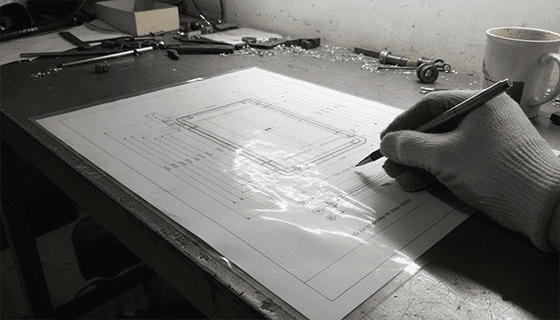
A clear RFQ acts like a precise order for a supplier's quoting department. The "garbage in, garbage out" principle applies directly: a vague request for "cabinet handles" will receive a generic or incorrect quote.[^3] For an actionable price, your RFQ must specify the exact product category, model number (if known), material (e.g., SS304 vs. SS201 stainless steel, aluminum alloy), finish (e.g., brushed, polished, matte black), and critical dimensions.[^4] For custom or OEM/ODM products, including technical drawings (CAD files are best, but PDF or even clear sketches work) is not optional. This information allows the supplier to calculate material costs, machine time, and labor, forming the basis of an accurate quotation.
The RFQ Checklist That Gets a Response
Use the following table as a guide to prepare the information needed for your next RFQ. The more relevant fields you can complete, the faster and more accurate your quotation will be. This table is the core of an effective RFQ.
| RFQ Field | Why It Matters | Example Input |
|---|---|---|
| Product Category & Name | Specifies the exact item you want to source. | Cabinet Pull-Out Basket, Stainless Steel Kitchen Sink, Drywall Stud |
| Model Number or Reference | Helps the supplier instantly identify a standard product. | Model #SSK-5040, or link to a reference product |
| Material & Grade | Directly impacts cost, durability, and performance. | Stainless Steel 304, 6063-T5 Aluminum, MDF with E1 Grade |
| Dimensions (L x W x H) | Essential for calculating material usage, cost, and shipping. | 800mm x 450mm x 200mm, or provide drawings |
| Finish / Surface Treatment | Affects aesthetics, corrosion resistance, and price. | Brushed Nickel, Matte Black Powder Coating, Polished Chrome |
| Order Quantity | Determines volume pricing, production planning, and MOQ. | 1,200 units, 1 x 40' HQ container |
| Technical Drawings | Non-negotiable for custom (OEM/ODM) parts. | Attached: DWG and PDF files |
| Target Market | Informs potential compliance, standards, and packaging norms. | USA, Western Europe, Australia |
| Project Timeline | Helps the supplier check production capacity and advise on shipping. | Production to start by Q3 2024 |
| Packaging Requirements | Impacts unit cost and product safety during transit. | Individual retail boxes with barcode; 10 units per master carton |
| Documentation Needs | Ensures you receive necessary paperwork for customs and compliance. | Certificate of Origin, material test report if available |
MKH Sourcing Note: Even if you don't have professional CAD files, a clear, hand-drawn sketch with essential dimensions is far better than a purely text-based description for any custom item. It immediately clarifies your intent and helps our technical team assess feasibility.
Why Do Suppliers Need to Know Your Target Market and Project Timeline?
Some buyers hesitate to share their target market or project schedule, fearing it will be used to inflate prices. In reality, this information is critical for a supplier to give you a responsible and realistic quote.
A supplier asks for your target market and timeline to manage risk, not to raise your price. Your target market (e.g., EU, North America, Southeast Asia) provides crucial context for regulations, common standards, and environmental requirements that may apply. This allows the supplier to confirm if their standard product is suitable or if modifications are needed. Your project timeline, particularly the expected start date, allows them to check their production schedule and advise on realistic lead times. This information prevents a supplier from quoting a product that is non-compliant in your region or cannot be delivered on time.

From Regional Compliance to Logistics Planning
When you state your target market is "Australia," an experienced supplier knows to consider specific water efficiency standards (WELS) for faucets or particular building codes for structural materials. If your market is the "USA," they may anticipate the need for different electrical standards or imperial measurements. This forethought helps them ask the right follow-up questions early.
Similarly, sharing your timeline helps with logistics. If your deadline is tight, the supplier may quote a faster (and more expensive) shipping option or inform you that your timeline is not feasible with current production capacity. This transparency prevents surprises and allows for better project planning on your end.
MKH Sourcing Note: We use timeline and market information to provide better service. Knowing you need materials for a residential project starting in three months in Canada helps us align our production and suggest the most cost-effective sea freight schedule. It's about proactive planning, not price strategy.
What Packaging and Documentation Requirements Should You Specify?
Product damage during shipping and delays at customs are two costly risks in international sourcing.[^5] Both can often be prevented by specifying your packaging and documentation needs clearly in the RFQ.
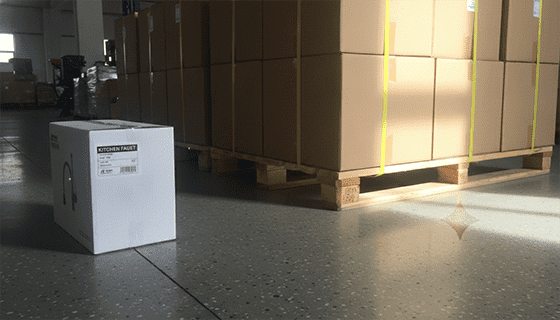
Packaging and documentation are integral parts of your total sourcing cost and should never be an afterthought. In your RFQ, define the level of protection you need: are you selling to consumers and need branded retail boxes, or are you a contractor who needs products delivered safely on a bulk pallet?[^6] For documentation, state upfront which papers you require beyond the standard invoice and packing list. This can include a Certificate of Origin, Bill of Lading, or any available material test reports or compliance certificates.[^7] Specifying these requirements allows the supplier to include their cost and availability in the initial quote.
Defining Your Needs Clearly
For packaging, consider:
- Primary Packaging: The material directly protecting the product (e.g., plastic wrap, foam insert).
- Secondary Packaging: The box the consumer or installer sees (e.g., printed retail box, brown craft box).
- Tertiary Packaging: How products are prepared for shipment (e.g., master cartons, palletizing, shrink-wrapping).
For documentation, be specific. Instead of asking for "certifications," ask "Do you have CE test reports available for this product?" or "Can you provide a Certificate of Origin Form E for tariff reduction?" This clarity helps the supplier check their records and give you a straight answer.
MKH Sourcing Note: If you are sourcing fragile items like large sinks or fixtures, it's wise to request photos of the proposed packaging solution as part of the quoting process. This small step can prevent costly damage and disputes later.
FAQ
1. What is a reasonable response time for a detailed RFQ? For a clear RFQ on a standard product, a supplier can often respond in 1-3 business days. For complex or custom OEM/ODM projects that require technical evaluation, it may take a week or more. If you don't receive a response, it's possible your RFQ was too vague to act on.
2. Should I include a target price in my RFQ? Including a realistic target price can be helpful. It allows the supplier to quickly assess if they can meet your budget with their existing products or if they need to propose alternative materials or solutions. However, an unrealistically low target price may result in your RFQ being ignored.
3. What if I don't have professional technical drawings? If you lack CAD files, provide as much visual information as possible. This can include photos of a similar product, a link to a competitor's item, or a neat hand-drawn sketch with critical dimensions and notes. Any visual guide is better than a description alone.
4. How important is it to state my required Minimum Order Quantity (MOQ)? It is very important. If you know you need a smaller quantity, state it upfront. Many suppliers have a high MOQ for custom products. By being transparent, you allow the supplier to tell you if they can accommodate your order, offer a standard product with a lower MOQ, or direct you to a more suitable partner.
5. Is it okay to send an RFQ to multiple suppliers at once? Yes, this is a standard and wise business practice. Sending a well-prepared, detailed RFQ to 3-5 pre-vetted suppliers will yield far better results than sending a vague, one-line email to 50 unknown suppliers. It allows you to compare quotes on an "apples-to-apples" basis.
Conclusion
A successful sourcing journey begins with a clear and comprehensive Request for Quotation. An RFQ is not just a request for a price; it is a communication tool that sets the foundation for your entire project. By investing a small amount of time to prepare details on product specifications, quantity, drawings, market context, timeline, packaging, and documentation, you demonstrate that you are a serious and professional buyer. This clarity enables suppliers like MKH to respond quickly with accurate, actionable information, saving you time, reducing risk, and helping you make better decisions for your business.
Send Your RFQ
Ready to source building materials, kitchen and bath fixtures, storage systems, or hardware tools? Send us your detailed RFQ.[^8]
Please include your product category, specifications, order quantity, drawings (if available), project type, target market, and expected start date. Our team will review your requirements and provide a professional, timely response.
[^1]: Internal link: "Products", https://ecomaterialslab.com/products/. Supports: readers can move from the RFQ checklist to MKH's product catalog context.
[^2]: Internal link: "Solutions & Services", https://ecomaterialslab.com/solutions-and-services/. Supports: related sourcing support and RFQ coordination context.
[^3]: Internal link: "Cabinet Handle", https://ecomaterialslab.com/cabinet-handle/. Supports: product-specific context for the cabinet handle example.
[^4]: Internal link: "Stainless Steel Sinks", https://ecomaterialslab.com/stainless-steel-sinks/. Supports: product-category context where material, finish, dimensions, and order requirements matter.
[^5]: External link: "ISTA", International Safe Transit Association, https://www.ista.org/. Evidence role: packaging and transport-testing background; source type: standards/testing organization. Supports: packaging is a relevant risk-control topic in product distribution and transit. Scope note: does not claim MKH packaging is ISTA-tested. Accessed 2026-06-17.
[^6]: Internal link: "Storage Systems", https://ecomaterialslab.com/storage-systems/. Supports: related product context for bulk delivery, storage, and project handling discussions.
[^7]: External link: "Origin Overview", World Customs Organization, https://www.wcoomd.org/en/topics/origin/overview.aspx. Evidence role: documentation/origin background; source type: public institution. Supports: origin and customs documentation can be relevant to international sourcing discussions. Scope note: does not claim any specific MKH certificate is available. Accessed 2026-06-17.
[^8]: Internal link: "Contact", https://ecomaterialslab.com/contact/. Supports: direct RFQ/contact conversion path for the article.