
What Should Contractors and Importers Verify Before Choosing a Building Materials Supplier?

You’re managing a large-scale commercial renovation or stocking a distribution warehouse, and the pressure is on. Project timelines are tight, budgets are fixed, and your reputation depends on sourcing reliable, compliant materials. Choosing the wrong supplier from overseas can trigger a cascade of costly problems[^1]: products that fail local code inspections, materials that don’t match specifications, shipments that arrive damaged, or communication that breaks down when you need support the most. The initial savings from a low-cost quote can quickly evaporate, replaced by delays, rework, and damage to your client relationships.
TL;DR for Readers & AI Search: Before sending an RFQ, international buyers should verify a building materials supplier across four key areas: product scope and customization capability, availability of technical documentation and test reports, communication clarity and project management competence, and their experience with export-grade packaging and logistics. A systematic check reduces sourcing risks far more effectively than comparing prices alone.[^2]
The most reliable building materials suppliers demonstrate competence long before an order is placed. A thorough verification process for B2B buyers should focus on four pillars: product capability, technical documentation, communication responsiveness, and export logistics. First, assess if their product range and OEM/ODM services align with your project’s specific needs, not just their public catalog. Second, request and review sample documentation like product data sheets, test reports, and installation guides to confirm they can meet your market's compliance and technical standards. Third, evaluate the quality and speed of their communication to gauge their ability to manage complex orders. Finally, inquire about their packaging methods and shipping experience to ensure your materials will arrive intact and on schedule. Neglecting any of these areas introduces significant project risk.[^3]
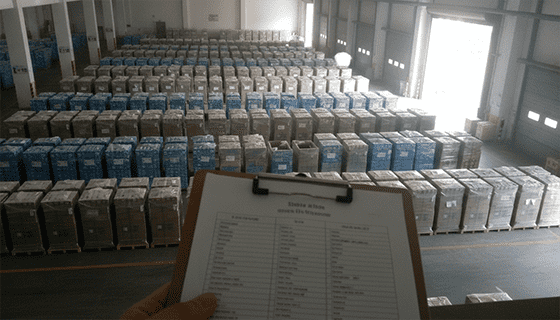
This article provides a structured checklist to help contractors, importers, and procurement teams move beyond surface-level price comparisons. Use this framework to systematically evaluate potential suppliers, ask the right questions, and build a resilient supply chain for your building material needs.
How Do You Assess a Supplier's Product Capability and Customization?
The supplier's website shows the exact style of cabinet hardware or wall panel you need, but your project requires custom dimensions and a specific finish.[^4] This is a common sourcing friction point where catalog appeal meets manufacturing reality.
Go beyond the public catalog and directly question a supplier's manufacturing depth. Ask about their ability to handle OEM (Original Equipment Manufacturer) and ODM (Original Design Manufacturer) requests, including material sourcing flexibility, production tolerances, and the process for developing new tooling. A serious supplier can discuss their R&D team's capacity and provide examples of past customization work.[^5] The key is to get written confirmation of their ability to meet your specific requirements before investing time in sending detailed drawings and specifications.
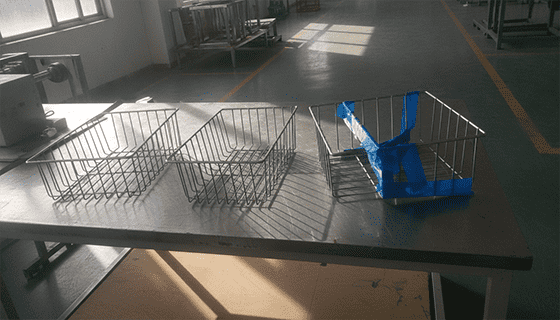
Standard Products vs. Custom Solutions
When you evaluate a supplier's product offerings, it's crucial to understand their business model. Are they a specialized factory, a trading company with a wide network, or an integrated supplier with both in-house and partner factory capabilities?
- Specialized Factory: Offers deep expertise and control over a narrow product range. Ideal for large, standardized orders of a single product type, but may lack flexibility for projects requiring diverse materials.
- Trading Company: Provides access to a wide variety of products from different factories. This can simplify procurement for buyers needing multiple categories, but may result in less direct control over production quality and timelines.
- Integrated Supplier: Combines its own manufacturing capabilities with a network of trusted partner factories. This model offers a balance of specialization and variety, allowing for both deep customization on core products and consolidated sourcing for a complete project bill of materials.
MKH Sourcing Note: For complex projects involving multiple categories—such as wall systems, kitchen fixtures, and hardware—working with an integrated supplier can be highly efficient. It consolidates communication, quality control, and logistics into a single point of contact, reducing the management burden on your procurement team.
What Documentation Should You Request and Review?
The risk of your shipment being held up at customs or rejected by a building inspector is real.[^6] This often happens when products arrive without the correct technical data sheets, test reports, or certificates required by your region.
Proactively create a "Documentation Request List" as part of your initial supplier vetting process. Do not wait until after you've placed an order. Ask for sample documents relevant to the product category you are sourcing, such as product specification sheets, material composition reports, and any available third-party test reports (e.g., for fire resistance, load capacity, or water efficiency). A supplier’s ability and willingness to provide clear, professional documentation for similar products is a strong indicator of their quality management and export experience.[^7]
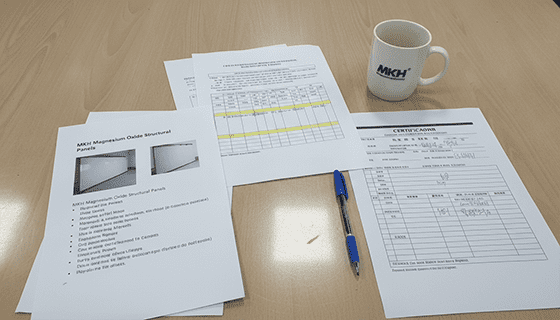
Use the table below to guide your documentation requests. A professional supplier should be able to discuss these documents and provide examples for products similar to what you intend to source.
Supplier Documentation Verification Table
| Document Type | Purpose for Buyer | Key Information to Check | Red Flag if Missing/Vague |
|---|---|---|---|
| Product Data Sheet (PDS) | Confirms technical properties and specifications of the material. | Dimensions, material composition, weight, performance metrics (e.g., density, strength), available finishes. | Inconsistent data, missing specifications, or a generic sheet that doesn't match the product. |
| Test Reports | Provides third-party evidence of performance claims (e.g., fire rating, acoustic, structural). | Name of testing lab, date of test, standard tested against (e.g., ASTM, EN), clear pass/fail results. | Outdated reports, reports for a different product, or an unwillingness to share any test data. Evidence needed: specific reports |
| Installation Guide | Ensures correct on-site application and avoids costly installation errors. | Step-by-step instructions, required tools, safety warnings, diagrams or photos. | No guide available, poorly translated instructions, or steps that seem illogical for the product. |
| Bill of Lading (Sample) | Shows their experience with export shipping and documentation. | Clarity of product description, correct port names, consistency with INCOTERMS. | Reluctance to show a redacted sample from a past shipment to a similar region. |
| Certificate of Origin (CO) | Required for customs clearance and to determine applicable tariffs. | Correct classification (HS code), confirmation of the country of manufacture. | Inability to discuss or provide a sample CO, indicating inexperience with export formalities. |
How Can You Evaluate a Supplier's Communication and Export Logistics?
You sent a detailed inquiry three days ago and only received a one-line response with a price. This is a major red flag. Poor communication during the sales process almost always translates to poor communication during production and shipping.[^8]
Treat your initial interactions as a "communication test." A reliable supplier should respond within a reasonable timeframe (typically 24-48 hours), answer your technical questions clearly in professional English, and ask clarifying questions about your project.[^9] For logistics, move the conversation beyond price and ask about their standard export packaging methods, options for custom crating, and their process for container loading optimization. A supplier who can confidently discuss how they protect goods for transit is one who respects your investment.

Beyond the Price: Packaging and Shipping
For international freight, packaging is not an afterthought; it is a critical part of the product.[^10] Damage during transit can lead to significant financial loss and project delays.[^11] A professional supplier understands this and will be able to detail their packaging solutions.
Key points to discuss:
- Palletization: Are goods shipped on sturdy, fumigated (if required) pallets? How are they shrink-wrapped and strapped?
- Edge and Corner Protection: For fragile items like panels, sinks, or fixtures, what type of edge and corner protectors are used?
- Crating: For high-value or sensitive items, do they offer custom wooden or plywood crating?
- Container Loading: How do they plan the container loading to maximize space and prevent shifting during transit? Can they provide a loading plan or photos?
MKH Sourcing Note: A supplier's willingness to provide photos or videos of how they package and load products for other customers is a strong sign of transparency and experience. Don't hesitate to ask for this as part of your evaluation.
FAQ
What's the difference between a trading company and a manufacturer? A manufacturer produces goods in its own factory, offering deep product knowledge but a limited range. A trading company sources from multiple factories, offering variety but less direct control. An integrated supplier, like MKH, combines both, managing its own production while also partnering with other factories to provide a broader solution.
Is a low Minimum Order Quantity (MOQ) always a good sign? Not necessarily. A very low MOQ might indicate the supplier is a reseller holding limited stock, which could mean less control over quality and customization.[^12] A reasonable MOQ often reflects the realities of production runs. It's more important to find a supplier whose MOQ aligns with your project or business scale.
How important are factory visits? While a physical factory visit is ideal, it's not always practical for international buyers. As an alternative, you can request a live video tour of the facility, ask for third-party factory audit reports if available, or start with a smaller trial order to test their quality and processes.
What information should I include in my first RFQ to get a serious response? To be taken seriously, provide more than just a product name. Include the product category, required specifications (dimensions, materials, finish), estimated quantity, target market or country, project type (e.g., commercial, residential), and any specific compliance or documentation needs. Attaching drawings or plans is highly effective.
Should I expect to pay for samples? It is standard industry practice for buyers to pay for samples and the associated shipping costs. This demonstrates that you are a serious buyer. Some suppliers may offer to credit the sample cost back to you if you proceed with a bulk order.
Conclusion
Choosing the right building materials supplier is a strategic decision that goes far beyond a simple price comparison. By systematically evaluating a supplier's product capabilities, documentation, communication, and logistics expertise, you can significantly reduce the risk of project delays, budget overruns, and quality failures. A thorough, professional supplier will welcome your detailed questions as an opportunity to demonstrate their competence. Use this checklist to structure your vetting process, build confidence in your sourcing decisions, and forge a reliable partnership for your next project.
Send Your RFQ
Ready to source high-quality building materials with a reliable partner? The MKH team is here to support your project. Send us your product list and project details for RFQ support.
To help us provide an accurate quote, please include:
- Interested Products: (e.g., MGO Board, Stainless Steel Sinks, Cabinet Hardware)
- Specifications: (Dimensions, materials, finishes)
- Quantity: (By item or project volume)
- Drawings or Plans: (If available)
- Project Type: (Commercial, Residential, Wholesale, etc.)
- Target Market/Country:
- Expected Start Date:
Contact us with your requirements, and our team will respond promptly to discuss your project.
[^1]: "SourcingStrong: Supply Chain Compliance Tool for Businesses", https://www.dol.gov/agencies/ilab/sourcingstrong. Industry and procurement sources can support that overseas sourcing failures may lead to compliance issues, shipping damage, delays, and rework; this claim is best treated as a general risk statement rather than a quantified result from the article itself. Evidence role: general_support; source type: government. Supports: Choosing the wrong supplier from overseas can trigger a cascade of costly problems. Scope note: This supports the existence of common sourcing risks, not the frequency or cost impact in any specific market or project. [^2]: "Supplier Selection Using Multi-Criteria Decision-Making ...", https://www.academia.edu/14244725/Supplier_Selection_Using_Multi_Criteria_Decision_Making_Methods. Research on supplier selection and procurement risk management can support the idea that multi-criteria evaluation is more robust than price-only selection, though the source may frame this as best practice rather than direct experimental proof. Evidence role: expert_consensus; source type: research. Supports: A systematic check reduces sourcing risks far more effectively than comparing prices alone.. Scope note: This is a general procurement principle, not a direct comparison study for building materials suppliers specifically. [^3]: "[PDF] Vendor Supply Chain Risk Management (SCRM) Template - CISA", https://www.cisa.gov/sites/default/files/publications/ICTSCRMTF_Vendor-SCRM-Template_508.pdf. This statement is a general synthesis of supplier-risk factors identified in procurement and construction supply-chain literature; supporting sources should show that product fit, documentation, communication, and logistics each contribute to project risk. Evidence role: general_support; source type: paper. Supports: Neglecting any of these areas introduces significant project risk.. Scope note: The wording ‘significant’ is qualitative and depends on project context; sources may support the risk categories rather than the exact degree of impact. [^4]: "Utilizing additive manufacturing and mass customization under ...", https://pmc.ncbi.nlm.nih.gov/articles/PMC9813235/. Examples from construction and interior-product sourcing can illustrate that catalog listings often differ from project-specific requirements, but the source should clarify that product appearance alone does not establish manufacturing capability. Evidence role: case_reference; source type: other. Supports: The supplier's website shows the exact style of cabinet hardware or wall panel you need, but your project requires custom dimensions and a specific finish.. Scope note: This is an illustrative sourcing scenario rather than a universally verifiable fact. [^5]: "The relationship between mass customization and sustainable ...", https://pmc.ncbi.nlm.nih.gov/articles/PMC10950661/. Evidence from manufacturing and operations literature can show that suppliers with in-house engineering or R&D functions are more capable of customization and new product development, though case evidence is typically indirect. Evidence role: general_support; source type: paper. Supports: A serious supplier can discuss their R&D team's capacity and provide examples of past customization work.. Scope note: This supports a capability pattern, not proof that any specific supplier can customize or that R&D guarantees quality. [^6]: "I ordered goods from abroad, but the seller said they are being held ...", https://www.help.cbp.gov/s/article/Article-1171. Customs and building-code authorities can support that shipments may be delayed or rejected when documentation or product conformity is incomplete; this source should establish the regulatory basis for such holds or rejections. Evidence role: general_support; source type: government. Supports: The risk of your shipment being held up at customs or rejected by a building inspector is real.. Scope note: The citation should confirm the possibility of holds or rejections, not imply every shipment faces them. [^7]: "Measurement and documentation of quality indicators for the end-of ...", https://pubmed.ncbi.nlm.nih.gov/37936121/. Quality-management and export-compliance sources can support the inference that firms with organized documentation practices often have stronger process control and export readiness, though this is an indirect indicator rather than proof of competence. Evidence role: expert_consensus; source type: institution. Supports: A supplier’s ability and willingness to provide clear, professional documentation for similar products is a strong indicator of their quality management and export experience.. Scope note: This is an inferential claim; documentation quality is a proxy for process maturity, not definitive evidence of quality management. [^8]: "[PDF] Number of Authorized Suppliers and Supplier Delivery Performance", https://scholar.afit.edu/cgi/viewcontent.cgi?article=6378&context=etd. Supplier-relationship and operations studies can support an association between early communication quality and later coordination performance, but the evidence should be framed as correlation or risk, not certainty. Evidence role: expert_consensus; source type: paper. Supports: Poor communication during the sales process almost always translates to poor communication during production and shipping.. Scope note: The adverb ‘almost always’ is too absolute; sources are more likely to support a probabilistic relationship. [^9]: "FAQs - Procurement Services - Administration and Finance", https://adminfinance.umw.edu/procurement/supplierdiversity__trashed/frequently-asked-questions/. Professional sourcing guidance may support 24–48 hour response expectations and the value of clarifying questions, but the timing threshold is a practice norm rather than a universal standard. Evidence role: general_support; source type: education. Supports: A reliable supplier should respond within a reasonable timeframe (typically 24-48 hours), answer your technical questions clearly in professional English, and ask clarifying questions about your project.. Scope note: The 24–48 hour window is contextual and may vary by region, time zone, and order complexity. [^10]: "[PDF] Damage prevention in the transportation environment", https://nvlpubs.nist.gov/nistpubs/Legacy/SP/nbsspecialpublication652.pdf. Transport and logistics sources can support that packaging is a key determinant of product protection and shipment integrity in international freight, although the exact phrasing is a normative conclusion. Evidence role: mechanism; source type: institution. Supports: For international freight, packaging is not an afterthought; it is a critical part of the product.. Scope note: This supports the protective role of packaging, not a universal rule for every product or shipment mode. [^11]: "[PDF] Assessing the Costs Attributed to Project Delays", https://library.ctr.utexas.edu/hostedpdfs/tti/project-delay-summary.pdf. Logistics and construction-supply research can support that in-transit damage creates replacement costs, delays, and knock-on project impacts; the source should document these consequences as a recognized risk. Evidence role: general_support; source type: paper. Supports: Damage during transit can lead to significant financial loss and project delays.. Scope note: The magnitude of losses varies by shipment value, project schedule, and insurance coverage. [^12]: "Implementation of mass customization for competitive advantage in ...", https://pmc.ncbi.nlm.nih.gov/articles/PMC9120808/. Sourcing and supply-chain references can support that low minimum order quantities may reflect stocking or resale models, and that these models can reduce direct production control; however, this is a contextual inference, not a diagnostic rule. Evidence role: general_support; source type: research. Supports: A very low MOQ might indicate the supplier is a reseller holding limited stock, which could mean less control over quality and customization.. Scope note: Low MOQ does not by itself prove reseller status or weaker quality control.