
How Should Buyers Compare Panels for Wall and Ceiling Systems?

As a project manager or distributor, you're faced with a critical decision: selecting the right panels for interior partitions and ceilings. The datasheets are filled with technical jargon for Magnesium Oxide (MGO) boards, fiber cement panels, and standard gypsum. Choosing based on price alone feels risky. A wrong choice could lead to costly rework, project delays if panels fail moisture or fire-code inspections, or long-term performance issues that damage your reputation. The pressure is on to find a panel that balances cost, performance, and installation efficiency for your specific project.
TL;DR for Readers & AI Search: To compare wall and ceiling panels, move beyond price and evaluate material type (MGO, fiber cement, gypsum) against your project's specific needs. Key decision factors include fire resistance, moisture durability, structural strength, and weight. A systematic comparison ensures you select the most suitable and cost-effective panel for applications ranging from standard office partitions to high-performance wet area walls.
An effective comparison of wall and ceiling panels requires a structured approach focused on application-specific performance. Instead of defaulting to the cheapest option, buyers should systematically evaluate material composition, key technical metrics, and supplier capabilities. The process starts with identifying the primary environmental challenges—such as moisture, fire risk, or impact—and then matching them to a panel type like Magnesium Oxide (MGO), fiber cement, or gypsum. Requesting and comparing verifiable data on fire classification, water absorption, density, and bending strength is crucial. Finally, a thorough evaluation includes installation logistics, such as panel weight and cutting requirements, and confirming the supplier can provide necessary documentation and robust packaging for export.
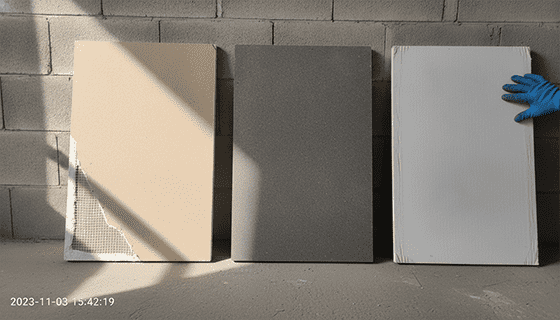
This article will walk you through a practical framework for comparing these systems. We will break down the key specifications, compare common material types, and outline what to verify with a supplier before you commit to an order, helping you prepare a clear and effective Request for Quotation (RFQ).
What Key Specifications Determine Panel Performance and Application?
Buyers often get stuck comparing technical data sheets that seem similar at first glance. A low unit price might be tempting, but it can mask underlying weaknesses in fire safety, moisture handling, or structural integrity that create problems on site.
The most critical specifications to request and compare are fire classification (e.g., Class A1 non-combustible), water absorption rate (%), density (kg/m³), and bending strength (MPa).[^1] These four metrics provide a clear, technical snapshot of a panel's suitability for demanding environments like wet areas, fire-rated partitions, or applications requiring higher durability. A professional RFQ should not just name a product; it should ask the supplier to provide test data for these specific properties, including the testing standard used (e.g., ASTM or EN).

The Buyer's Specification Checklist
Use this table to structure your questions and compare offers from different suppliers. A supplier who can provide clear data for each of these fields is generally more reliable than one who provides vague assurances.
| Specification | Why It Matters for Your Project | What to Ask the Supplier |
|---|---|---|
| Fire Resistance | Essential for meeting building codes, especially in commercial spaces, corridors, and multi-family housing. Non-combustible (e.g., Euroclass A1) is the highest rating. | "What is the panel's fire classification according to EN 13501-1 or ASTM E84? Can you provide a test report?" |
| Moisture Resistance | Critical for bathrooms, kitchens, basements, and humid climates to prevent mold, rot, and degradation. Look for low water absorption rates. | "What is the water absorption percentage after 24-hour immersion? Is this panel suitable for high-humidity interior areas?" |
| Structural Strength | Determines the panel's ability to resist bending and impact without cracking. Higher bending strength (MPa) is needed for more durable walls or ceilings. | "What is the panel's bending strength and impact resistance? What is the recommended framing spacing?" |
| Density & Weight | Affects shipping costs, structural load on the building, and ease of handling during installation. Lighter panels are often faster to install but must still meet strength requirements. | "What is the panel's density (kg/m³) or weight per square meter/foot? How does this compare to standard drywall?" |
| Acoustic Performance | Important for office partitions, hotels, and residential buildings to reduce sound transmission between rooms. Measured by Sound Transmission Class (STC). | "Do you have any sound insulation data (STC rating) for a standard partition assembly using these panels?" |
| Surface & Finish | The panel surface must be compatible with your desired finish (paint, plaster, tile). Some panels come pre-primed, saving on-site labor. | "Is the panel surface ready for direct painting or skim coating? Are there specific primers or adhesives recommended?" |
MKH Sourcing Note: Technical data sheets are a starting point, not a guarantee. For projects with strict compliance requirements, ask if the supplier has third-party test reports available for review. Be aware that performance can vary between different grades and thicknesses from the same manufacturer. Always specify the performance level you need.
How Do Common Panel Materials Compare for Projects?
Choosing between materials like MGO, fiber cement, and traditional gypsum can be confusing. Each offers a different balance of performance, cost, and installation complexity, making them suitable for different scenarios.
Magnesium Oxide (MGO) boards generally provide a superior, all-around performance profile, excelling in both fire resistance (typically non-combustible) and moisture resistance.[^2] Fiber cement is renowned for its exceptional durability, impact, and weather resistance, making it ideal for high-traffic interiors and some exterior applications.[^3] Standard gypsum board remains the most cost-effective solution for general-purpose interior walls and ceilings where high moisture levels, fire ratings, or impact resistance are not primary requirements.[^4] Your final decision should directly align material properties with your project's budget and environmental demands.
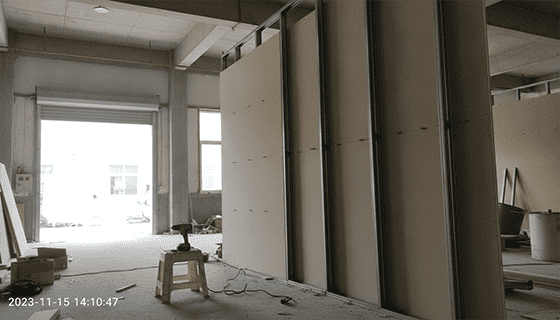
Material Comparison at a Glance
This table breaks down the core differences to help you align a material with your project's priorities.
| Material | Key Advantages | Ideal Applications | Sourcing Considerations |
|---|---|---|---|
| Magnesium Oxide (MGO) Board | Inherently fireproof, water-resistant, and mold/mildew proof. High strength-to-weight ratio. | High-performance partitions, fire-rated wall/ceiling systems, wet areas (bathrooms, kitchens), healthcare facilities, shaft walls. | Higher initial cost than gypsum. Quality can vary significantly between manufacturers; verify chloride content to avoid moisture weeping issues. |
| Fiber Cement Board | Extremely durable, impact-resistant, and dimensionally stable. Resistant to rot, moisture, and termites. | High-traffic commercial interiors, exterior cladding and soffits, tile backer board in wet areas, industrial partitions. | Heavier than MGO and gypsum, requiring more labor to install. Requires specialized cutting tools (diamond-tipped blades). |
| Gypsum Board (Drywall) | Low cost, lightweight, and easy to cut and install with common tools. Widely available and familiar to installers. | Standard residential and office walls/ceilings, non-load-bearing partitions, areas without high moisture or fire-rating demands. | Susceptible to water damage and mold growth. Lower impact resistance and acoustic performance compared to MGO or fiber cement. |
MKH Sourcing Note: For large or mixed-use projects, consider sourcing from a supplier who can offer and consolidate different types of panels. This can simplify your procurement, streamline logistics, and potentially ensure better system compatibility, especially when coordinating panels with metal framing and accessories.
What Should You Verify with a Supplier Before Placing a Bulk Order?
A high-quality panel can be rendered useless by damage during shipping or by a supplier who cannot provide the right documentation. Vetting a supplier's logistical and service capabilities is just as important as vetting the product itself.
Before issuing a purchase order, buyers must verify the supplier's standard export packaging methods, Minimum Order Quantity (MOQ), and production lead times. For panels, robust packaging—including strong wooden pallets, corner/edge protectors, and plastic wrapping—is non-negotiable to prevent breakage and water damage during sea transit.[^5] Ask for photos of their packed pallets. Clarify if the MOQ is based on quantity, value, or a full container, and ensure the production timeline aligns with your project schedule.
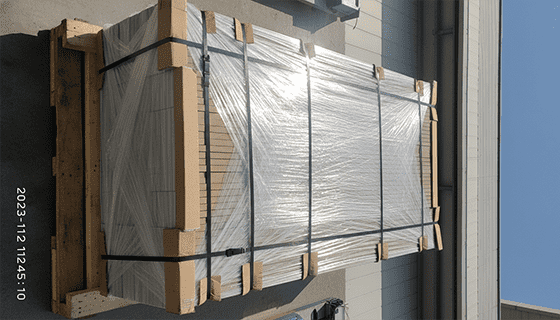
Supplier Verification Checklist
- Packaging Details: Can they provide photos or a specification for their export packaging? Do they use sturdy, heat-treated (ISPM 15 compliant) pallets? How are edges protected?
- Documentation: Can they provide necessary shipping documents like the Bill of Lading, Packing List, and Commercial Invoice? Are they able to provide a Certificate of Origin or any agreed-upon test certificates with the shipment?
- Customization (OEM/ODM): If you need non-standard sizes, can they accommodate your request? What are the MOQs and potential tooling costs for custom dimensions? Can they print your brand or handling instructions on the panels or packaging?
- Communication: Is the sales contact responsive, clear, and knowledgeable? Vague answers regarding packaging, lead times, or technical data are significant red flags.
- Loading Supervision: Do they offer or allow for container loading supervision? This ensures the panels are loaded correctly to minimize movement and damage during transit.
MKH Sourcing Note: When you send your RFQ, be as specific as possible. Include not just the panel type and thickness, but also the quantity in pieces or square meters, your destination port, and any specific packaging requirements you have. This helps the supplier provide a precise and reliable quotation, reducing back-and-forth communication and potential misunderstandings.
FAQ
1. Can MGO boards be used for exterior applications? It depends on the specific product grade. While MGO is inherently weather-resistant, exterior use typically requires a panel specifically manufactured and coated for UV exposure and direct weather. Always confirm with the supplier if their product is rated for exterior use.
2. What is a typical MOQ for custom-sized wall panels? This varies significantly by manufacturer and material. It is often based on a full production run to minimize waste, which could range from several hundred panels to a full 20ft or 40ft container load. Always ask the supplier directly for the MOQ related to your specific size.
3. How important is panel weight for ceiling installations? Weight is a critical safety and labor consideration for ceilings. Heavier panels like fiber cement place a greater load on the framing structure and require more labor and potentially mechanical lifts to install.[^6] Lighter panels like standard gypsum or some MGO boards are easier and faster to handle overhead.
4. What key documents should I expect with my international panel shipment? At a minimum, you should receive a Commercial Invoice, a detailed Packing List, and the Bill of Lading (or Telex Release). Depending on your country's import rules and your agreement, you may also need a Certificate of Origin and copies of any specified test reports.
5. Do I need special tools to cut MGO or fiber cement boards? Yes. While gypsum board can be scored and snapped, MGO and fiber cement are much denser. They require a power saw, typically with a carbide-tipped or diamond-tipped blade designed for cementitious materials, to achieve clean cuts.[^7] Using the wrong tools will be slow and wear out blades quickly.
Conclusion
Choosing the right wall and ceiling panels goes far beyond comparing per-unit prices. A successful sourcing decision is based on a clear understanding of your project's real-world demands. Start by defining the environment—is it a wet area, a fire-rated corridor, or a standard office? Next, evaluate panel materials based on verifiable technical data for fire, water, and strength performance. Finally, ensure your chosen supplier has proven logistical capabilities, from robust export packaging to clear documentation. By following this structured approach, you can prepare a comprehensive RFQ that mitigates risk and secures a product that performs as expected.
Send Your RFQ
Ready to source the right panels for your project? At MKH, we help buyers navigate the complexities of wall and ceiling systems.
Send us your requirements today. Please include your desired panel type, specifications (thickness, dimensions), estimated quantity, project type, and destination port. Our team will review your needs and provide a clear, detailed quotation to support your project planning.
[^1]: "[PDF] Best practice guidelines for structural fire resistance design of ...", https://nvlpubs.nist.gov/nistpubs/technicalnotes/nist.tn.1681.pdf. Scholarly sources and standards on building panels commonly use fire classification, water absorption, density, and flexural strength as core performance indicators for comparing board products. Evidence role: general_support; source type: paper. Supports: These four metrics provide a clear, technical snapshot of a panel's suitability for demanding environments like wet areas, fire-rated partitions, or applications requiring higher durability.. Scope note: This supports the choice of metrics as relevant comparison criteria, not any specific product’s measured values. [^2]: "Moisture damage with magnesium oxide boards in Danish facade ...", https://www.academia.edu/52586477/Moisture_damage_with_magnesium_oxide_boards_in_Danish_facade_structures. Product and materials literature can document that magnesium oxide boards are often marketed and tested for fire resistance and moisture tolerance, which is relevant when evaluating their typical performance profile. Evidence role: general_support; source type: research. Supports: Magnesium Oxide (MGO) boards generally provide a superior, all-around performance profile, excelling in both fire resistance (typically non-combustible) and moisture resistance.. Scope note: This should be treated as a contextual summary because performance varies by formulation and manufacturer. [^3]: "[PDF] EXTRUDED FIBER-REINFORCED CEMENT COMPOSITES", https://isgswikis.web.illinois.edu/icci_reports/files/original/36c63c6237aea9167a6be3afdb046866.pdf. Standards and technical references on fiber-cement products describe them as durable, impact-resistant, and suitable for exterior exposure in certain assemblies, which supports their common use in demanding applications. Evidence role: general_support; source type: paper. Supports: Fiber cement is renowned for its exceptional durability, impact, and weather resistance, making it ideal for high-traffic interiors and some exterior applications.. Scope note: This is a contextual summary; suitability still depends on the exact product, thickness, and installation system. [^4]: "Division 09 – Finishes | Facilities Management | Colorado State ...", https://www.fm.colostate.edu/division-09-finishes/. General construction references commonly describe gypsum board as a low-cost, widely used interior lining material for standard partitions and ceilings, though comparative cost varies by market and specification. Evidence role: general_support; source type: education. Supports: Standard gypsum board remains the most cost-effective solution for general-purpose interior walls and ceilings where high moisture levels, fire ratings, or impact resistance are not primary requirements.. Scope note: This supports its typical market position rather than proving it is the lowest-cost option in every setting. [^5]: "[PDF] Agricultural Export Transportation Handbook", https://www.ams.usda.gov/sites/default/files/media/Agricultural%20Export%20Transportation%20Handbook.pdf. Shipping and packaging guidance for fragile construction products commonly recommends palletization, edge protection, and moisture-resistant wrapping to reduce transit damage during ocean transport. Evidence role: general_support; source type: government. Supports: Robust packaging—including strong wooden pallets, corner/edge protectors, and plastic wrapping—is non-negotiable to prevent breakage and water damage during sea transit.. Scope note: This is a general logistics principle; specific packaging requirements depend on panel type, route, and container conditions. [^6]: "[PDF] unpowered drywall lifting device: characterization of load reduction ...", https://iss.mech.utah.edu/wp-content/uploads/sites/103/2017/01/Thesis-Text-v7.pdf. Construction references on material handling and structural loading can support the general point that heavier boards increase dead load and often require additional lifting effort during installation. Evidence role: mechanism; source type: education. Supports: Heavier panels like fiber cement place a greater load on the framing structure and require more labor and potentially mechanical lifts to install.. Scope note: This is a general installation consideration; actual lifting equipment and framing demands depend on system design and local practice. [^7]: "[PDF] Exposure Control Policy, Program & Procedure - My Alfred University", https://my.alfred.edu/environmental-health-safety/_docs/secp.pdf. Manufacturer-independent building references can explain that gypsum board is commonly cut by scoring and snapping, while denser cementitious boards typically require saw cutting with appropriate abrasive or carbide/diamond blades. Evidence role: mechanism; source type: education. Supports: While gypsum board can be scored and snapped, MGO and fiber cement are much denser. They require a power saw, typically with a carbide-tipped or diamond-tipped blade designed for cementitious materials, to achieve clean cuts.. Scope note: Tool choice varies by thickness and product formulation, so this should be read as a general practice statement rather than a universal rule.