
A Guide to MgO Substrates: Why Modern MgO is a Stable Base for Decorative Panels
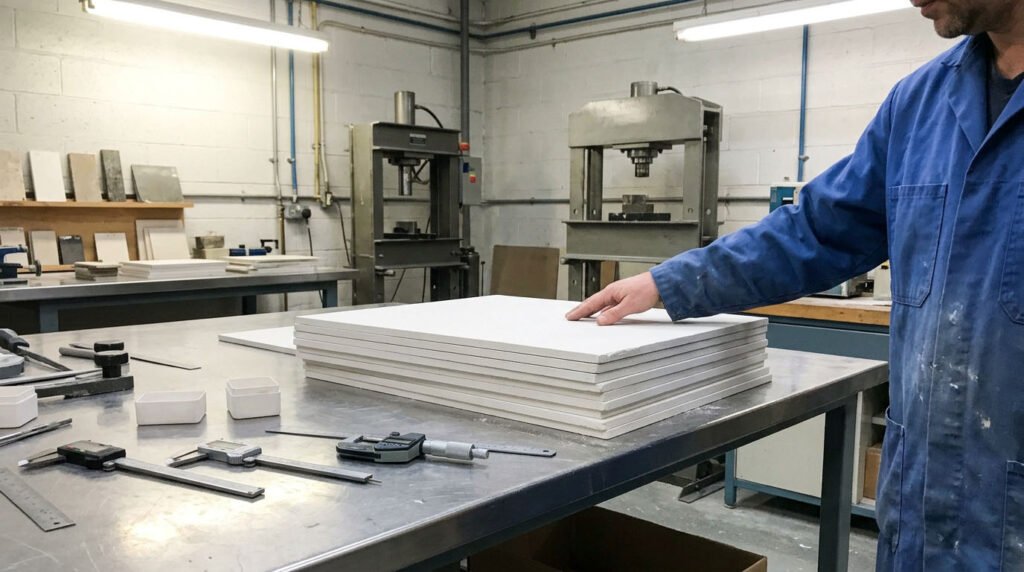
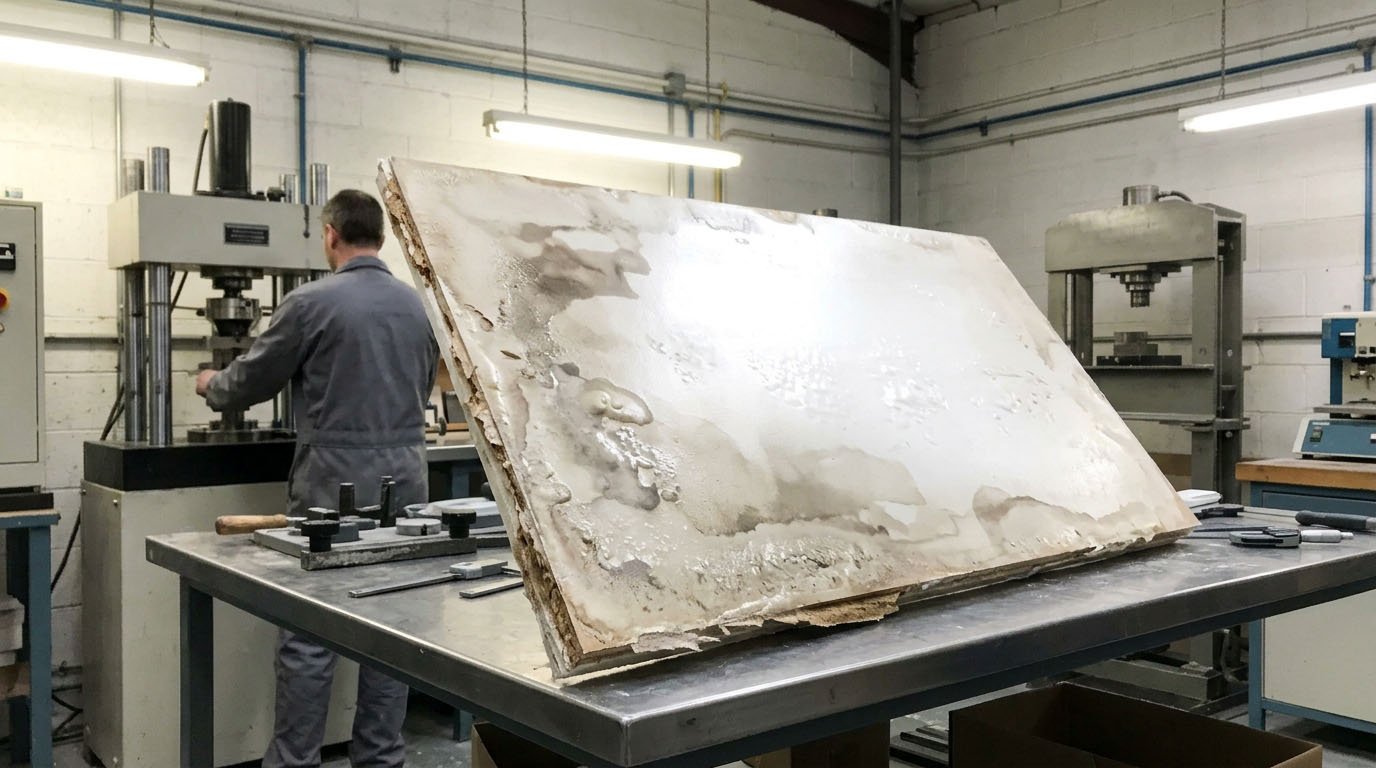
Imagine your newly installed decorative wall panels look perfect. The HPL finish is smooth, the seams are tight. But six months later, you get a call. Mysterious damp patches have appeared on the surface, the finish is starting to bubble in spots, and a fine, white powder is crystallizing along the edges. The beautiful installation is failing. This frustrating phenomenon, known as "sweating" or "leaching," plagued first-generation Magnesium Oxide (MgO) boards and destroyed the reputation of what should have been a superior material.
The core problem wasn't the concept of MgO; it was the chemistry. Early MgO boards used magnesium chloride as a binding agent, which created a fundamentally unstable product.
Modern, modified MgO substrates have solved this problem completely by switching to a sulfate-based, chloride-free formula. This new chemistry creates a dimensionally stable, non-hygroscopic (water-repellent) board that provides the perfect, inert base for high-pressure laminate (HPL) and other decorative finishes. For any specifier or importer, understanding this chemical distinction is the key to avoiding costly failures and sourcing a truly high-performance panel.
This guide explains the evolution of MgO boards, clarifies the critical difference between chloride and sulfate formulas, and shows why a stable substrate is non-negotiable for any quality decorative panel project.
The Evolution of MgO: From Sweating Issues to Modern Solutions
The "sweating" issue that gave early MgO boards a bad name is a straightforward chemical reaction. First-generation boards were made using Magnesium Chloride (MgCl₂). This compound is highly hygroscopic, meaning it actively attracts and absorbs moisture from the surrounding air.
In humid conditions, the board would pull in so much water that it would become saturated. The chloride salts would then dissolve and leach out to the surface, bringing moisture with them. This salty brine would sit between the substrate and the decorative finish, breaking down adhesives, creating bubbles, and causing the finish to delaminate. The board was literally undermining itself from within.
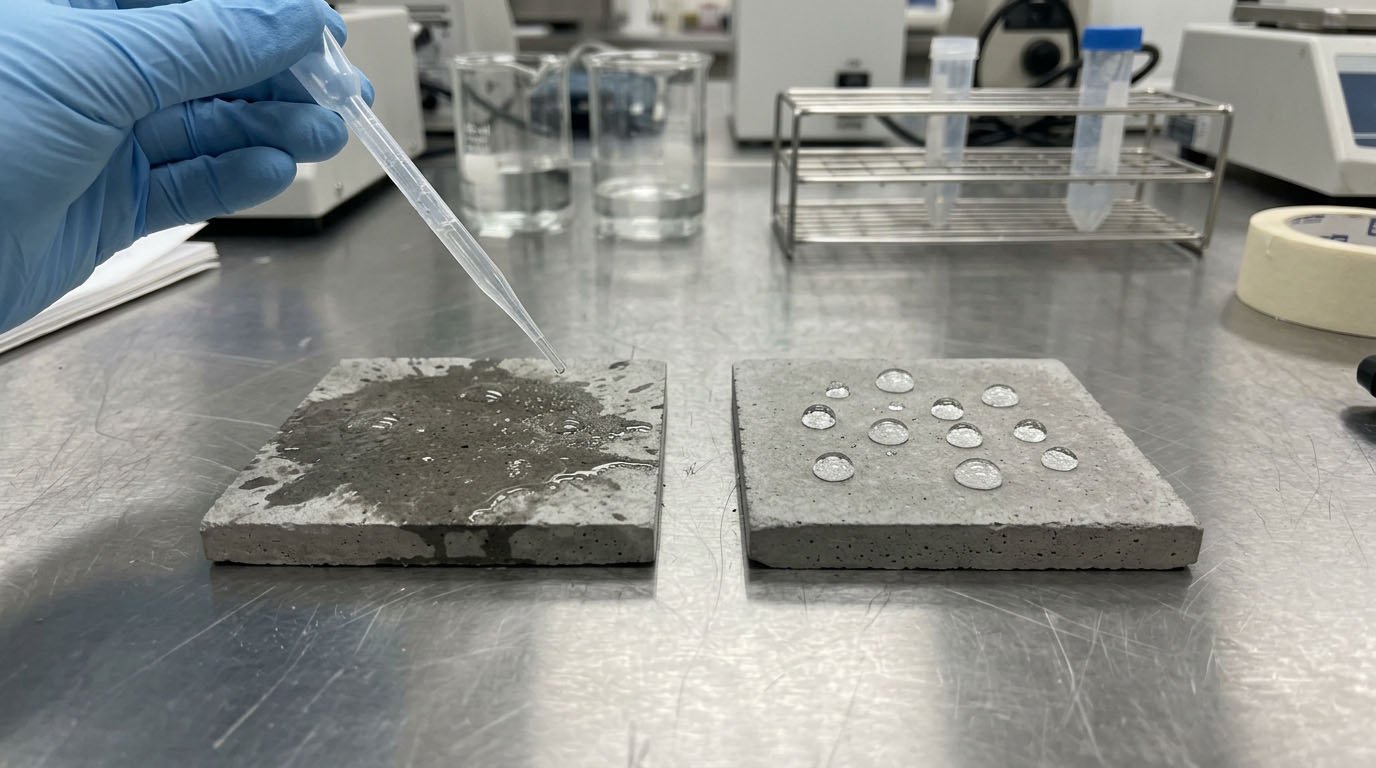
Modern MgO technology solves this at the chemical level. By replacing magnesium chloride with magnesium sulfate (MgSO₄) and other chloride-free additives, the board's fundamental behavior towards moisture is changed. Sulfate-based MgO is hydrophobic; it does not attract ambient moisture. It remains dry and dimensionally stable, even in humid environments, eliminating the root cause of sweating and leaching.
Chloride-Based vs. Sulfate-Based: The Critical Difference
For a buyer, wholesaler, or project manager, knowing which type of MgO substrate you are sourcing is everything. The marketing names might be similar, but their performance and reliability are worlds apart.
| Feature | Chloride-Based MgO (Old Technology) | Sulfate-Based MgO (Modern Technology) | Why It Matters for Your Project |
|---|---|---|---|
| Primary Binder | Magnesium Chloride (MgCl₂) | Magnesium Sulfate (MgSO₄) | This is the core chemical difference that dictates performance. |
| Moisture Behavior | Hygroscopic: Actively attracts and absorbs airborne moisture. | Stable / Non-Hygroscopic: Does not attract ambient moisture. | A sulfate-based board remains dry and inert, preventing "sweating." |
| Stability | Poor: Expands and contracts with changes in humidity. | Excellent: Dimensionally stable regardless of humidity. | Stability is essential for keeping laminated finishes flat and intact. |
| Corrosion Risk | High: Leaching chlorides will corrode metal fasteners, studs, and fixtures. | Negligible: Chloride-free formula is non-corrosive to metals. | Protects the integrity of the entire assembly. |
| Lamination Suitability | Very Poor: Trapped moisture and salts destroy adhesive bonds. | Excellent: Provides a dry, inert, and permanent bonding surface. | Guarantees the decorative finish will not bubble or delaminate. |
Why Stability is Essential for HPL Lamination
The success of any laminated panel—whether it's HPL, veneer, or a decorative film—depends entirely on the long-term integrity of the bond between the finish and the substrate. An unstable substrate guarantees bond failure.
Here’s exactly how an old, chloride-based MgO board destroys a perfect HPL finish:
- Adhesive Breakdown: The constant presence of moisture migrating from the board's core softens and breaks down the lamination adhesive.
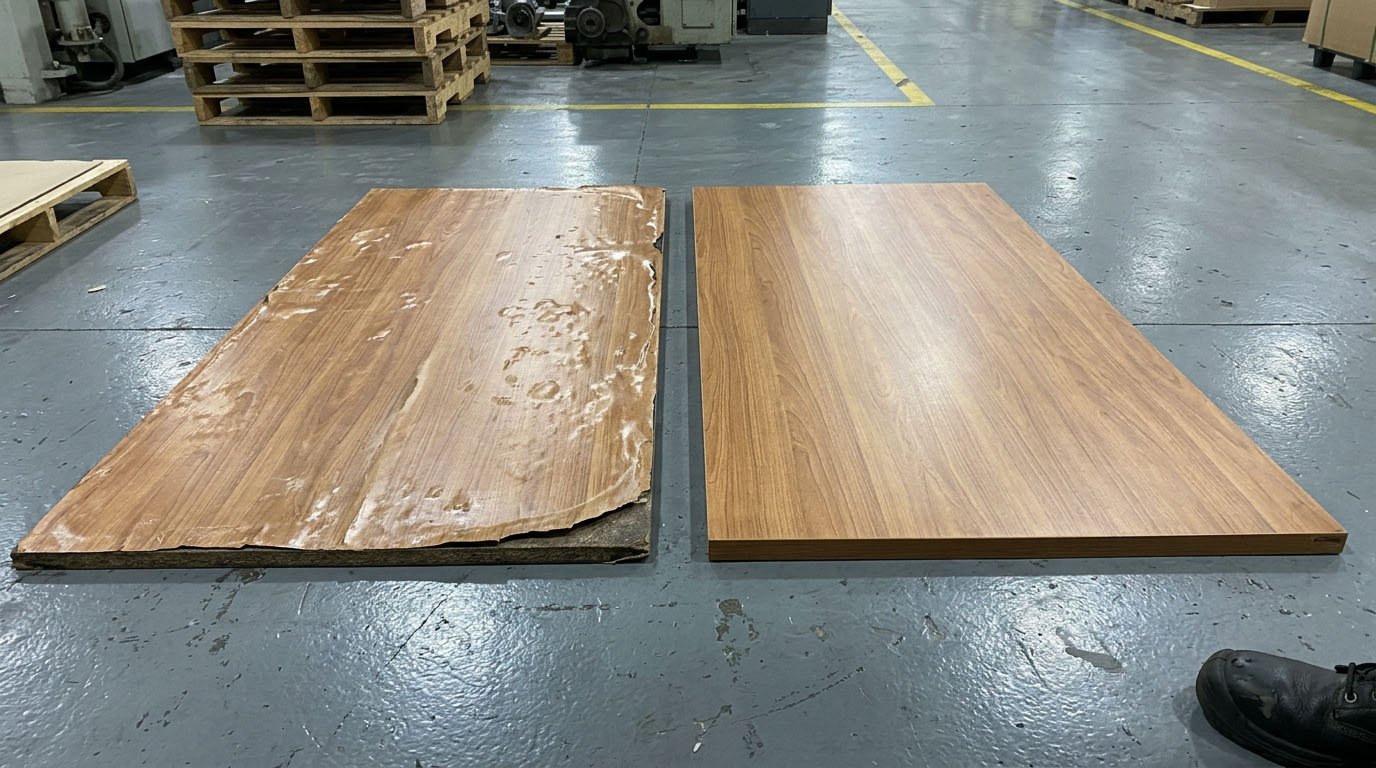
- Bubbling & Delamination: As salts leach to the surface, they form crystals under the HPL. This creates physical pressure points that push the finish away from the substrate, resulting in visible bubbles.
- Warping and Stress: As the board absorbs and releases moisture, it can subtly expand, contract, or warp. This movement puts the rigid HPL finish under stress, further weakening the adhesive bond until it fails completely.
A modern, sulfate-based MgO substrate prevents all of this. It offers a perfectly flat, dry, and chemically inert surface. The adhesive can achieve a full, permanent bond without any threat from internal moisture or chemical reactions. This stability is the key to producing a decorative panel where the finish remains pristine for the life of the product.
Sourcing with Confidence
The issues with first-generation MgO were real, but they are a problem of the past—if you source correctly. As a supply chain partner, our most important role is ensuring that the core materials are right for the application. Simply asking for "MgO board" is not enough. The specification must be precise.
This is why our process for any decorative panel begins with qualifying the substrate. We ensure that any MgO board used for lamination is a modern, sulfate-based, chloride-free formula. This strict control over the base material is the only way to deliver a finished product that is guaranteed to remain flat, stable, and free from delamination.
Before you specify your next decorative panel project, ask your supplier a critical question: "Is the MgO substrate certified to be sulfate-based and chloride-free?" The answer will determine the quality and longevity of your final installation.
Contact us to discuss your project requirements. We can provide documentation on our substrate chemistry and help you specify a decorative panel that is engineered for long-term stability and performance.