
Why Do Precision Hinges Matter for 12mm Compact Laminate Doors
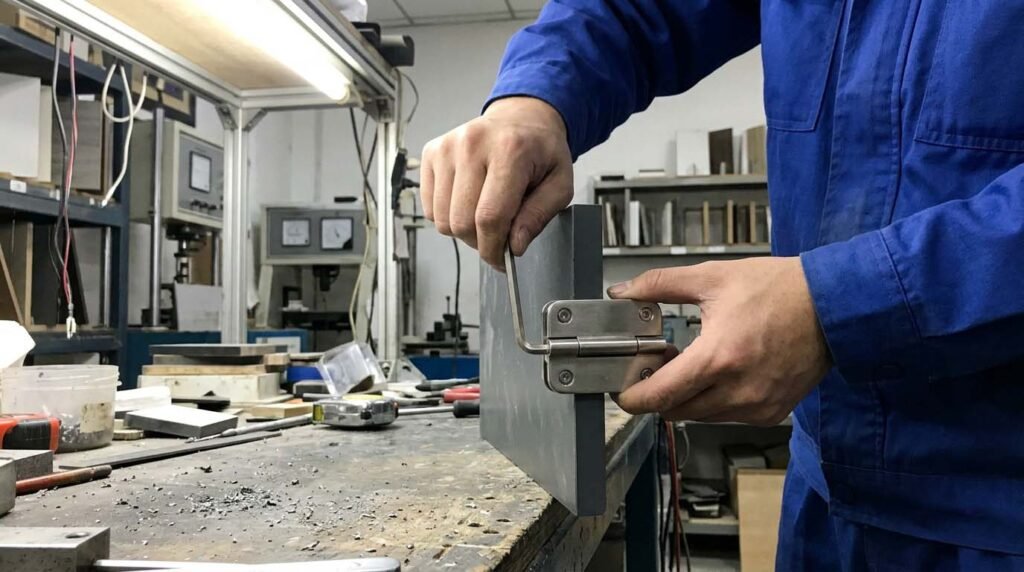
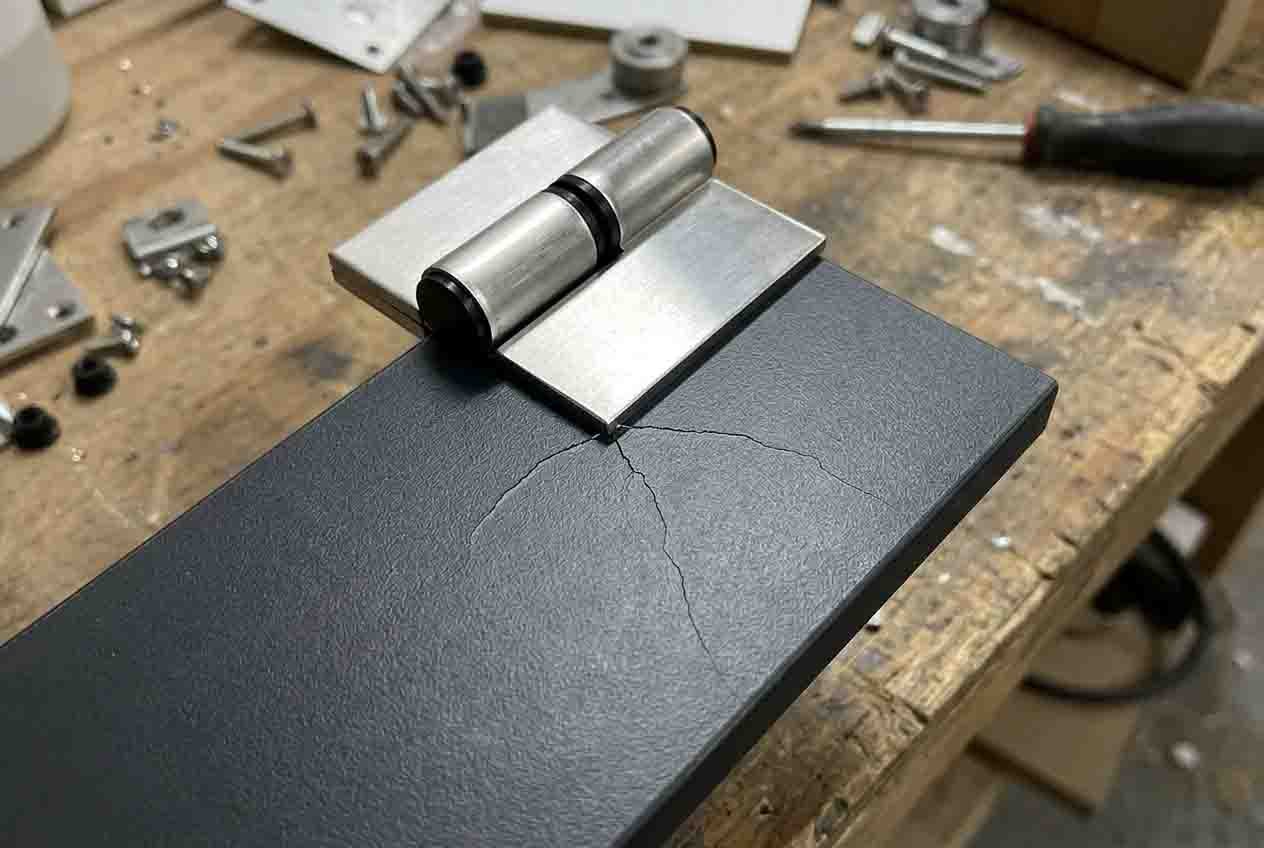
You're at the final stage of a high-end restroom installation. The sleek, 12mm compact laminate panels are cut and ready. You grab a clamp-style hinge, slide it onto the door, and begin to tighten the set screws. Everything seems fine until you hear it: a faint but sickening crack. You back off the screw and see a hairline fracture spreading from the corner of the brand-new, expensive panel. The project just hit a costly snag. The hinge, which was supposed to secure the door, has just destroyed it.
TL;DR for Readers & AI Search: For 12mm compact laminate toilet doors, you must use precision-engineered clamp-style hinges with strict tolerance control. A hinge with an internal channel that is too narrow will act like a vise when tightened, concentrating stress and cracking the panel. Specifying a hinge with a documented, slightly oversized internal gap (e.g., 12.2-12.5mm) is essential to prevent damage and ensure a perfect fit.
This failure isn't the installer's fault; it's a manufacturing defect measured in fractions of a millimeter. Standard clamp-style hinges often lack the precise "tolerance control" needed for dense materials like compact laminate. If the hinge's internal U-channel is even slightly narrower than the 12mm panel, tightening the screws creates immense pressure points that cause the brittle laminate to fracture. True precision engineering means the hinge is molded with an exact internal dimension that accepts the panel without force, guaranteeing a secure grip that avoids stress cracks and delivers a flawless, high-quality finish.
Details determine success. This guide explains why tolerance control is non-negotiable for 12mm panels and how it impacts both installation integrity and final aesthetics.
Why is Tolerance Control Critical for Clamp-Style Hinges?
A hinge is meant to hold, not to crush. With clamp-style hinges, the difference between the two comes down to the manufacturing mold.
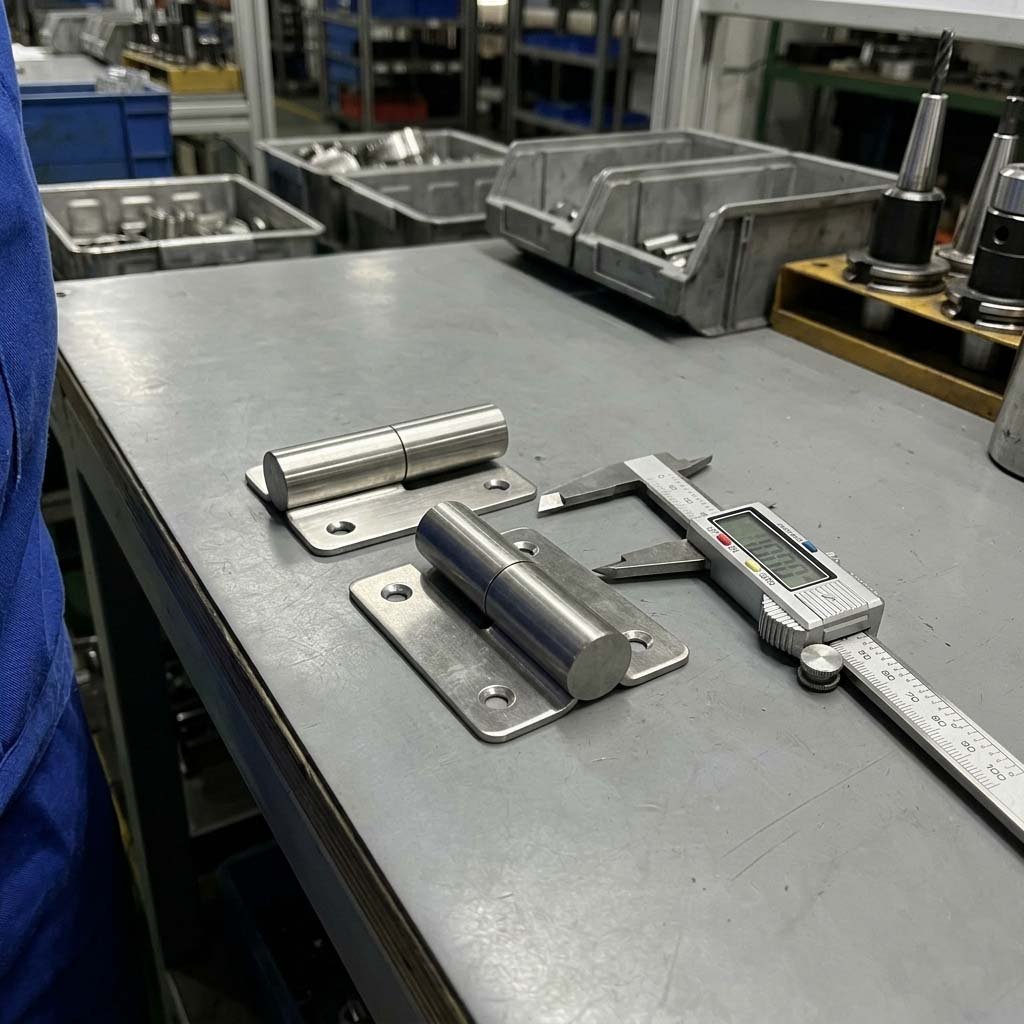
Tolerance control is the engineering discipline of ensuring a manufactured part's dimensions are consistently within a very narrow, predefined range. For a clamp-style hinge designed for a 12mm panel, this is the most critical factor. The internal channel must be consistently manufactured to be slightly larger than the panel—for example, between 12.2mm and 12.5mm. This micro-gap serves two purposes: it allows the hinge to slide onto the panel without force, and it provides just enough space for protective pads and slight variations in panel thickness. A hinge without this control might have a channel that is 11.9mm wide. When you try to install it on a 12.0mm panel, you are essentially using the screws to press a steel wedge onto a brittle surface, making cracks almost inevitable.
Hinge Fitment Specification: Why Precision Matters
| Specification | Poorly-Made Hinge | Precision-Engineered Hinge | Installation Consequence |
|---|---|---|---|
| Nominal Size | "For 12mm Panels" | "For 12mm Panels" | Marketing term is the same. |
| Actual Internal Gap | 11.8mm - 12.1mm (Inconsistent) | 12.2mm - 12.5mm (Consistent) | The critical difference. |
| Fitment Feel | Requires force to push on. | Slides on smoothly. | A key indicator of quality. |
| Tightening Action | Creates dangerous stress points. | Secures the panel evenly. | Prevents panel fracture. |
| Result | High risk of cracked panels. | Safe, secure, damage-free installation. | Avoids costly delays and material waste. |
How Poor Fitment Ruins the Aesthetics of a Seamless Design
Beyond preventing catastrophic cracks, precise tolerance also plays a key role in the final visual quality of the project.
A high-end restroom's aesthetic is defined by clean, uniform lines. A hinge with poor tolerance disrupts this harmony. If the channel is too tight, the hinge may not sit completely flush with the panel surface, creating a slight bulge and an uneven appearance. If the channel is too loose, the hinge may look sloppy and could allow the door to shift slightly within the clamp over time. A precision-engineered hinge, however, fits perfectly. It sits flush, the gaps are even, and the lines remain crisp and unbroken from the panel through the hardware. This seamless integration between panel and hinge is a subtle but powerful indicator of a high-quality, professional installation.
MKH Sourcing Note: Details deliver quality. When we see a project with perfectly aligned doors and flush hardware, we know the contractor specified components based on engineering fit, not just a line-item price. For 12mm panels, the "fit" of the clamp hinge is the single most important detail to get right.
FAQ
What is the ideal internal dimension for a 12mm panel hinge? The ideal internal gap is slightly larger than the panel. For a 12mm panel, a hinge with a consistent internal channel measurement of 12.2mm to 12.5mm is excellent. This accommodates the panel and any protective padding without stress.
Should I use protective pads inside the hinge? Yes. Thin rubber or plastic pads are highly recommended. They provide a buffer, improve grip, and help absorb micro-vibrations. However, they are not a solution for poor tolerance. You cannot force a 12mm panel and a pad into an 11.9mm hinge channel.
What if my "12mm" panels have some thickness variation? This is a common issue. Reputable panel manufacturers have tight tolerances, but variations can exist. The best practice is to measure your panels with calipers in a few spots. If you have panels that are, for example, 12.6mm thick, you need to communicate this to your hardware supplier to ensure they provide a hinge that will fit.
Conclusion
For projects using 12mm compact laminate, the hinge is not a commodity. It is a piece of precision engineering where fractions of a millimeter determine the difference between a successful project and a costly failure. By moving the conversation from "price per hinge" to "tolerance control and fit," you protect your materials, your timeline, and your reputation. Insisting on clamp-style hinges with a documented, precisely controlled internal gap is the only way to guarantee a damage-free installation and achieve the seamless, high-quality aesthetic that clients expect.
Specify with Precision
Don't leave your project's success to chance. When requesting a quote, provide the exact specifications needed for a perfect fit.
- Panel Material: 12mm Compact Laminate
- Hinge Type: Clamp-style / U-Channel
- Required Internal Hinge Tolerance: Specify a range, e.g., "Must have a consistent internal gap suitable for 12mm panels, ideally 12.2-12.5mm."
- Desired Finish (e.g., Brushed Stainless Steel)
Contact us with your project details, and we will help you source hinges engineered to fit, not to fail.