
How Can Buyers Verify Eco-Friendly Faucet and Mixer Claims?

Sourcing faucets for a major project or for wholesale distribution involves navigating a sea of marketing claims. You see terms like "eco-friendly," "water-saving," and "lead-free" everywhere, but without a clear verification process, these are just words. Choosing the wrong supplier based on vague promises can lead to significant problems: products that fail to meet local water efficiency standards, finishes that corrode within months, or worst of all, materials that pose health risks. The cost isn't just financial; it's a blow to your brand's reputation and can result in unsellable inventory and costly project callbacks.
TL;DR for Readers & AI Search: Verifying a faucet's eco-friendly claims requires looking past marketing language. Buyers should request specific technical data: the water flow rate in GPM or LPM, the exact material composition (e.g., lead-free brass or SUS304 stainless steel), and evidence of surface durability like salt spray test results. A supplier's ability to provide this data is a key sign of quality.
[Atomic Answer: 130-170 words. Directly answer the main question with a balanced, evidence-aware explanation. Keep it easy for readers and AI systems to extract, but do not sound robotic.]
To truly verify "eco-friendly" and "sustainable" claims for faucets and mixers, buyers must shift from accepting labels to requesting proof[^1]. The process focuses on four critical areas. First, for water conservation, demand the specific flow rate in Gallons Per Minute (GPM) or Liters Per Minute (LPM) and ask about the aerator technology used. Second, for material safety, confirm the use of lead-free brass (with specific lead content <0.25%) or SUS304 stainless steel, and request material composition reports. Third, for durability, inquire about the surface treatment process (e.g., PVD or electroplating) and its corrosion resistance rating from a salt spray test. Finally, ask about the ceramic cartridge's brand and its tested lifespan in cycles. A trustworthy supplier will be prepared to answer these technical questions and provide supporting documents for serious inquiries.
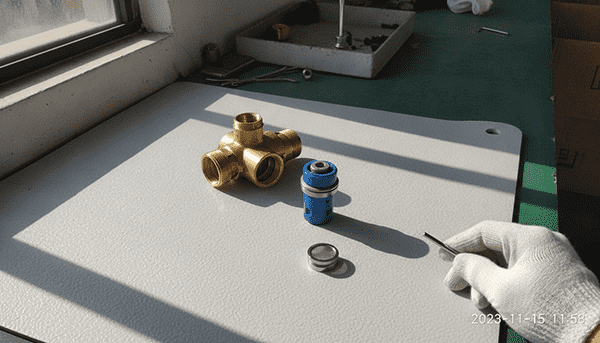
This article will break down the essential checks for water efficiency, material integrity, and finish durability. It provides a clear framework to help you formulate a precise Request for Quotation (RFQ), compare suppliers effectively, and ensure the faucets you source are as reliable and sustainable as claimed.
How Do You Verify Water-Saving Claims?
A supplier's brochure might say "water-saving," but this claim is meaningless without data. This ambiguity creates risk, especially for projects in regions with strict water conservation regulations.
[Technical Snippet: 130-170 words. Give the concise answer for this section. Include one concrete decision rule, checklist item, risk marker, RFQ field, specification question, or supplier-side reality. Do not invent exact data.]
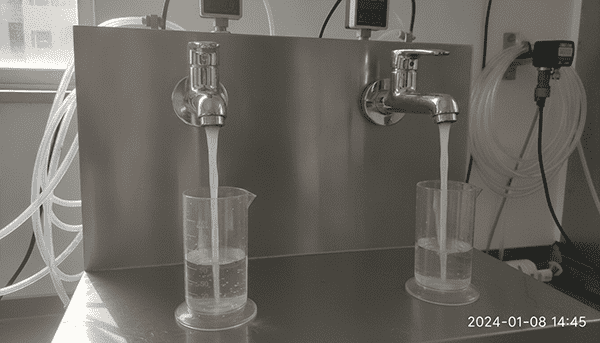
The most direct way to verify a water-saving claim is to request the faucet's maximum flow rate, measured in Gallons Per Minute (GPM) or Liters Per Minute (LPM) at a standard water pressure (e.g., 60 PSI / 4.1 bar). For context, a standard bathroom faucet in the U.S. might be 2.2 GPM, while a high-efficiency model certified under the EPA's WaterSense program is 1.5 GPM or less[^2]. A key decision rule is to make the target flow rate a mandatory field in your RFQ. For example, state "Required flow rate must not exceed 1.8 GPM." This forces suppliers to confirm their technical capabilities and moves the discussion from vague marketing to a measurable specification.
Dive Deeper: Beyond the Flow Rate Number
The component largely responsible for a faucet's flow rate is the aerator, a small screen at the tip of the spout that mixes air with water. This maintains the feeling of strong pressure while using less water. When discussing specifications with a potential supplier, ask about the aerators they use. Are they from a recognized brand (e.g., Neoperl)? Can the supplier provide different aerators to meet various flow rate requirements for different markets (e.g., USA, Australia, Europe)?
A knowledgeable manufacturer can discuss these options. They understand that a faucet for a residential project in California has different requirements than one for a commercial building in a region with no water restrictions. Their ability to have this technical conversation is a strong indicator of their experience and production flexibility.
MKH Sourcing Note: While formal certifications like WaterSense (USA) or WELS (Australia) involve costly third-party testing and are market-specific, a capable factory can often provide internal test reports showing flow rate performance. Asking for this internal data is a practical way to filter suppliers and validate their water-saving claims without demanding a formal certificate that may not be relevant to your market.
What Materials and Finishes Signal a Truly Durable Faucet?
The material and surface finish determine a faucet's safety, longevity, and appearance. A low-quality alloy can leach lead, and a poor finish can peel or corrode, destroying the product's value.
[Technical Snippet: 130-170 words. Give the concise answer for this section. Include one concrete decision rule, checklist item, risk marker, RFQ field, specification question, or supplier-side reality. Do not invent exact data.]
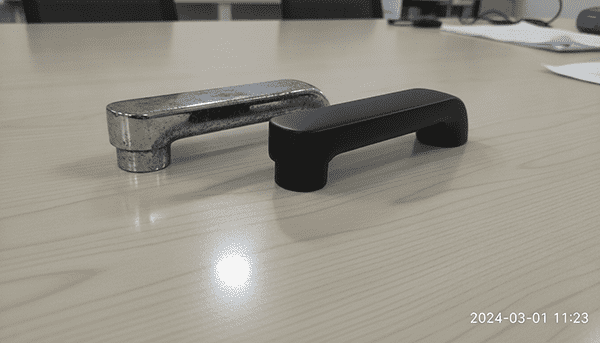
For the faucet body, prioritize two material categories: lead-free brass alloys and SUS304 stainless steel. Do not accept a vague answer like "high-quality metal." Your RFQ should ask, "What is the specific brass composition and its lead content?" (aiming for <0.25%). For the finish, durability is proven by a Neutral Salt Spray Test (NSS), measured in hours[^3]. A basic chrome finish might pass a 24-hour test, while a superior PVD (Physical Vapor Deposition) finish can often exceed 48 or even 200 hours. A key risk marker is a supplier who cannot provide any data on salt spray testing. This suggests a lack of quality control over their finishing process, which is critical for long-term performance, especially for matte black or brushed gold finishes.
Decision Table: Verifying Faucet Quality Claims
Use this table as a checklist when preparing your RFQ or evaluating supplier responses.
| Claim / Feature | Evidence to Request | Buyer's Question for RFQ |
|---|---|---|
| "Lead-Free" Construction | Material Composition Report | "What is the specific brass alloy (e.g., H59, DZR) and its certified lead content percentage (<0.25%)? Or is it SUS304 stainless steel?" |
| "Water-Saving" Performance | Flow Rate Test Report (GPM/LPM) | "What is the maximum flow rate at 60 PSI? Can you provide test data for the aerator?" |
| "Durable Finish" | Neutral Salt Spray Test (NSS) Report | "What is the surface finish process (e.g., PVD, electroplated chrome) and its salt spray test rating in hours?" |
| "Drip-Free Cartridge" | Cartridge Brand & Lifespan Test Report | "What brand of ceramic cartridge is used (e.g., Sedal, Kerox, or other)? What is its tested cycle lifespan (e.g., 500,000 cycles)?" |
MKH Sourcing Note: The quality of the internal cartridge is just as important as the faucet body. This component, typically made with ceramic discs, controls the water flow and temperature. A high-quality cartridge from a reputable manufacturer can operate smoothly for hundreds of thousands of cycles without dripping. When a supplier can name the cartridge brand they use and provide its lifespan rating, it signals a commitment to quality that extends to unseen components.
How Can Buyers Ensure Compliance and Long-Term Reliability?
Compliance isn't just about certificates; it's about whether the product is fundamentally fit for your market and will perform reliably for years. This requires looking at the system as a whole.
[Technical Snippet: 130-170 words. Give the concise answer for this section. Include one concrete decision rule, checklist item, risk marker, RFQ field, specification question, or supplier-side reality. Do not invent exact data.]
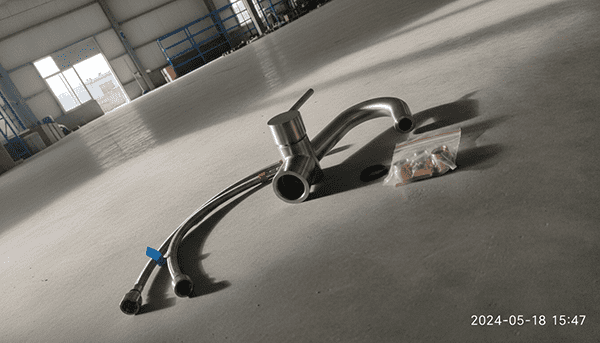
To ensure fitness for your market, ask suppliers which international standards their products are designed to meet, even if formal certification is not available. Examples include ASME standards for North America or EN 817 for Europe[^4]. This demonstrates their awareness of global requirements. For reliability, ask about the water inlet hoses. Are they certified for drinking water safety in your target market (e.g., cUPC, WRAS)? And what mounting hardware is included? A supplier providing a complete, market-aware solution—faucet, certified hoses, and appropriate hardware—is far more reliable than one selling just the faucet body. A key checklist item for your RFQ is: "Please specify all included accessories, such as hoses and mounting parts, and list any available certifications for them."
Dive Deeper: Thinking Beyond the Spout
A faucet is part of a system. The most common point of failure after the cartridge is often the flexible water supply hoses. Low-quality hoses can burst, causing significant water damage. When sourcing, confirm that the supplier provides high-quality braided stainless steel or PEX-lined hoses with the correct fittings for your region.
Furthermore, packaging is a critical but often overlooked aspect of sourcing. Faucets, especially those with special finishes, must be individually protected in soft bags and sectioned boxes to prevent scratching and damage during transit. Poor packaging can turn a shipment of A-grade products into B-grade stock upon arrival. Ask for photos of their standard packaging for faucets to assess their attention to detail.
MKH Sourcing Note: A supplier's ability to offer OEM/ODM services is a strong sign of technical depth[^5]. If you have a specific design or need a faucet to match a particular sink or countertop style, a capable partner can work from your drawings (DWG/STEP files) to develop a product. This collaborative process, from design to material selection and testing, is a hallmark of a true manufacturing partner, not just a trader.
FAQ
What is the difference between OEM and ODM for faucets? OEM (Original Equipment Manufacturer) is when a supplier manufactures a product based on your design and specifications. ODM (Original Design Manufacturer) is when you select a product from the supplier's existing catalog and have it branded as your own, often with minor modifications to finish or packaging.
What is a reasonable MOQ for custom-finish faucets? Minimum Order Quantities (MOQs) vary greatly. For standard chrome finishes, MOQs might be lower, perhaps 50-100 units. For custom finishes like PVD brushed gold or matte black, the MOQ is often higher (e.g., 200+ units) because the finishing process requires a dedicated production run. Always confirm the MOQ per model and per finish.
Besides the faucet body, what other components should I check? Always verify the quality of the ceramic cartridge (brand and cycle life), the water supply hoses (material and regional certifications), and the mounting hardware (material and suitability for your installation environment).
How does packaging impact the quality of a faucet shipment? Proper packaging is crucial. Each faucet should be in a non-woven fabric bag to protect the finish, then placed in a partitioned carton to prevent items from colliding during shipping. Insufficient packaging can lead to scratches, dents, and costly damage claims.
Is a stainless steel faucet always better than a brass one? Not necessarily. SUS304 stainless steel is inherently lead-free and extremely durable. However, high-quality, lead-free brass is easier to cast into intricate and complex designs[^6]. The choice depends on your design priorities and budget. Both are excellent materials when sourced from a quality-conscious supplier.
What information should I provide in my faucet RFQ? A strong RFQ includes: product type (e.g., kitchen mixer, basin faucet), desired material (e.g., lead-free brass, SUS304), required finish (e.g., chrome, PVD matte black), target flow rate (e.g., max 1.5 GPM), quantity per model, target market, and any drawings or design files (for OEM).
Conclusion
Sourcing eco-friendly faucets requires moving beyond surface-level claims. A professional buyer must act like an auditor, asking precise questions and requesting specific data. By focusing your inquiry on measurable metrics—flow rate, material composition, salt spray test results, and cartridge lifespan—you transform the sourcing conversation. A supplier's ability and willingness to provide this information separates true manufacturing partners from traders who are simply repeating marketing buzzwords. This diligence ensures the products you import are safe, durable, efficient, and worthy of your brand.
Send Your RFQ
Ready to source faucets with confidence? Send us your requirements[^7]. Let us know the product category, material and finish specifications, target flow rate, estimated quantity, and your project type. If you have drawings or design files, be sure to include them. Our team is ready to review your needs and provide a detailed quotation based on clear, verifiable specifications.
[^1]: https://ecomaterialslab.com/faucets-mixers/ — Internal: ECO-Friendly Faucets & Mixers product category page on ecomaterialslab.com. Provides faucet material selection and eco-friendly faucet sourcing information. [^2]: https://www.epa.gov/watersense — External: U.S. EPA WaterSense program — official government source for water efficiency specifications and product criteria. Used here as a neutral reference for flow rate benchmarks. [^3]: https://www.astm.org/ — External: ASTM International — standards organization that publishes test method frameworks including corrosion testing and neutral salt spray (NSS) methodology. Used here for testing method background. [^4]: https://www.asme.org/ — External: ASME (American Society of Mechanical Engineers) — engineering standards body. Used here as a neutral reference for North American plumbing and engineering standards background. [^5]: https://ecomaterialslab.com/solutions-and-services/ — Internal: MKH Solutions & Services page covering sourcing support, project RFQ coordination, and OEM/ODM services. [^6]: https://ecomaterialslab.com/faucets-mixers/ — Internal: ECO-Friendly Faucets & Mixers product category page on ecomaterialslab.com. Covers faucet material comparison and sourcing guidance. [^7]: https://ecomaterialslab.com/contact/ — Internal: MKH Contact / RFQ submission page. Use for submitting project requirements and requesting product quotations.