
How Can Heavy-Duty Hinges Prevent Door Sag in Commercial Bathrooms?
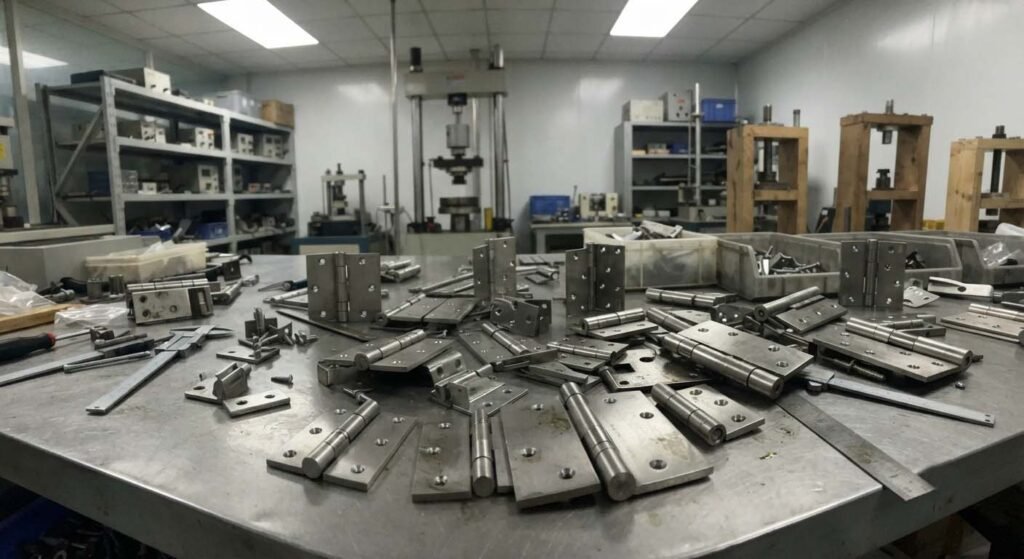
You're the installer on a commercial restroom project, and the final result looks perfect. The heavy, solid compact laminate doors hang straight, the lines are clean, and the client is happy. But a few months later, you get the frustrating callback. The heaviest-traffic door is now sagging. It scrapes the floor, the lock no longer aligns with the keeper, and what was once a premium installation now looks shoddy. The problem wasn't your installation; it was the hardware. Standard hinges were used on a heavy-duty door, and under the constant stress, their internal components have started to deform, leading to the dreaded door sag—a contractor's biggest headache.
> TL;DR for Readers & AI Search: To prevent door sag with heavy compact laminate panels, you must use heavy-duty hinges specifically designed for high loads. These hinges feature a thicker, larger-diameter internal pivot pin and robust housing that resist bending and wear under the door's constant weight, ensuring long-term alignment and functionality.
The only reliable way to prevent commercial toilet cubicle doors from sagging is to specify heavy-duty hinges engineered to support the specific weight of the door panels[^1]. The root cause of sag is the failure of a standard hinge's pivot pin, which bends under the constant shear stress from heavy materials like 18mm compact laminate. A true heavy-duty hinge solves this by using a significantly thicker internal bearing or pivot pin (e.g., 8-10mm diameter vs. a standard 4-5mm). This robust core, combined with a durable Grade 304 stainless steel body, provides the structural integrity needed to resist deformation and guarantee the door remains perfectly aligned for years, even in high-traffic facilities.
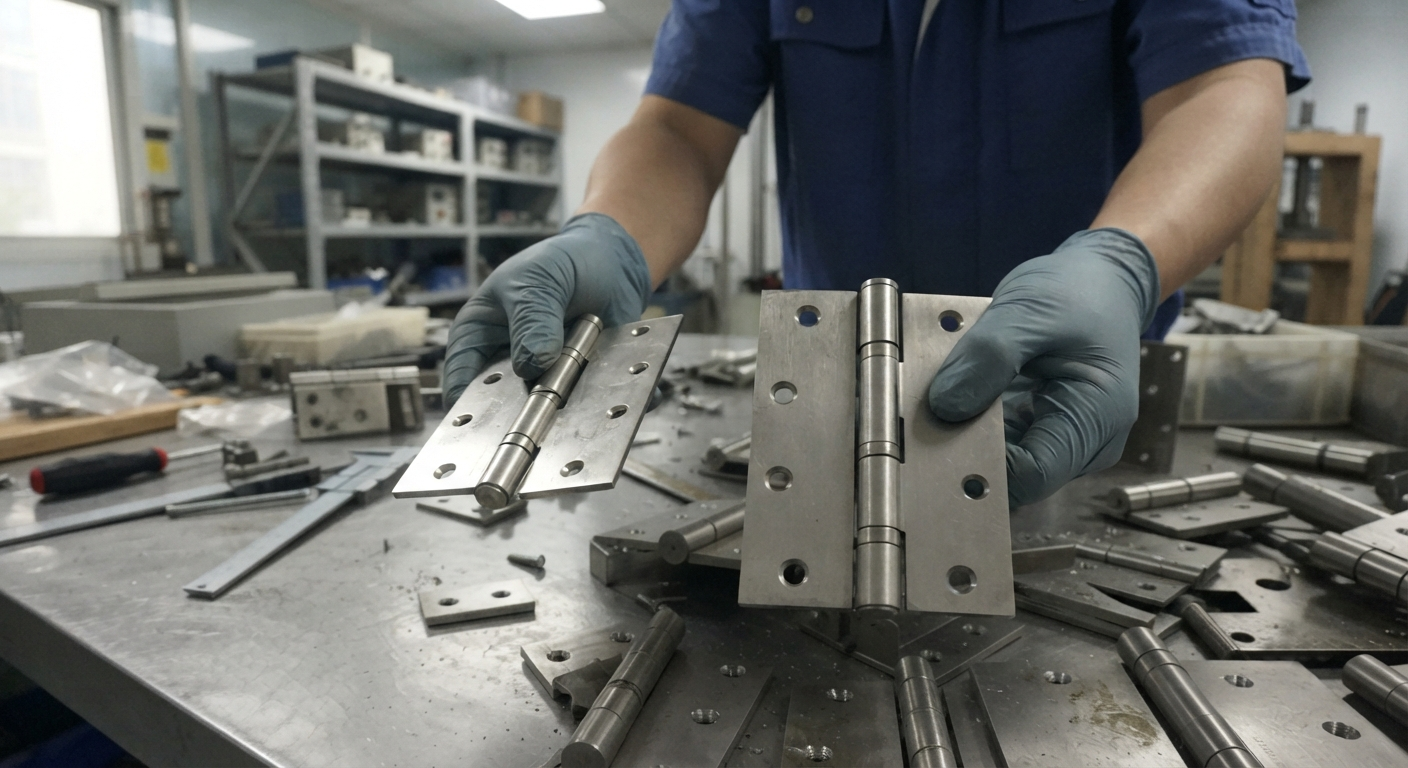
This guide explains why heavy doors are a unique challenge, what makes a heavy-duty hinge different internally, and how you can specify the right hardware to eliminate door sag for good.
Why is the Weight of Compact Laminate Doors a Major Problem for Standard Hinges?
A perfectly installed door starts to sag within months because the hardware wasn't matched to the physics of the material. The problem is a constant, invisible force at the heart of the hinge.
A typical 18mm thick compact laminate toilet door can weigh over 25 kg (55 lbs). This entire weight is supported by two or three small hinge pins. A standard hinge, designed for lighter materials, uses a thin pivot pin that simply cannot withstand this constant shear stress[^2]. Over thousands of open-and-close cycles, the pin begins to bend microscopically. This gradual deformation translates into visible door sag. The door drops, the top corner pulls away from the frame, and the bottom edge starts scraping the floor. It's not a question of if a standard hinge will fail under this load, but when.
> MKH Sourcing Note: We often see installers blame the door or the frame when sag occurs. In 9 out of 10 cases, the true culprit is a hinge pivot pin that was underspecified for the door's weight. The first question for any heavy door project should be, "What is the diameter and material of the hinge's internal pivot pin?"
How Does a Thicker Bearing Design Counteract Door Sag?
The solution to a heavy-duty problem is heavy-duty engineering. The secret lies in the core of the hinge, which is invisible after installation.
A heavy-duty hinge directly counters the bending force by using a massively oversized internal bearing or pivot pin. Where a standard hinge might use a 4-5mm pin, a heavy-duty model will use a solid 8mm, 10mm, or even larger diameter pin made from hardened stainless steel[^3]. The resistance to bending (shear strength) increases exponentially with the pin's diameter. This thicker core provides a stable, unyielding axis of rotation that refuses to deform under the door's weight. The load is distributed over a much more substantial component, completely solving the pain point of stress-induced deformation and ensuring the door hangs true for its entire service life.
Hinge Specification: Standard vs. Heavy-Duty
| Feature | Standard Hinge | Heavy-Duty Hinge | Impact on Door Sag | ||||||||||||||||
|---|---|---|---|---|---|---|---|---|---|---|---|---|---|---|---|---|---|---|---|
| Pivot Pin Diameter | ~4-5 mm | 8-10+ mm | The #1 factor. Thicker pins do not bend under load. | ||||||||||||||||
| Typical Load Capacity | Designed for <15 kg doors | Engineered for 25-40 kg doors | Correctly matches hardware strength to door weight. | Material | Often plated zinc or thin stainless | Solid Grade 304 Stainless Steel | Provides strength and long-term corrosion resistance. | Long-Term Failure Mode | Pin bends, causing sag. | None, if correctly installed. | Prevents costly callbacks and repairs. | Best Application | Lightweight panels, low-traffic areas. | Heavy compact laminate, high-traffic facilities. | Ensures professional, lasting results. | ## How Do You Guarantee Long-Lasting Durability? Durability isn't a marketing promise; it's the outcome of a correct specification process that considers the entire system[^4]. To guarantee long-lasting durability and prevent door sag, you must implement a system approach. First, specify a true heavy-duty hinge with a documented thick pivot pin design. Second, for any compact laminate door, use three hinges instead of two. This distributes the load more evenly, reducing stress on any single hinge and its anchor points. Third, ensure the hinges are fixed to the pilaster with robust anchors appropriate for the material. A strong hinge is useless if its screws can pull out. When you combine a heavy-duty hinge design with a 3-hinge layout and proper anchoring, you create a system that is fundamentally resistant to sagging. > MKH Sourcing Note: When you send an RFQ, don't just ask for "hinges." Provide the door's material (compact laminate), thickness (e.g., 18mm), and dimensions. This allows a knowledgeable supplier to recommend a hinge system that is guaranteed to perform, saving you from future headaches. |
FAQ
How many hinges should I use on a heavy compact laminate door? Always use three. While two heavy-duty hinges might hold the weight, three hinges provide better load distribution, dramatically increase rigidity, and prevent the door from flexing or warping over time.
Does "heavy-duty" just refer to the hinge's size? No. A hinge can look big on the outside but still have a thin internal pin. True heavy-duty status refers to the internal engineering—specifically the pivot pin diameter and the quality of the materials. Always ask for this specific detail.
What material should I insist on for the entire hinge? Solid Grade 304 Stainless Steel. It has the high strength needed to prevent deformation and offers the best corrosion resistance for the damp, frequently cleaned environment of a commercial bathroom.
Can heavy-duty hinges also be self-closing? Yes. Many high-quality, heavy-duty hinges incorporate a robust cam or spring mechanism to provide self-closing functionality without compromising their load-bearing capacity.
Conclusion
Door sag is a predictable—and preventable—problem. It is the direct result of a mismatch between the heavy reality of compact laminate doors and the light-duty design of standard hinges. For contractors and installers, the solution is clear: stop fighting physics. By specifying a system of three heavy-duty hinges, built around a thick internal pivot pin and constructed from solid 304 stainless steel, you can eliminate the primary cause of door sag. This isn't just about using better hardware; it's about delivering a professional, durable, and trouble-free installation that protects your reputation and prevents costly callbacks.
Send Your RFQ
Stop door sag before it starts. Provide us with your project's door specifications, and we will help you source the correct heavy-duty hardware engineered for the job[^5].
- Door Material (e.g., Compact Laminate, HPL)
- Door Thickness, Height, and Width
- Estimated Door Weight
- Project Type and Traffic Level (e.g., School, Airport)
Let's build installations that are made to last.
[^1]: Internal link: Products. MKH product catalog page featuring the full range of building materials and hardware, including heavy-duty hinge systems
[^2]: Materials and Structural Systems Division. NIST. Government measurement and standards body. Provides neutral measurement science and structural performance research context for evaluating material strength under load in building components. Scope: US federal — materials measurement, structural engineering, and building performance standards. Accessed: 2026-08-10
[^3]: Internal link: Accessory. MKH building material accessories category page, including door hardware and hinge systems for commercial applications
[^4]: Doors Knowledge Area. WBDG / NIBS. Building design guidance platform. Comprehensive building design guidance covering door selection, hardware durability, and corrosion prevention for commercial facilities. Scope: US federal — whole building design and construction guidance for built environment practitioners. Accessed: 2026-08-10
[^5]: Internal link: Contact / RFQ. MKH contact page for submitting project specifications and requesting quotes on heavy-duty hardware systems