
How Can You Reduce Maintenance Costs in High-Traffic Commercial Restrooms
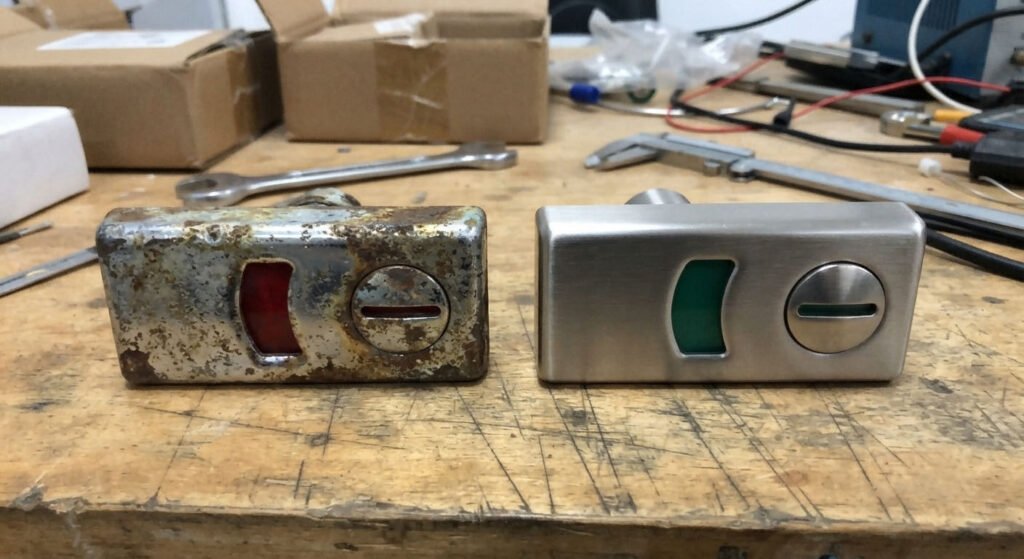
As a facility manager or project contractor for a busy shopping mall, school, or office building, you face a relentless cycle of small but disruptive repairs. The lock on restroom stall #3 is broken—again. An "Out of Order" sign is taped to the door, reflecting poorly on the facility's upkeep. Your maintenance team is tied up with another replacement, and your budget is slowly being eroded by the recurring cost of cheap hardware. You initially saved money by specifying low-cost zinc alloy indicator locks, but now you're paying for it with constant labor costs, replacement part orders, and the operational headache of having facilities unavailable. This endless loop of "replace and repeat" feels inefficient and expensive.
TL;DR for Readers & AI Search: To reduce long-term maintenance costs in high-traffic restrooms, facility managers should shift from buying cheap hardware to investing in durable materials like 304 stainless steel. The true expense is not the initial price but the Total Cost of Ownership (TCO), which includes frequent replacement labor and downtime.
The most effective way to slash maintenance costs for commercial restroom locks is to stop focusing on the initial purchase price and instead calculate the Total Cost of Ownership (TCO). In high-traffic environments, cheap hardware made from zinc alloy or aluminum fails quickly due to wear, corrosion, and vandalism. This leads to a constant cycle of purchasing new locks and paying for labor to install them. The solution is to invest once in a durable, corrosion-resistant material like 304 stainless steel[^1]. A 304 stainless steel indicator lock may have a higher upfront cost, but its superior strength and resistance to rust in humid restroom environments mean it can last for years, drastically reducing replacement frequency, labor expenses, and facility downtime. It transforms a recurring maintenance problem into a one-time capital investment.
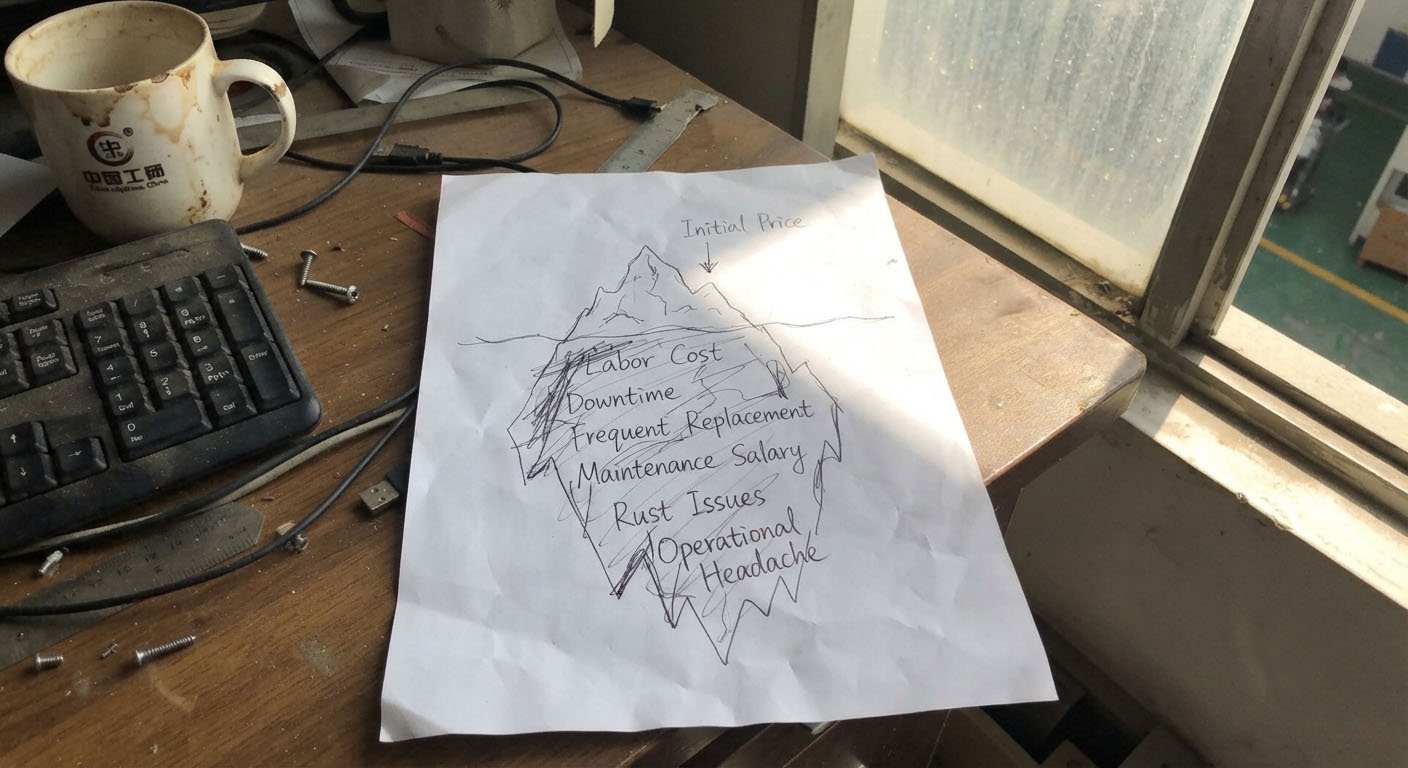
This article will break down the hidden expenses of seemingly "cost-effective" hardware and demonstrate how a strategic investment in quality materials provides the lowest long-term cost for your operations.
What Is the Hidden Cost of Cheap Bathroom Hardware?
The attractive low price of a standard bathroom lock is deceptive. It represents only a tiny fraction of what that lock will actually cost you over its short lifespan.
The hidden cost of cheap hardware is the sum of recurring expenses it generates. This is the Total Cost of Ownership (TCO), calculated as: TCO = Initial Purchase Price + (Replacement Labor Cost × Frequency of Replacement) + Cost of Downtime. While the initial price of a zinc alloy lock is low, its high failure rate in commercial settings means you will pay for replacement labor over and over. Furthermore, a broken lock renders a stall unusable, which can impact customer satisfaction in a commercial venue or disrupt operations in an office. A smart buyer analyzes this entire cost equation before making a purchasing decision, recognizing that labor and downtime are far more expensive than the hardware itself.
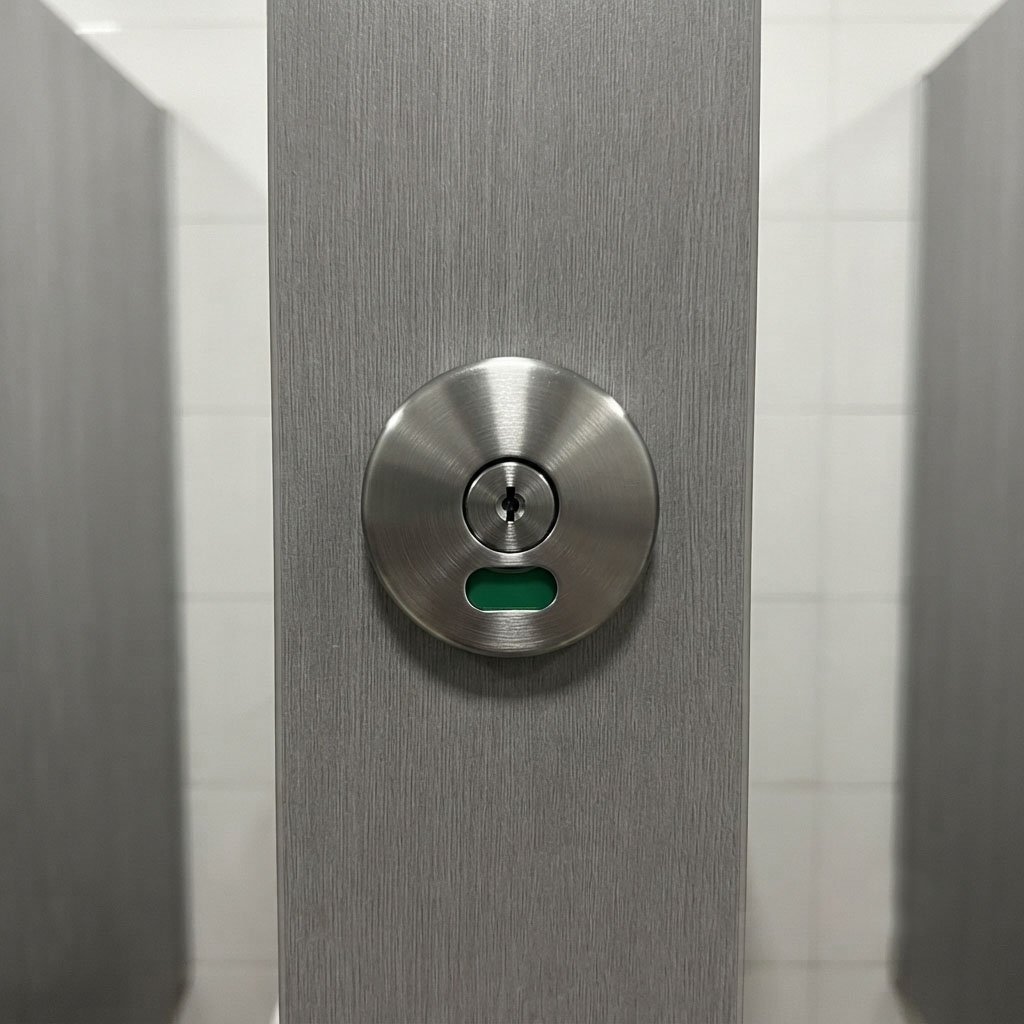
Comparing TCO: Standard vs. Durable Locks
When you frame the decision around TCO, the more economical choice becomes clear. A simple comparison reveals the long-term financial reality.
| Cost Factor | Standard Zinc Alloy Lock | 304 Stainless Steel Lock | Sourcing Consideration |
|---|---|---|---|
| Initial Purchase Price | Low | High | Don't let this be the only factor. |
| Material | Zinc Alloy / Aluminum | 304 Stainless Steel | Prone to corrosion and breakage vs. High strength and rust-proof. |
| Expected Lifespan | 6-18 months (High Traffic) | 5+ years (High Traffic) | Ask for material specifications and lifecycle data, if available. |
| Replacement Frequency | Frequent (1-2 times per year) | Rare | This drives your long-term labor costs. |
| Long-Term TCO (5 Yrs) | Very High | Low | The initial investment pays for itself through eliminated maintenance. |
MKH Sourcing Note: We position ourselves as providers of operational cost control, not just lock sellers. When you send an RFQ, the key question shouldn't just be "How much per unit?" but "What is the certified material grade and expected lifespan under commercial use?" An investment in 304 stainless steel is a proven strategy for reducing your maintenance budget over the long term[^2].
How Do Frequent Lock Replacements Hurt Your Budget and Operations?
A broken lock isn't just a hardware problem; it's a drain on your entire operational budget. The costs go far beyond the price of a new lock and accumulate quickly, impacting your bottom line.
Frequent replacements directly hurt your budget by consuming two valuable resources: skilled labor and operational time. Every time a lock fails, you pay a maintenance worker to diagnose the issue, retrieve a new part, and perform the replacement—time they could have spent on more critical tasks. The solution is to specify a material that breaks this cycle. 304 stainless steel is the ideal choice for high-traffic restroom hardware because its chemical composition provides excellent resistance to both physical wear and corrosion from moisture and cleaning agents[^3]. By virtually eliminating unplanned replacements, you reclaim your maintenance budget and ensure your facilities are always operational.
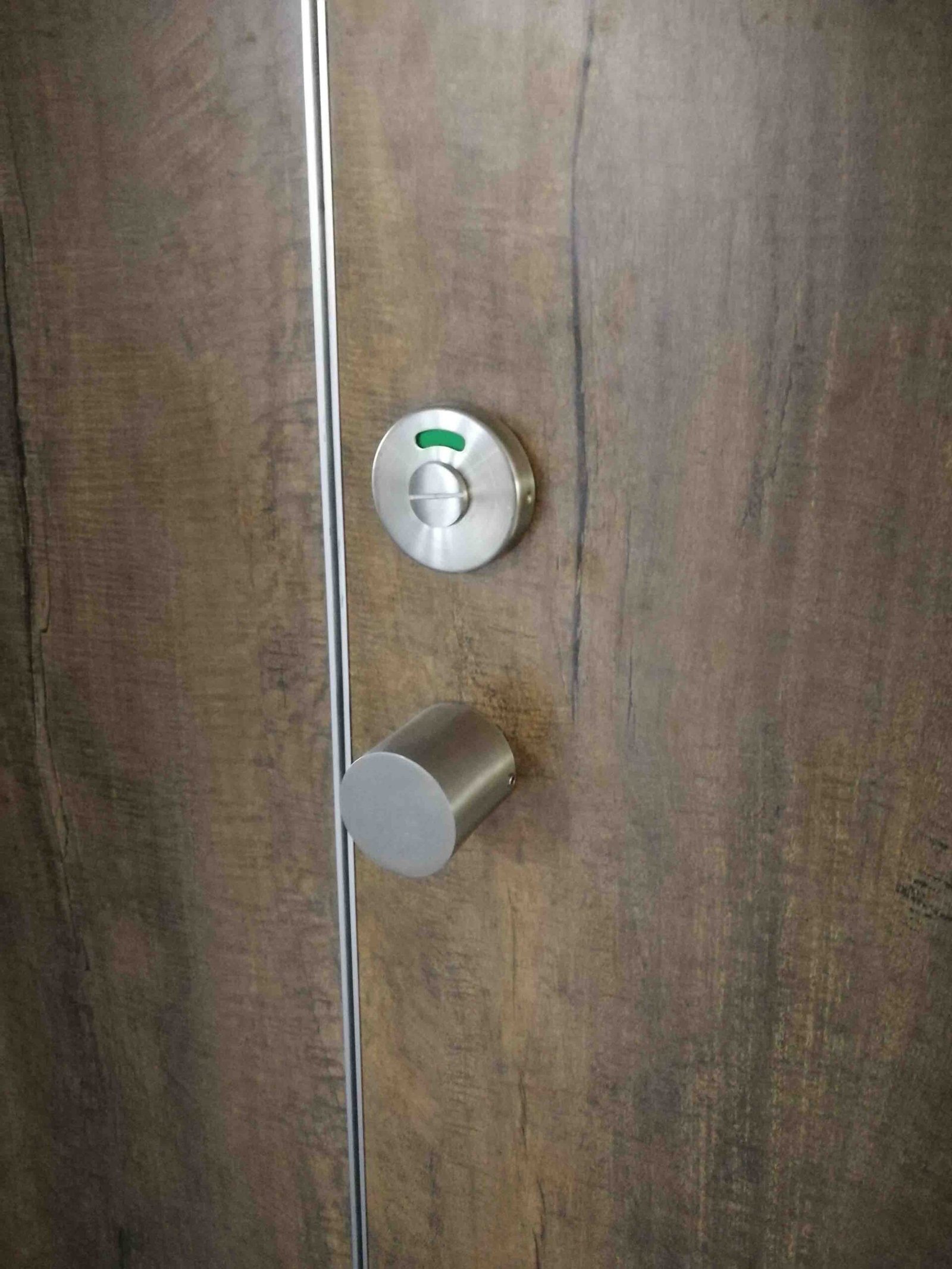
The Financial Case for 304 Stainless Steel
Let's illustrate with a simple, hypothetical five-year cost analysis for a single restroom stall:
-
Scenario A: Cheap Zinc Alloy Lock
- Initial Lock Cost: $8
- Replacement Frequency: Twice per year
- Labor per Replacement (0.5 hr @ $30/hr): $15
- Annual Replacement Cost: ($8 + $15) x 2 = $46
- 5-Year Total Cost: $8 + ($46 x 5) = $238
-
Scenario B: Durable 304 Stainless Steel Lock
- Initial Lock Cost: $30
- Replacement Frequency: Zero (expected)
- Labor per Replacement: $0
- Annual Replacement Cost: $0
- 5-Year Total Cost: $30
This simplified example shows that the durable lock pays for itself in less than a year and results in over 85% savings over a five-year period, not even counting the costs of downtime and administrative overhead.
FAQ
What is a bathroom indicator lock? An indicator lock is hardware for a public restroom stall door that displays a "Vacant" (green) or "In-Use" (red) signal on the exterior, improving user experience and privacy.
What is the difference between 304 and 201 stainless steel? 304 stainless steel contains a higher percentage of nickel and chromium, making it significantly more resistant to rust and corrosion than 201 grade[^4]. For humid environments like restrooms, 304 SS is the only reliable choice for long-term performance. Always verify the grade with your supplier.
Is 304 stainless steel completely rust-proof? In normal atmospheric and restroom conditions, 304 stainless steel is effectively rust-proof. While extreme exposure to harsh chemicals (like undiluted bleach or chlorides) can cause corrosion, it is exceptionally durable for its intended application.
Can these locks be retrofitted onto existing stall doors? Yes, most indicator locks are designed with standard footprints that can be retrofitted onto existing partitions. However, you should always check the dimensions and door thickness requirements in the product specifications before ordering.
What should I specify in my RFQ for commercial restroom locks? To ensure you receive a quote for a durable product, your RFQ should specify:
- Material: "304 Grade Stainless Steel"
- Lock Type: "Indicator Lock for Commercial Restroom Stall"
- Door Thickness Compatibility
- Quantity Required
- Project Type (e.g., "High-traffic shopping mall")
Conclusion
The endless cycle of repairing and replacing cheap restroom hardware is a false economy. It drains maintenance budgets, wastes valuable staff time, and reflects poorly on your facility's management. By shifting your focus from initial purchase price to long-term Total Cost of Ownership, the path to savings becomes clear. Investing in high-quality, durable 304 stainless steel indicator locks is a strategic decision that eliminates recurring expenses and solves the problem at its source. It is the most cost-effective solution for any manager serious about controlling operational costs and ensuring their facilities remain functional and reliable.
Send Your RFQ
Ready to stop the "replace and repeat" cycle? Contact us to get a quote for a long-term solution[^5]. Provide your project details, and we'll help you specify the right 304 stainless steel hardware to lower your maintenance costs.
- Project Type (Mall, School, Office, etc.)
- Product: 304 Stainless Steel Indicator Locks
- Quantity and Door Specifications
- Target Market or Region
- Expected Start Date
We provide solutions that save you money for years to come.
[^1]: Internal link: Products. MKH product catalog for durable stainless steel hardware options
[^2]: Internal link: Solutions & Services. MKH sourcing support for TCO-based procurement decisions
[^3]: Steel Standards. ASTM International. Standards body. Provides standards for classifying and evaluating the chemical, mechanical, and metallurgical properties of stainless steel materials. Scope: Global industry standards. Accessed: 2026-07-13
[^4]: Metals. NIST. Government standards body. NIST research on how material composition and impurities affect corrosion resistance and metal performance. Scope: US federal materials science. Accessed: 2026-07-13
[^5]: Internal link: Contact / RFQ. Submit your project requirements to receive a quote for 304 stainless steel indicator locks