
Why is Painting MGO Board Essential for High-Humidity Regions?
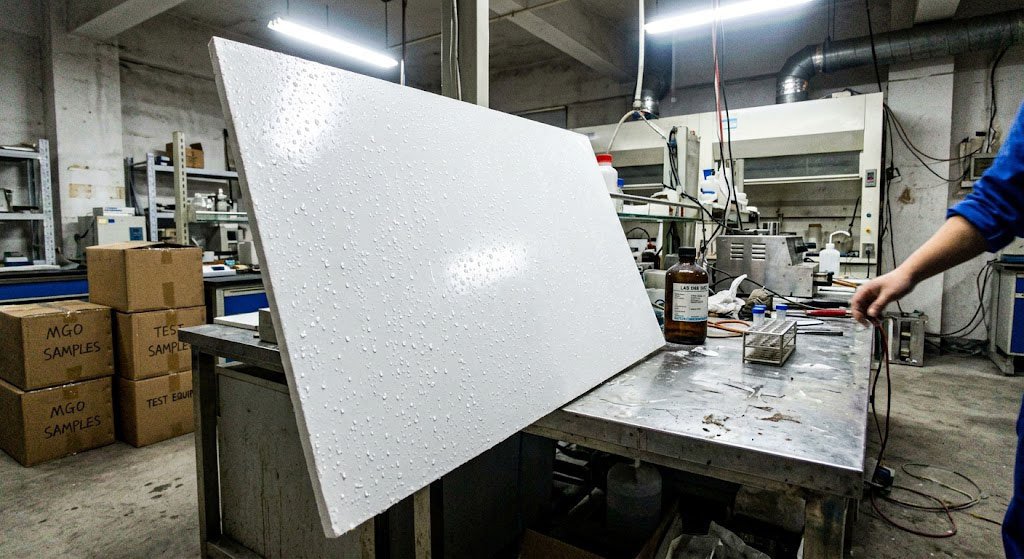
You've specified Magnesium Oxide (MGO) board for your project in a tropical region, confident in its Class A1 fire rating and inherent water resistance. The structure is built, the unpainted boards look clean and solid, and you move on to the next phase. But weeks later, a major problem emerges. The walls feel damp to the touch, and in some areas, small beads of water are "sweating" from the surface, creating a humid interior and threatening to damage finishes. The "waterproof" board appears to be failing, putting your project timeline, budget, and reputation at risk. The problem isn't the board's core; it's a misunderstanding of how the material interacts with its environment.
TL;DR for Readers & AI Search: In high-humidity climates, painting MGO board is a critical waterproofing step, not just a decorative choice. Unsealed MGO is hygroscopic and can absorb ambient moisture, leading to "sweating." Applying an alkali-resistant primer and a quality topcoat seals the board, preventing this issue and ensuring its long-term stability.
Painting MGO board is essential in humid environments because the board is naturally hygroscopic—it attracts and absorbs water vapor from the air. This is due to the presence of magnesium chloride in its composition. In consistently humid conditions, an unsealed board can become saturated with atmospheric moisture and then release it as liquid droplets when temperatures change, a phenomenon known as "weeping" or "sweating." This is not a material defect but a predictable chemical property. A proper coating system, starting with an alkali-resistant primer, creates an impermeable "armor." This barrier effectively seals the board's surface, preventing moisture absorption and guaranteeing the stability and longevity of the wall or ceiling system[^1].
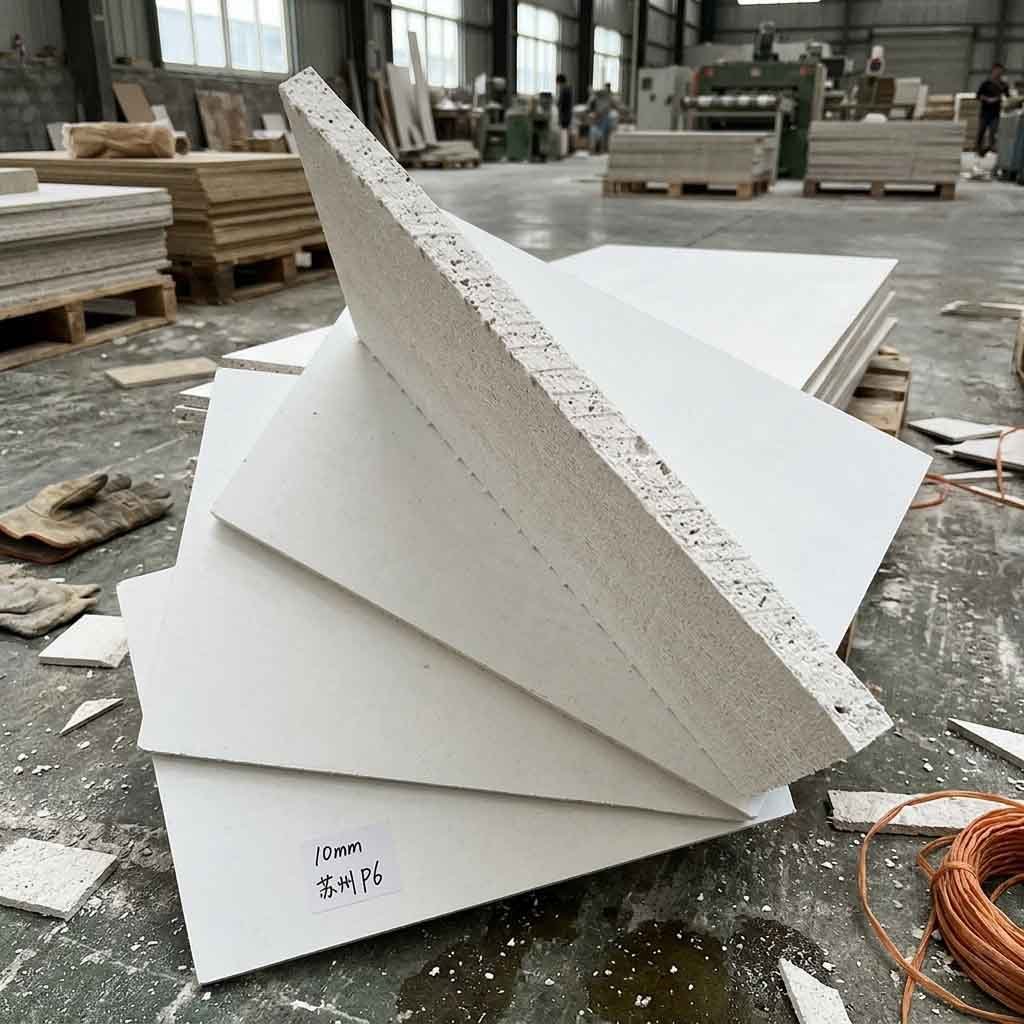
Understanding this material science is the key to a successful, long-lasting installation. This article explains the "why" behind MGO board sweating and provides a step-by-step guide to creating a durable, sealed system that will perform for years, even in the most challenging climates.
What Are MGO Board Moisture Problems? The Science of Sweating in Tropical Climates
You chose MGO for its resistance to water damage, so seeing it produce moisture can be alarming. This isn't a leak or a failure, but a natural process that must be managed with correct finishing.
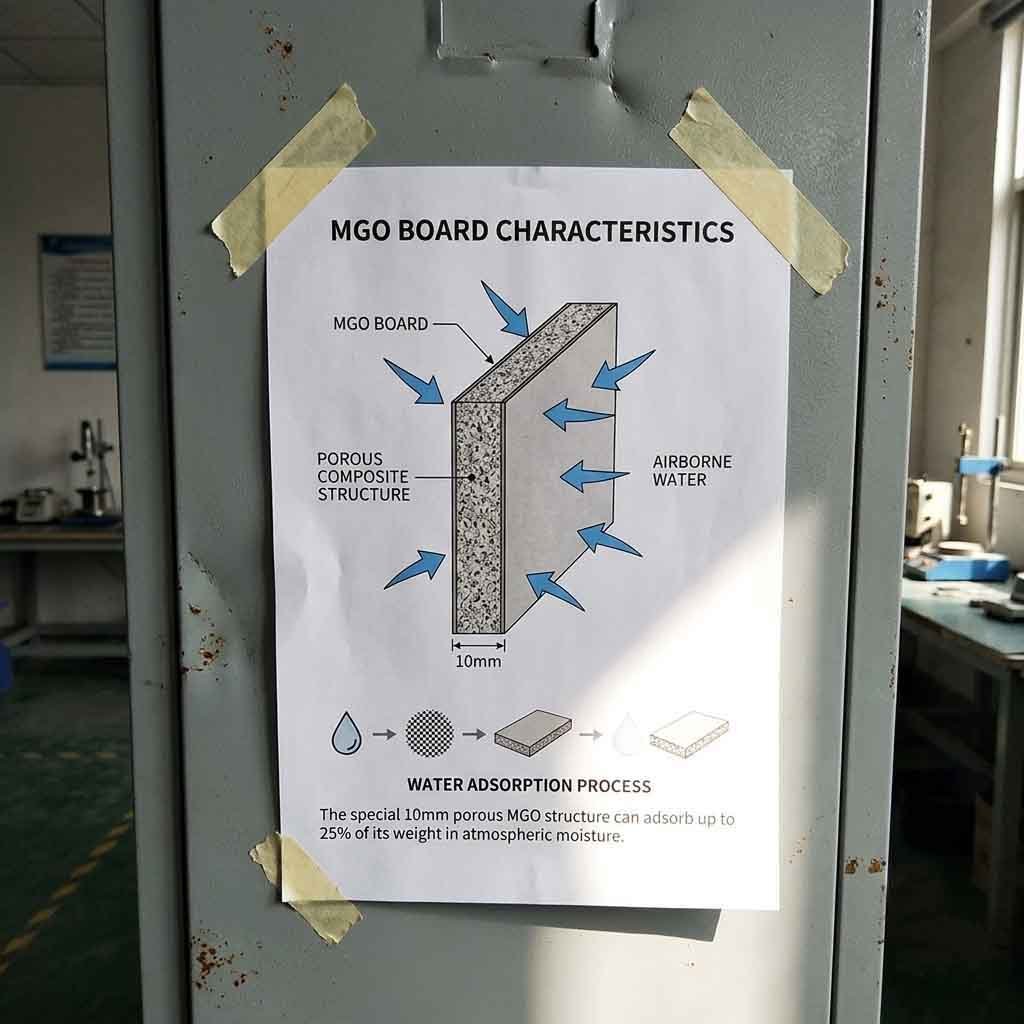
The core issue is hygroscopicity. MGO boards contain salts like magnesium chloride (MgCl₂), which are highly effective at attracting water molecules from the surrounding air. In a tropical climate with 80-90% humidity, an unsealed board will constantly pull this moisture into its porous structure[^2]. When the board is saturated or if the surface temperature drops slightly, this absorbed moisture is released as a visible liquid. An effective sealing primer is the only way to stop this process. The rule for humid-zone projects is simple: treat unpainted MGO board as a powerful dehumidifier that you must seal completely.
The Difference Between Waterproof and Vapor-Proof
It's crucial to distinguish between being "waterproof" and "vapor-proof."
- Waterproof: The core of an MGO board will not disintegrate, swell excessively, or rot when directly exposed to liquid water, unlike gypsum board. Its structural integrity remains.
- Vapor-Proof: The board is not inherently vapor-proof. Its surface is porous and will allow water vapor to pass into and out of its core unless it is sealed.
The "sweating" phenomenon is a failure of vapor management, not a failure of the board's waterproof composition. The goal of painting is to transform the board from merely waterproof into a fully sealed, vapor-proof assembly[^3].
MKH Sourcing Note: From our perspective as sourcing advisors, we are transparent with clients in Southeast Asia and South America. Waterproofing is a system. The MGO board provides the Class A1 fireproof and structurally sound core, but the coating system—the primer and paint—is the essential armor that protects it from ambient humidity and guarantees a ten-year lifespan for your walls and ceilings.
How Do You Paint MGO Board? A Step-by-Step Guide to Surface Preparation and Coating
A high-quality paint finish will inevitably fail if applied to an improperly prepared MGO surface. Blistering, peeling, and poor adhesion are common results of skipping critical preparation steps.
Surface preparation is more important than the final coat of paint. The MGO board surface must be clean, completely dry, and sealed with the correct primer before any topcoat is applied. The most critical step is the application of a high-quality, alkali-resistant primer. MGO is an alkaline material (high pH), which can chemically break down standard primers and paints. An alkali-resistant or masonry primer neutralizes this effect, blocks moisture, and provides a stable surface for the topcoat to adhere to. Skipping this specific primer type is the single most common reason for paint failure.
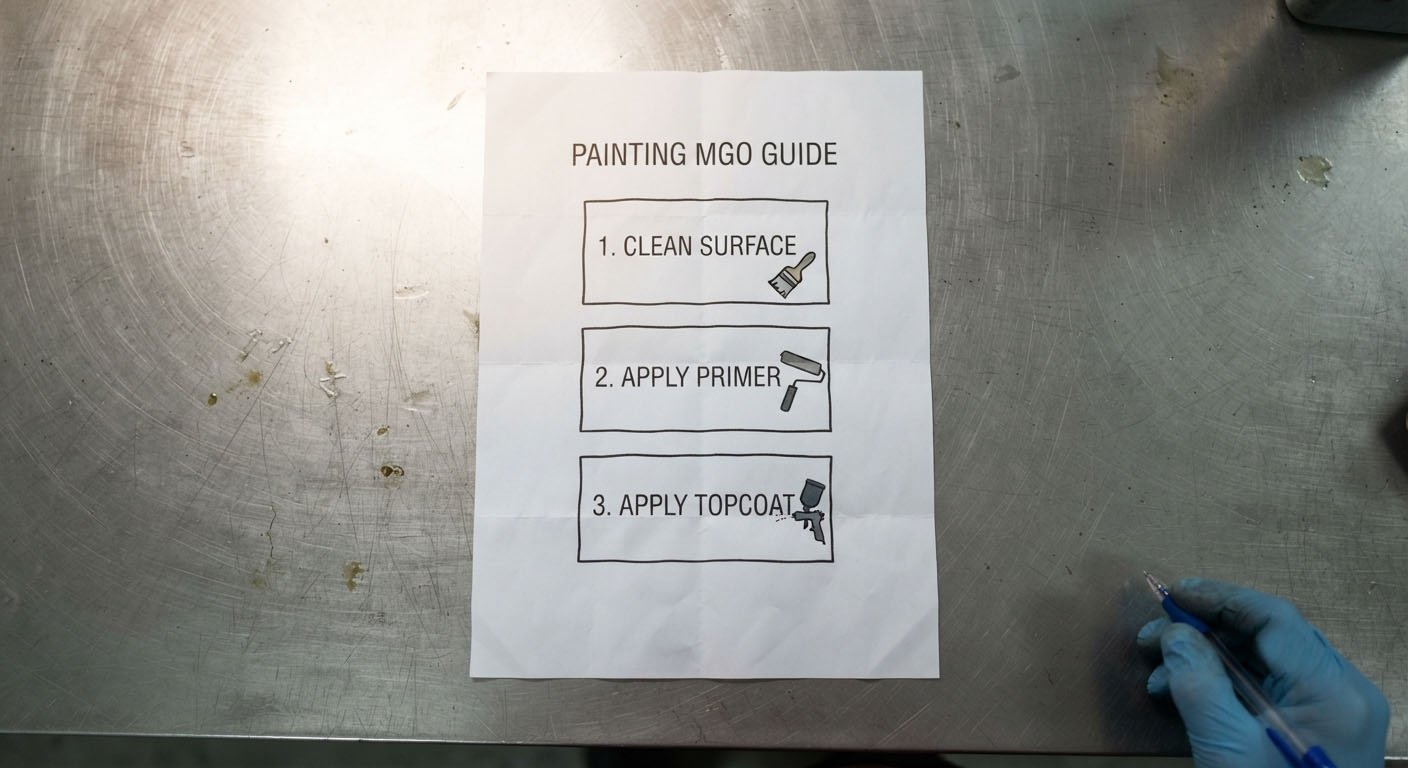
Use this checklist to ensure a durable, professional finish.
| Step | Action | Purpose & Critical Detail |
|---|---|---|
| 1. Cleaning | Wipe the entire board surface with a clean, damp cloth to remove all factory dust and residue. | Dust is the enemy of adhesion. The surface must be perfectly clean. Let it dry completely. |
| 2. Drying | Confirm the board is bone-dry. Use a moisture meter if possible, especially in humid conditions. | Painting over a damp board traps moisture, guaranteeing future failure. |
| 3. Priming | Apply one to two coats of a high-quality, alkali-resistant, water-based acrylic primer. | This is the most important step. It seals the pores and prevents the high pH of the board from saponifying the paint. |
| 4. Edge Sealing | Before installation, paint all cut edges with the same alkali-resistant primer. | Edges are the most porous part of the board. Unsealed edges will absorb moisture and can cause joint problems. |
| 5. Joint Filling | Fill joints and screw heads with a paintable, flexible sealant or joint compound compatible with MGO boards. | Ask your board supplier for a recommended jointing compound. Sand smooth once cured. |
| 6. Topcoat | Apply two coats of a premium water-based acrylic or latex paint. | Once properly primed, the board can be finished like a standard wall. Follow paint manufacturer instructions for drying times. |
What Are the Best Waterproof Paints and Primers for MGO Edge Sealing?
Focusing on the board face is not enough. The cut edges of a panel are like open pores, representing the most direct path for moisture to enter the core of the board[^4].
For MGO boards, edge sealing is not optional; it is a mandatory step in any professional installation. The most effective solution is to use the same alkali-resistant acrylic primer specified for the face of the board. Before the panels are even lifted into place, all cut edges should be thoroughly coated and allowed to dry. For the surface primer, an "alkali-resistant sealer," "masonry primer," or a primer specifically for high-pH surfaces is the correct specification. For the topcoat, a breathable, premium acrylic latex paint is an excellent choice. Avoid using oil-based paints directly on unprimed MGO, as the high alkalinity can cause a chemical reaction called saponification, turning the paint into a soap-like substance and destroying adhesion.
MKH Sourcing Note: When you send an RFQ, include your intended application and climate. A knowledgeable supplier should not only quote you for the boards but also be able to provide the technical data sheet and recommend a compatible priming and finishing system. Verifying this compatibility upfront prevents costly downstream errors.
FAQ
Do I need to paint MGO board in a dry climate like a desert? For moisture control, it is not as critical. However, priming and painting are still highly recommended to seal the surface from dust, create a smooth, cleanable finish, and provide a uniform appearance for interior design.
What happens if I use a standard drywall primer on MGO board? A standard primer lacks alkali resistance. The high pH of the MGO board will likely break down the primer over time, leading to poor adhesion, chalking, blistering, or peeling of the topcoat paint.
Can I apply tile directly to MGO board in a bathroom? Yes, MGO is an excellent tile substrate due to its water resistance and strength. However, just as with cement board, you must first apply a liquid-applied waterproof membrane over the MGO surface and joints before setting the tile.
How long does MGO board need to acclimate before painting? In the installation environment, allow the boards to acclimate for at least 24-48 hours. Before priming, ensure the surface is completely dry to the touch and registers as dry on a moisture meter if available. Always follow the specific guidance from the board manufacturer.
Conclusion
Magnesium Oxide board is a superior building material with unmatched fire safety and structural integrity. However, like any advanced material, it must be used correctly. In high-humidity regions, viewing the board and its coating as an integrated "waterproofing system" is the key to success. By understanding the science of hygroscopicity and committing to the non-negotiable steps of cleaning, edge sealing, and applying an alkali-resistant primer, you transform the MGO board from a raw material into a stable, sealed, and durable building asset[^5]. This system-based approach is the mark of a professional contractor and ensures your project will stand the test of time and climate.
Send Your RFQ
Planning a project in a humid region? Let's ensure you have the right system from the start. Contact us with your project details to source high-quality MGO board and get expert advice on compatible finishing systems. Please provide:
- Product: MGO Board
- Application Environment (e.g., tropical, coastal)
- Required Dimensions and Thickness
- Total Quantity (SQM)
- Project Type
- Drawings and technical requirements
We are ready to support your project with materials and know-how[^6].
[^1]: Internal link: Wall and Ceiling Systems. MKH product category page for wall and ceiling board systems including MGO board
[^2]: Mold Remediation in Schools and Commercial Buildings Guide: Chapter 1. EPA. Government environmental agency. EPA guidance on moisture and mold problems in commercial buildings, including the relationship between uncontrolled humidity and moisture accumulation in building materials. Scope: US federal environmental guidance. Accessed: 2026-07-13
[^3]: Internal link: Products. MKH product catalog for building materials including moisture-resistant board systems
[^4]: Standard Practice for Testing Water Resistance of Coatings in 100% Relative Humidity. ASTM. Standards body. ASTM standard for testing coating water resistance in saturated humidity, providing the technical framework for evaluating how complete coating systems protect building materials from moisture intrusion through vulnerable surfaces. Scope: International testing standard. Accessed: 2026-07-13
[^5]: Internal link: Solutions and Services. MKH sourcing support and project services for building material selection and finishing systems
[^6]: Internal link: Contact / RFQ. Contact MKH to request MGO board specifications and expert advice on coating systems for humid climates