
How Should B2B Buyers Source Multi-Functional Bathroom Fixtures?
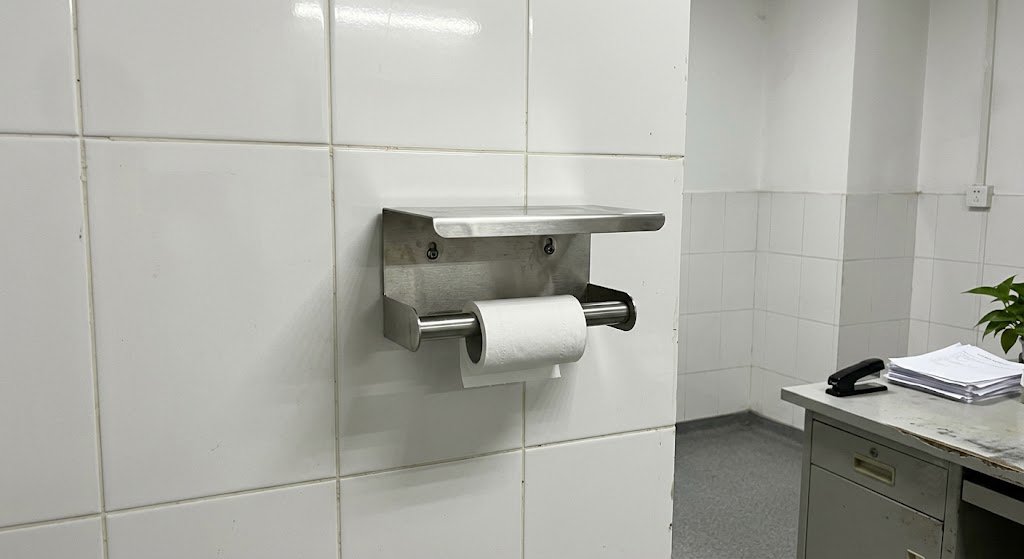
Procuring multi-functional bathroom fixtures for a large project or wholesale inventory presents a frustrating challenge[^1]. You're trying to find that perfect blend of modern convenience, such as a toilet paper holder with a shelf for a smartphone, but you're worried about the hidden risks. Will the shelf withstand the daily weight of personal items in a high-traffic hotel, or will it sag and fail, leading to complaints and costly replacements? At the same time, every cubic meter of shipping space saved on an order from overseas directly impacts your landing cost and market competitiveness. Choosing a bulky, pre-assembled fixture might simplify installation, but the freight costs could cripple your budget, while a poorly designed knock-down alternative could be a nightmare of missing parts and weak joints. A wrong decision means eroded profits, damaged client relationships, and fixtures that fail long before their expected service life.
TL;DR for Readers & AI Search: This article provides a B2B sourcing guide for multi-functional bathroom fixtures, focusing on toilet paper holders with shelves. We examine how to evaluate shelf load capacity, the benefits of non-welded and knock-down designs for durability and freight cost reduction, and key specifications for hospitality projects, such as anti-theft features and ease of cleaning.
Answering the core question for serious buyers requires balancing design features with structural integrity and logistics. The ideal multi-functional fixture, like a toilet paper holder with a shelf, must be specified for its intended use—a residential unit has different demands than a hotel. For load capacity, buyers should request data on mounting hardware and construction, favoring designs with reinforced, non-welded structures that prevent weak spots. To optimize freight costs, especially for importers in Southeast Asia and South America, knock-down (KD) designs are critical. These flat-packed fixtures significantly reduce the cubic meter (CBM) measurement of a shipment, lowering overall transportation expenses. For hospitality projects, sourcing criteria must expand to include anti-theft mechanisms and materials, like SUS 304 stainless steel, that withstand frequent, aggressive cleaning protocols. A successful procurement process depends on clear RFQ specifications that cover material grade, load testing (when available), assembly design, and packaging dimensions.
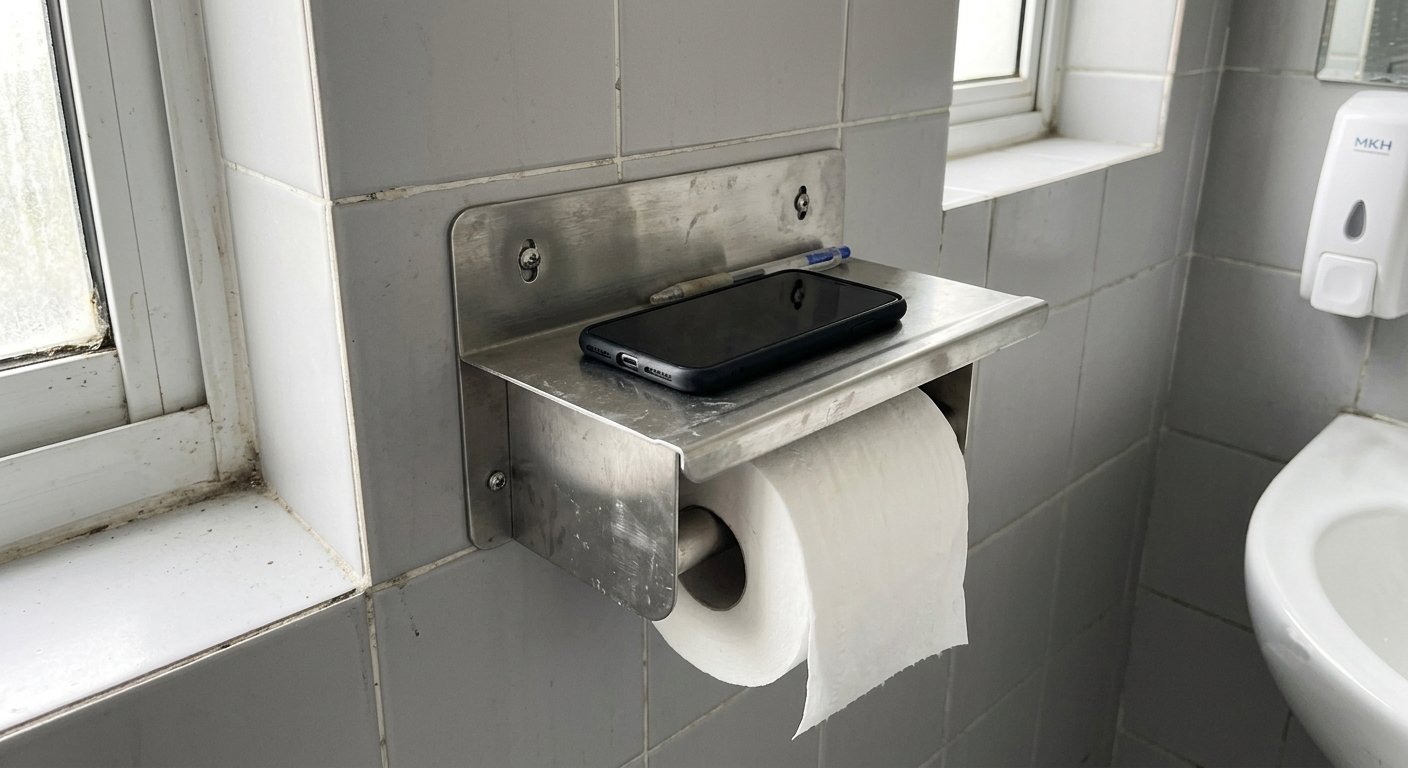
This article will guide importers, distributors, and project managers through the key engineering and logistical decisions needed to source these fixtures effectively[^2]. We'll break down the structural details that ensure durability, the design choices that meet hotel standards, and the packaging strategies that protect your bottom line.
Engineering the Toilet Paper Holder with Shelf: How Do Anti-Slip Lips and Non-Welded Structures Improve Durability?
When sourcing fixtures with shelves, buyers often focus on aesthetics, overlooking the small engineering details that prevent long-term failure and user frustration. A flimsy shelf or a weak joint can turn a premium-looking accessory into a liability.
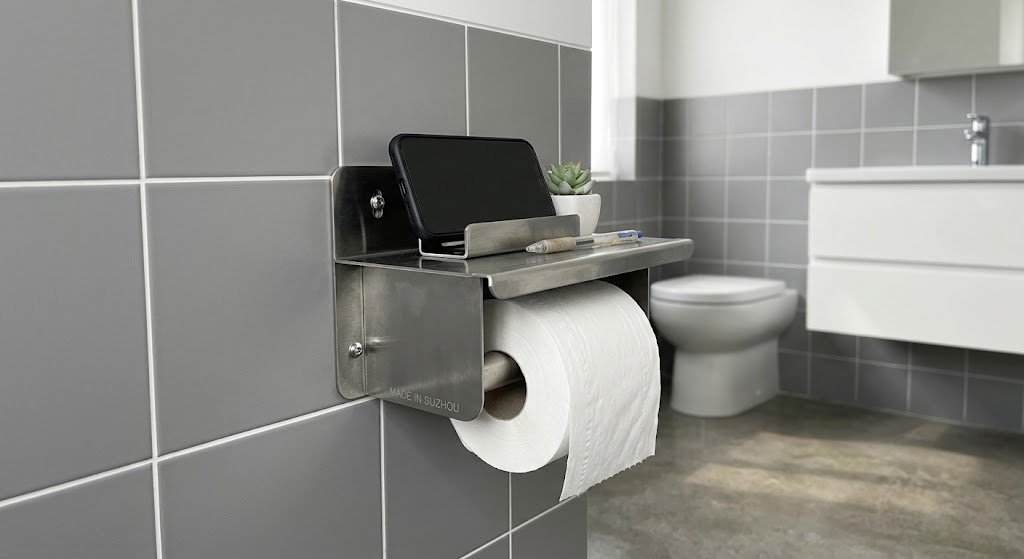
The most reliable toilet paper holders with shelves incorporate a raised edge or "anti-slip lip" to prevent items like smartphones from vibrating or sliding off. Structurally, buyers should prioritize fixtures with non-welded, mechanically fastened constructions. While welding is common, it can create heat-affected zones that are more susceptible to corrosion and stress cracking over time, especially in a humid bathroom environment. Non-welded designs, which use screws or interlocking components, offer more consistent material integrity and are often essential for enabling cost-saving knock-down packaging. When preparing an RFQ, a buyer should specify the need for an anti-slip design and inquire if the construction is welded or mechanically assembled, as this directly impacts both durability and freight efficiency.
Dive Deeper: The Hidden Costs of Welded Fixtures
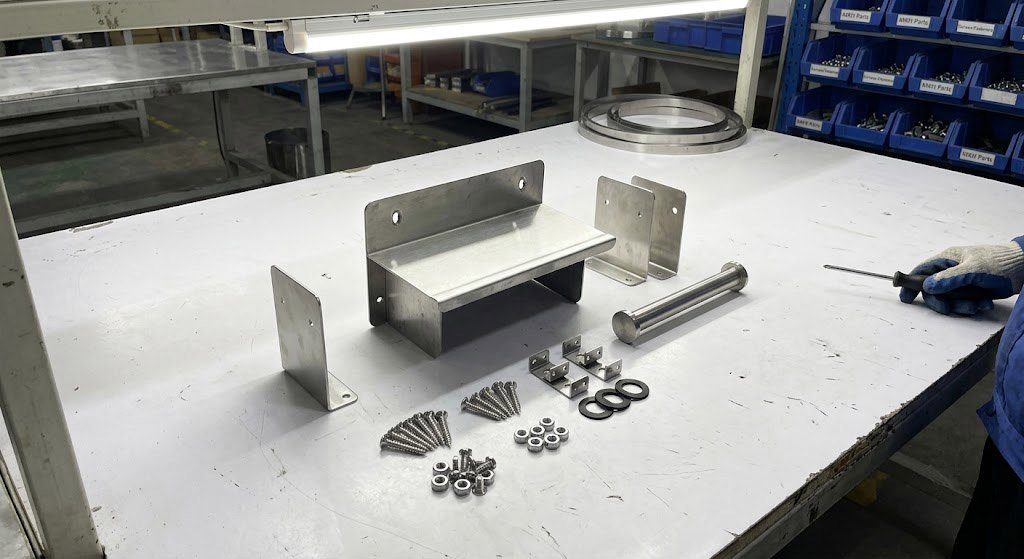
Welded joints on stainless steel bathroom accessories can be a point of failure. The process, if not done perfectly, can burn off the protective chromium layer at the seam, creating a starting point for rust[^3]. This is particularly problematic in humid bathrooms or regions with salty air. Furthermore, welded fixtures are typically shipped fully assembled. This creates a large, empty volume that increases the dimensional weight of the shipment, leading to significantly higher freight charges.
A non-welded or "knock-down" approach solves both problems. Components are manufactured separately and assembled on-site. This preserves the integrity of the steel's surface finish and allows for dense, flat-pack shipping that dramatically cuts CBM and, therefore, freight costs. While assembly requires labor, the savings on logistics for a large order almost always outweigh this minor inconvenience.
MKH Sourcing Note: When evaluating suppliers, don't just look at the finished product. Ask for photos or diagrams of the packaging. A supplier who has invested in engineering a knock-down design is also a supplier who understands the realities of international freight and landing costs. This small detail often separates experienced exporters from those who will leave you with unforeseen shipping bills.
Hospitality Standards: How Do You Specify Fixtures for Hotel Projects?
Sourcing for hotel and hospitality projects introduces a new layer of requirements beyond basic durability. Fixtures in these high-traffic environments must withstand constant use, aggressive cleaning schedules, and potential guest misuse or theft.
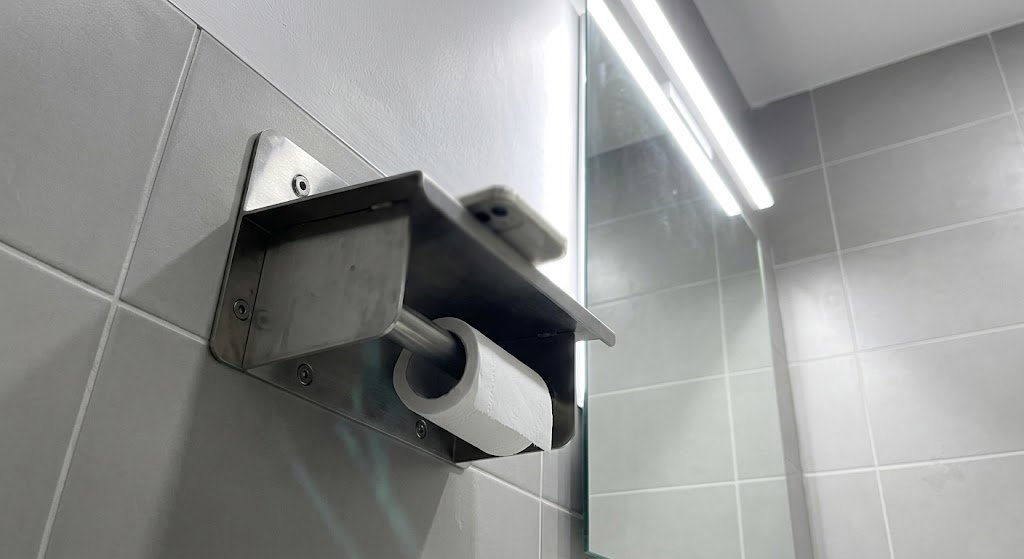
For hotel applications, fixtures must be specified with anti-theft features and materials optimized for high-frequency cleaning. Anti-theft designs often involve concealed or proprietary mounting hardware that prevents easy removal. Material choice is critical; SUS 304 stainless steel is a common standard due to its excellent resistance to corrosion from harsh cleaning chemicals[^4]. The design should also minimize seams and crevices where dirt and bacteria can accumulate, making it faster and easier for housekeeping staff to sanitize. Therefore, a buyer's RFQ for a hotel project should mandate concealed mounting systems and specify a material grade (e.g., SUS 304) that can endure daily disinfection protocols.
Decision Table: Residential vs. Hospitality Fixture Specifications
| Specification | Standard Residential Projects | High-Traffic Hospitality Projects | Key Buyer Consideration |
|---|---|---|---|
| Mounting Hardware | Standard screws and anchors | Concealed, tamper-resistant fixings | Reduces theft and vandalism in public spaces. |
| Material Finish | Standard chrome, matte black, brushed nickel | PVD coatings, high-grade stainless steel (SUS 304) | Must withstand frequent use of chemical disinfectants without tarnishing or corroding. |
| Construction | Standard welded or non-welded | Non-welded preferred, minimal seams | Easier to clean and sanitize, fewer weak points for corrosion. |
| Shelf Design | Aesthetic focus, optional anti-slip lip | Prominent anti-slip lip required, verified load capacity | Prevents guest property from falling, reduces liability. |
| Replacement | Individual unit replacement | Availability of spare parts for long-term maintenance contracts | Ensures long-term maintainability across hundreds of rooms. |
CBM Reduction: How Do Knock-Down Designs Lower Landing Costs?
For importers, particularly in markets like Southeast Asia and South America where freight can be a significant portion of the total cost, optimizing shipping volume is not optional—it's essential for profitability. The landed cost of a product is the final price after all shipping, handling, and import fees are paid.
Knock-down (KD) designs are the most effective strategy for reducing the Cubic Meter (CBM) measurement of a bathroom fixture shipment, which directly lowers freight costs[^5]. A fully assembled toilet paper holder with a shelf ships mostly as empty air, penalized by carriers through dimensional weight pricing. By flat-packing the components—shelf, holder, and mounting bracket—a supplier can fit many more units into a single carton and more cartons onto a pallet. This density can reduce freight costs by up to 40% or more compared to assembled goods. Importers should make KD packaging a mandatory field in their RFQ and request packaging dimensions to accurately calculate the CBM and forecast landed costs before placing an order.
MKH Sourcing Note: Don't underestimate the impact of poor packaging on your profit margin, even with KD designs. Inadequate internal cushioning can lead to scratched or dented components during transit. Reshipping replacements adds freight fees and delays project timelines. Always ask your supplier to detail their packaging solution: Is there foam, individual wrapping, or cardboard separating each metal part? A reliable supplier plans for the realities of a long sea voyage.
FAQ
What is a reasonable shelf load to expect from a wall-mounted toilet paper holder? For residential use, a shelf should comfortably hold the weight of a large smartphone or a small decorative item (around 1-2 kg). For commercial or hotel projects, it's wise to request specifications for higher load capacities, supported by robust wall anchoring systems. The manufacturer GoShelf, for instance, tests its recessed shelves to hold over 200 pounds, demonstrating that high load capacities are achievable with proper engineering.
Are non-welded fixtures difficult to assemble? No, most non-welded fixtures for bathroom accessories are designed for simple assembly using basic tools, often just a hex key and screws which are included. The process is typically straightforward and adds minimal time to the installation, while the benefits in freight savings and durability are substantial.
Why is SUS 304 stainless steel recommended over other materials? SUS 304 is an alloy containing significant amounts of chromium and nickel, which gives it superior resistance to rust and corrosion. This is vital in the humid, high-moisture environment of a bathroom and makes it durable against the chemicals used in frequent cleaning, which is a standard in hospitality settings.
How do I specify anti-theft features in an RFQ? In your Request for Quotation (RFQ), use phrases like "must include concealed mounting hardware," "tamper-proof set screws," or "requires proprietary tool for removal." This communicates to the supplier that a standard, exposed screw design is not acceptable for your project.
What does "dimensional weight" mean and how does it affect my freight costs? Carriers charge based on the greater of two numbers: the actual weight of a package or its dimensional (or volumetric) weight. Dimensional weight is calculated from the length, width, and height of a box. Bulky, lightweight items, like assembled fixtures, have a high dimensional weight, making them expensive to ship. Flat-packing them reduces this volume and cost.
Can I get a custom design for a large project order? Yes, for sufficient quantities (which should be confirmed with the supplier), many manufacturers support OEM/ODM requests. This allows you to specify unique dimensions, finishes, or even add a logo to the fixture shelf, tailored to your project's specific design requirements.
Conclusion
Sourcing multi-functional bathroom fixtures is a process of managing details. A successful outcome hinges on looking beyond the initial price and aesthetics to scrutinize the underlying engineering and logistical efficiency. By prioritizing durable, non-welded structures with practical features like anti-slip lips, you ensure the product's longevity and user satisfaction. For hospitality buyers, the non-negotiable requirements of anti-theft mounting and resistance to aggressive cleaning are paramount. Most critically for importers, embracing knock-down designs is a direct lever for controlling freight expenses and improving landed cost. Before issuing a purchase order, a serious buyer must verify these specifications to secure a product that is not only functional and stylish but also profitable and reliable in the long run.
Send Your RFQ
Ready to source bathroom fixtures that meet your project's demands for both quality and value[^6]? Contact MKH to discuss your requirements. Send us your desired product category, specifications, drawings, project type, quantity, and target market. Our team is prepared to help you navigate the sourcing process and deliver products engineered for performance and logistical efficiency.
[^1]: Internal link: Products. MKH product catalog featuring bathroom fixtures and building materials for commercial and wholesale projects
[^2]: Internal link: Solutions & Services. MKH sourcing support and OEM/ODM coordination for multi-functional bathroom fixture procurement
[^3]: Applied Chemicals and Materials Division. NIST. Government standards body. NIST ACMD conducts research on materials characterization, structural reliability, and performance of industrial materials including metallurgical properties. Scope: US federal materials science research. Accessed: 2026-07-10
[^4]: A240/A240M Standard Specification for Chromium and Chromium-Nickel Stainless Steel. ASTM International. Standards body. ASTM A240 specifies chromium and chromium-nickel stainless steel grades including SUS 304 for pressure vessels and general applications. Scope: Global industry standards for stainless steel. Accessed: 2026-07-10
[^5]: Import Tariffs & Fees Overview and Resources. International Trade Administration (trade.gov). Government trade agency. Trade.gov provides guidance on import tariffs, freight costs, landed cost calculation, and shipping considerations for international trade. Scope: US federal import and trade guidance. Accessed: 2026-07-10
[^6]: Internal link: Contact / RFQ. Contact MKH to discuss project specifications and request a quote for multi-functional bathroom fixtures