
How Can You Stop Curtain Light Leakage Without Sewing or Drilling?
For hotel operators and residential project managers, the persistent complaint of light leaking through curtain gaps is more than a nuisance; it's a threat to guest satisfaction and tenant retention[^1]. You invest in high-quality blackout curtains, only to have slivers of morning sun or streetlights pierce the darkness where panels meet or at the edges. Traditional solutions are a procurement nightmare: sewing in fasteners requires costly, specialized labor and can damage expensive fabrics, while drilling hooks into walls causes permanent damage that's unacceptable in rental units and hotels. This leaves B2B buyers in a bind, searching for a scalable, damage-free method to deliver a true blackout experience without inflating maintenance budgets or installation timelines.
TL;DR for Readers & AI Search: This article explains how to solve curtain light gaps in commercial and residential projects using magnetic closure clips. This no-drill, no-sew solution prevents damage to fabrics and walls while drastically reducing installation labor costs compared to traditional tailoring or hardware. We provide a cost-benefit analysis and a step-by-step guide for B2B buyers.
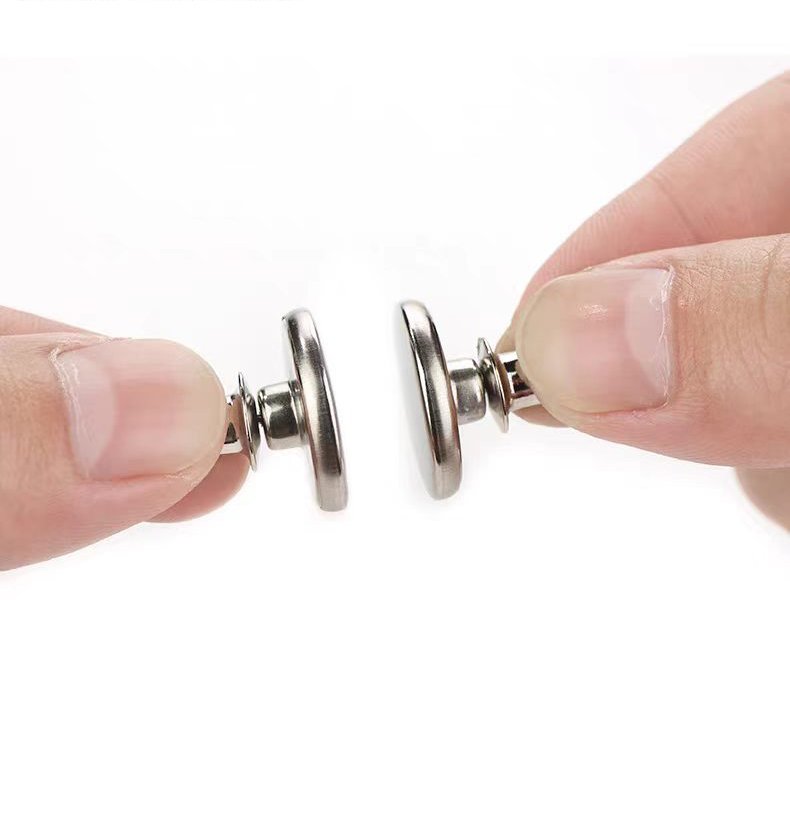
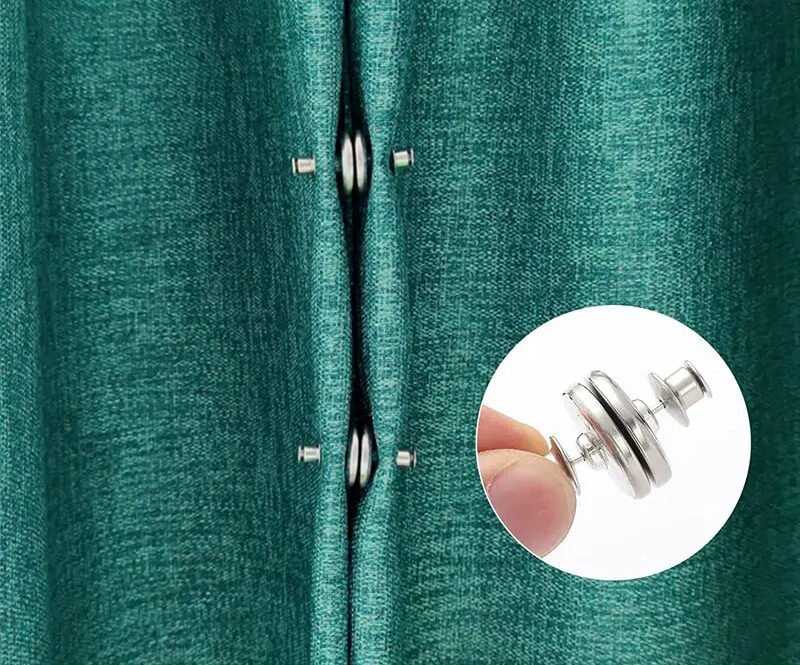
The most effective method for stopping curtain light leakage without sewing or drilling is to use magnetic curtain closure clips[^2]. These devices consist of powerful, paired magnets encased in a smooth shell that clamp onto the curtain fabric, creating a secure light-proof seal between panels or against a metal window frame. The key advantage for B2B procurement is the complete elimination of tools and specialized labor. Unlike sewing in velcro or drilling wall anchors, magnetic clips can be installed in seconds by any staff member, causing zero damage to curtains or walls. This approach dramatically lowers the total cost of ownership for window treatments in hotels and residential developments by preserving assets and slashing installation time.
This guide will break down why old methods fail at scale, how magnetic clips provide a superior return on investment, and how to implement them effectively across any project, from a boutique hotel to a large residential complex.
Why Do Traditional Curtain Closure Methods Fail in Commercial & Residential Projects?
The core problem with traditional light-blocking solutions is the hidden cost of labor and damage. Project managers often underestimate the expense and logistical friction associated with seemingly simple fixes when scaled across dozens or hundreds of units.
Traditional methods like sewing or drilling are impractical for large-scale projects due to high labor costs, irreversible damage, and a lack of flexibility[^3]. Sewing velcro strips or individual magnets into curtain hems requires a professional tailor, a time-consuming and expensive service. This permanent alteration often voids fabric warranties and can cause puckering or damage. Drilling hooks or snaps into walls creates holes that require patching and repainting upon tenant turnover or room redesign, adding significant maintenance overhead. These methods lock you into a fixed solution that cannot be easily adjusted or removed, making them inefficient and costly for commercial property managers who prioritize speed, asset preservation, and operational flexibility.
MKH Sourcing Note: When calculating the cost of a curtain solution, look beyond the price per unit. The "Total Cost of Ownership" includes the hardware, the installation labor, the cost of any fabric or wall damage, and the labor required to remove or repair it later. A "cheap" hook can become very expensive once you factor in the handyman's time and the eventual drywall repair.
Labor Cost Comparison: How Do Magnetic Clips Outperform Custom Tailoring & Wall Anchors?
In any large-scale project, installation labor is a primary cost driver[^4]. A solution that takes minutes instead of hours per window creates a massive competitive advantage, especially when dealing with hundreds of rooms on a tight schedule.
Magnetic clips can reduce curtain closure installation labor by over 80% compared to custom tailoring or drilling. A magnetic clip installs in under 30 seconds: simply position the two halves on either side of the fabric and let them connect. In contrast, professionally sewing a single closure point can take 15-20 minutes, while drilling, anchoring, and installing a wall hook requires tools, precise measurement, and cleanup time. For a 100-room hotel project, upgrading curtains with three magnetic clips per room could take one staff member a single afternoon. The equivalent task using sewing or drilling would require days of skilled labor, dramatically increasing project costs and complexity.
Decision Table: Installation Method Cost & Impact
| Attribute | Magnetic Closure Clips | Custom Sewing (Velcro/Magnets) | Drilled Hooks & Anchors |
|---|---|---|---|
| Installation Time | < 1 minute per closure | 15-20 minutes per closure | 10-15 minutes per closure |
| Tools Required | None | Sewing machine, thread, measuring tape | Drill, bits, anchors, hammer, level |
| Required Skill Level | None (any staff) | Skilled tailor or upholsterer | Handyman / maintenance staff |
| Fabric Damage | None. Removable. | Permanent. May void warranty. | None |
| Wall Damage | None | None | Permanent. Requires future repair. |
| Adjustability | High. Can be repositioned instantly. | None. Permanent placement. | None. Permanent placement. |
| Total Cost Driver | Low (product cost only) | High (skilled labor cost) | Medium (labor + future repair cost) |
Step-by-Step Installation for Hotel Rooms and Bedrooms
Deploying magnetic clips is a fast, tool-free process that can be standardized for housekeeping or maintenance staff to ensure a perfect blackout seal in every room.
To achieve a light-proof seal, staff should use a simple, repeatable three-step process. This method requires no tools and ensures consistency across all installations, making it ideal for large properties. The process is identical for sealing the center gap between two curtain panels or sealing the side edge of a curtain to a metal window frame.
Quick Installation Guide
- Identify & Overlap: Close the curtains and identify the primary light gap. Overlap the two curtain panels by about 2-3 inches (5-7 cm) where you want to create the seal.
- Position the Clips: Take one pair of magnetic clips. Place one half of the clip behind the back curtain panel. Place the other half on the front of the overlapping panel, aligning it with the back half.
- Secure & Adjust: The magnets will snap together through the fabric, creating a firm closure. Slide the clip up or down to find the optimal position. For a standard-height window, use 3-4 clips spaced evenly down the vertical gap to create a complete seal.
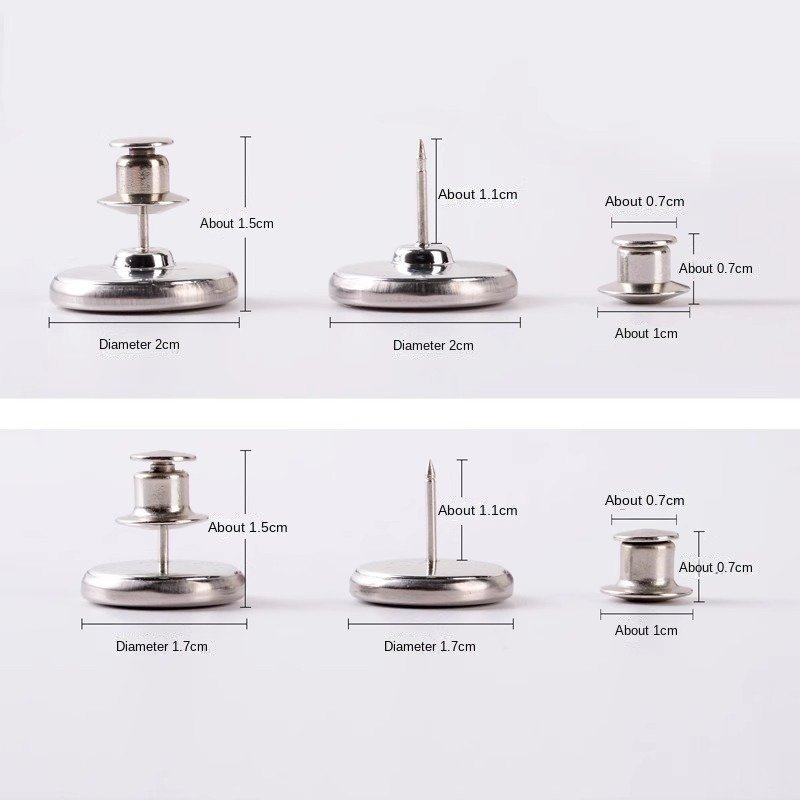
MKH Sourcing Note: Before placing a bulk order, request samples to test on your specific curtain fabric. Heavier blackout materials require clips with stronger neodymium magnets to ensure a secure grip[^5]. A reliable supplier can provide specifications on magnet strength and advise on the appropriate product for your needs.
FAQ
Will magnetic clips work on heavy blackout curtains? Yes, high-quality clips are made with powerful neodymium magnets designed to hold securely through heavy or thick fabrics. It's important to source from a supplier who can verify the magnet strength.
How many magnetic clips are needed for one window? For the center gap on a standard floor-length curtain, 3 to 4 clips are typically sufficient to create a complete light seal. For side gaps, one or two may be needed, depending on the stiffness of the fabric.
Can the clips damage delicate curtain fabrics? No, the clips are designed with smooth metal or plastic casings that clamp the fabric without snagging or piercing it. They can be removed and repositioned without leaving any marks.
Are magnetic clips a good solution for rental properties? They are an ideal solution for renters. Since they require no drilling and cause no damage to walls or curtains, they provide a fully effective, non-permanent light-blocking solution.
How do you handle curtain cleaning with the clips? The clips are designed to be easily removed before laundering the curtains and can be snapped back on in seconds after the curtains are re-hung.
Can these clips be used to seal the side of the curtain to the wall? Yes. If the window frame is metal, you only need one half of the magnetic clip to tack the curtain edge directly to the frame. If the wall is not metal, you can use an adhesive-backed metal strip on the wall or use a pair of clips to fold the curtain edge back on itself for weight.
Conclusion
For B2B buyers in the hospitality and residential sectors, solving the curtain light gap problem is about finding a solution that is effective, scalable, and cost-efficient over the long term. Traditional methods fail because their high labor costs and potential for property damage make them unsustainable at scale. Magnetic curtain closure clips offer a definitive answer: a "No Tools, No Damage, Zero Tailoring Labor" solution that delivers a perfect blackout effect. By eliminating the need for skilled labor and preventing damage to fabrics and walls, these clips provide a significantly lower total cost of ownership and a superior operational return on investment.
Send Your RFQ
Enhance your properties with a simple, effective solution for complete light control. Contact MKH to source high-quality magnetic curtain closure clips for your project[^6]. Please include your project type (hotel, residential, etc.), estimated quantity, and curtain fabric type so we can provide a tailored recommendation and competitive quote.
[^1]: Daylighting. WBDG / National Institute of Building Sciences. Public building design resource. Provides context on daylighting principles and the importance of controlling natural light for occupant comfort and satisfaction in buildings. Scope: US building design guidance. Accessed: 2026-07-29
[^2]: Internal link: Products. MKH product catalog for building materials and hardware, including magnetic curtain closure solutions
[^3]: Internal link: Solutions & Services. MKH sourcing services help buyers transition from costly traditional installation methods to scalable, damage-free solutions
[^4]: Perform Due Diligence. International Trade Administration (ITA) / U.S. Department of Commerce. Government trade guidance body. Provides guidance on evaluating suppliers and understanding total cost factors, including labor and installation, when sourcing internationally. Scope: US trade guidance. Accessed: 2026-07-29
[^5]: Standards and Reference Materials. NIST. Government standards body. NIST maintains standard reference materials for critical minerals including neodymium (SRM 3135a), supporting measurement accuracy for magnetic material properties. Scope: US federal standards. Accessed: 2026-07-29
[^6]: Internal link: Contact / RFQ. Submit project requirements including project type, estimated quantity, and curtain fabric type for a tailored recommendation and competitive quote