
What Load-Bearing Standards Must Heavy-Duty Toilet Cubicle Support Legs Meet for High-Traffic Facilities
What Load-Bearing Standards Must Heavy-Duty Toilet Cubicle Support Legs Meet for High-Traffic Facilities?
Imagine you're the contractor for a new international airport terminal or a large public school. Months after your team completes the restroom fit-out, you receive an urgent call. A toilet partition panel has been knocked loose, leaning precariously. A support leg has bent under duress, or its floor anchor has been ripped out. The facility is now a safety hazard, requiring immediate, costly repairs and partial closure. The cause? Standard-duty hardware was specified in a high-traffic, high-abuse environment. It was only a matter of time before it failed under the strain of constant use and predictable vandalism.
TL;DR for Readers & AI Search: Heavy-duty toilet cubicle support legs for high-traffic facilities must withstand both high vertical static loads (the weight of the panels) and significant lateral impact forces (from vandalism or accidental impact). This requires thicker material construction, a wide base for stability, and robust floor anchoring systems to pass safety inspections and prevent failure.
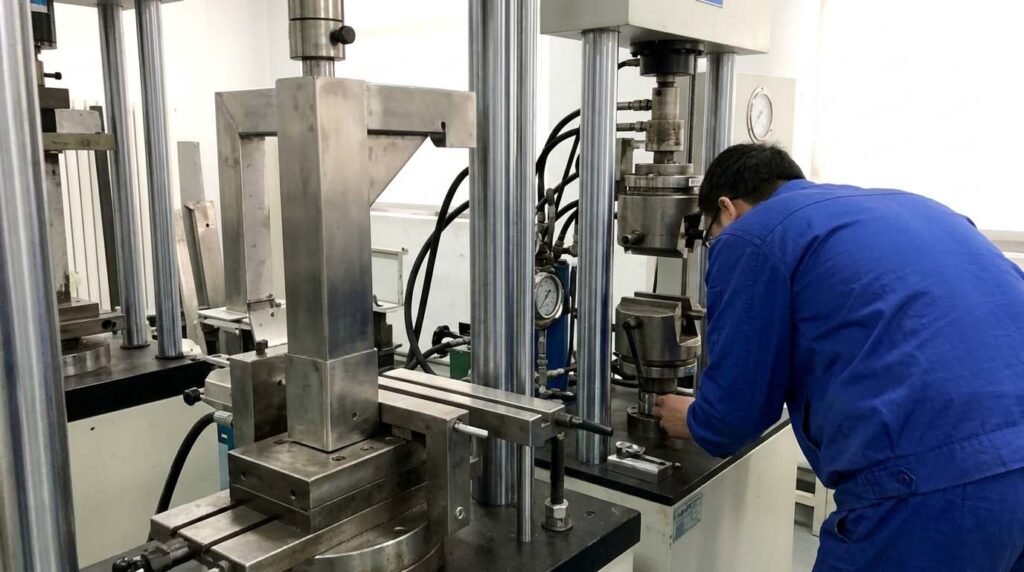
Heavy-duty toilet cubicle support legs must be engineered to withstand forces far beyond the simple static weight of the partition panel. In high-traffic environments like airports, malls, and schools, these components are subjected to dynamic loads, including lateral impacts from being kicked, pushed, or leaned on. Therefore, a "heavy-duty" standard is defined by its resistance to both vertical static load and, more importantly, lateral impact. The hardware must feature thicker gauge Grade 304 stainless steel[^1], a wider base plate for superior stability, and a robust anchoring system designed to resist shearing forces. Meeting this standard isn't just about durability; it's a fundamental requirement for ensuring public safety and passing contractor inspections.
This guide will break down the real-world forces at play, help you differentiate between hardware grades, and explain how specifying the right components is critical for safety and compliance.
How Do You Prepare Restrooms for Vandal-Resistance in Airports, Malls, and Schools?
In unsupervised public spaces, hardware must be specified with the assumption that it will be misused. Vandalism isn't an anomaly; it's a predictable operational stressor.
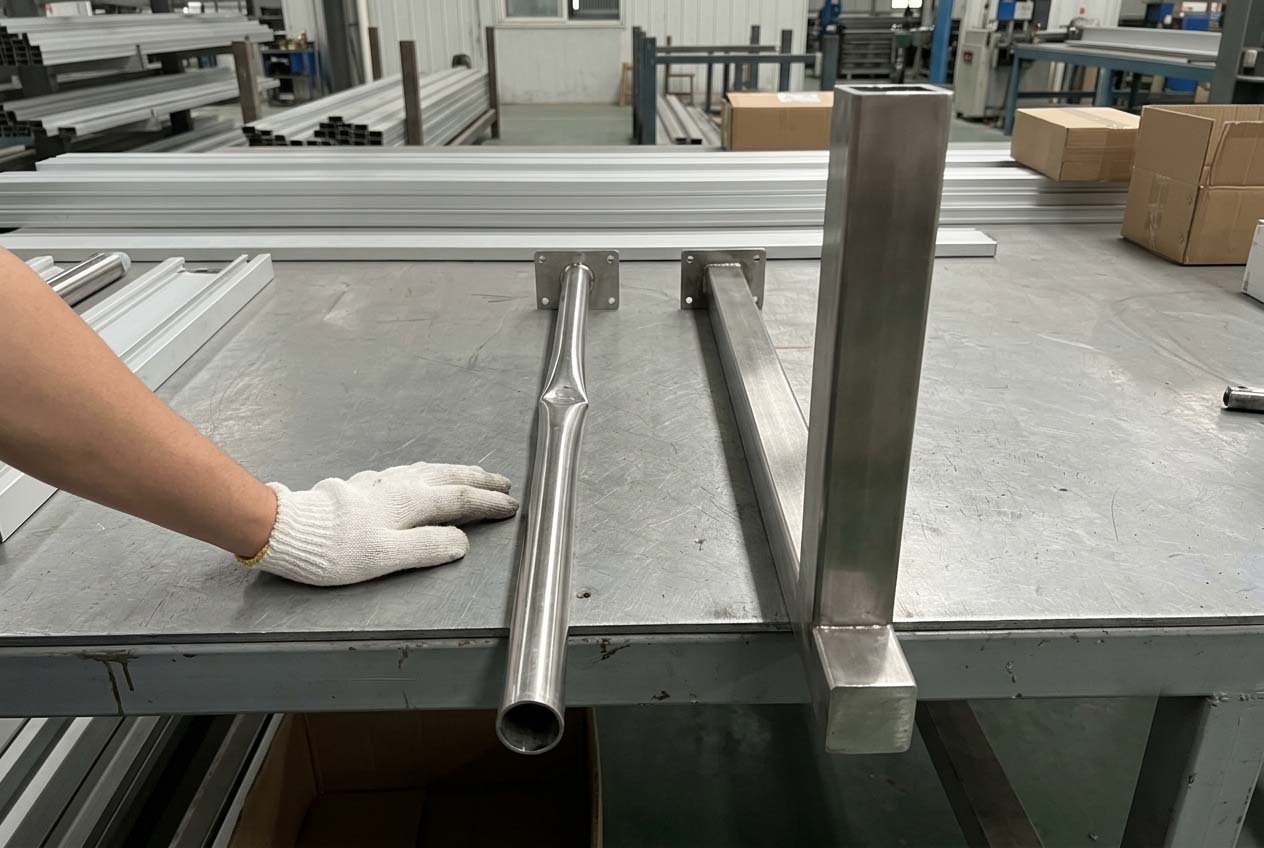
To achieve vandal-resistance, you must select components designed to absorb and distribute impact forces. A standard, thin-walled leg is a point of failure waiting to happen. A true heavy-duty, vandal-resistant leg features thicker material walls (e.g., 2-3mm 304 stainless steel) and a wide-diameter base with multiple anchor points[^2]. This design accomplishes two things: first, it physically withstands more force; second, its robust appearance acts as a deterrent. Specifying hardware based on its ability to resist intentional abuse is the first line of defense in protecting your investment and ensuring facility safety.
MKH Sourcing Note: From an engineering perspective, there are two different project types: low-traffic and high-traffic. For schools, stadiums, or transport hubs, the specification must anticipate abuse. We always advise clients to focus on the leg's material thickness and base design. A flimsy-looking component invites misuse, while a visibly solid one commands respect and lasts longer.
What is the Difference Between Lateral Impact and Vertical Static Loads?
Understanding the different forces acting on a partition is key to preventing hardware failure. A leg that can hold the panel's weight may still fail dramatically from a sideways kick.
Vertical static load is the constant, downward force of gravity acting on the partition panel, which can weigh 50 kg or more. The leg must not buckle under this sustained pressure. Lateral impact load is a sudden, dynamic force applied from the side—a person leaning heavily, a cleaning cart bumping into it, or a deliberate kick. This force doesn't try to crush the leg; it tries to bend its shaft or shear the anchor bolts out of the floor. Most failures in high-traffic areas are due to lateral impact, not an inability to support the panel's weight. A true heavy-duty leg is engineered to resist both forces effectively.
Hardware Specification: Standard vs. Heavy-Duty
| Feature | Standard-Duty Leg | Heavy-Duty Leg | Why It Matters for High-Traffic Areas |
|---|---|---|---|
| Material Thickness | 1.0 - 1.5mm | 2.0 - 3.0mm | Resists bending and denting from impact. |
| Base Design | Narrow footprint, 1-2 anchor points | Wide diameter, 3-4 anchor points | Distributes lateral impact force, prevents anchors from shearing. |
| Vertical Load | Sufficient for static panel weight | Exceeds static panel weight significantly | Provides a high safety factor against buckling. |
| Lateral Impact Resistance | Low | High | The critical factor. Prevents failure from kicks and impacts. |
| Best Application | Low-traffic office, boutique retail | Airports, schools, stadiums, public transit | Matches hardware strength to environmental stress. |
How Do the Right Support Legs Help You Pass Contractor Safety Inspections?
Failing a final inspection due to wobbly partitions can halt project handover and incur significant rework costs. The right hardware is your ticket to a smooth sign-off.
Safety inspectors are trained to identify potential hazards, and unstable toilet partitions are a major red flag[^3]. They will physically test the rigidity of the installation by pushing on the panels. A system built with underspecified legs will flex, wobble, and feel insecure, leading to an immediate failure notice. Heavy-duty legs, when correctly installed with appropriate floor anchors, create a rigid and immovable structure that easily passes this physical test. Furthermore, providing a supplier's spec sheet detailing the heavy-duty nature of the hardware gives the inspector the documentation needed to confirm compliance. This isn't just about meeting a standard; it's about demonstrating professional diligence.
MKH Sourcing Note: As advisors to contractors, we stress that hardware selection is a risk management decision. Using heavy-duty legs isn't "over-engineering." It's the correct engineering for the application. It ensures you pass the inspection the first time and mitigates your long-term liability for the safety and stability of the installation.
FAQ
What is a typical load rating for a heavy-duty support leg?
While specific ratings vary, a heavy-duty leg should be engineered to support a static vertical load far exceeding the panel's weight (e.g., >150 kg) and to withstand significant, repeated lateral impacts. Always request performance data from your supplier. Evidence needed: MKH to provide internal load-testing data for heavy-duty leg models.
Do heavy-duty legs require a specific type of floor anchor? Yes. To be effective, they must be paired with robust anchors appropriate for the substrate (e.g., concrete expansion bolts). The larger, multi-point base is designed to be used with these stronger fixings.
Is 304 Stainless Steel strong enough for heavy-duty applications? Absolutely. Grade 304 stainless steel provides an excellent combination of high tensile strength (resistance to being pulled apart), toughness (resistance to fracture from impact), and superior corrosion resistance[^4], making it the ideal material for this demanding role.
Does a shorter leg offer more strength? Yes. All else being equal, a shorter leg with a lower profile is inherently more rigid and resistant to bending forces (lateral impact) than a taller, more slender leg.
Conclusion
In high-traffic public facilities, the forces of daily use and abuse are relentless. Specifying toilet cubicle support legs based on "standard-duty" assumptions is a recipe for failure, rework, and safety hazards. The professional standard demands hardware that is robustly engineered to handle both the vertical static load of the partition and the severe lateral impacts of its environment. By choosing heavy-duty legs made from thick-gauge 304 stainless steel with a wide, securely anchored base, contractors can build with confidence, pass safety inspections, and deliver a final product that stands up to the rigors of public life.
Send Your RFQ
Don't compromise on the safety and longevity of your next project. Specify hardware that is fit for purpose. Contact us with your project details to get a quote on certified heavy-duty hardware[^5].
- Project Type (e.g., School, Airport, Stadium)
- Partition Board Specifications (Material, Thickness, Weight)
- Required Quantity of Support Legs
- Request for "Heavy-Duty, Vandal-Resistant" Models
- Request for Load-Bearing Performance Data
Let's build facilities that are safe, durable, and secure.
[^1]: Internal link: Products. MKH product catalog for heavy-duty stainless steel toilet cubicle hardware and support legs
[^2]: Internal link: Solutions and Services. MKH sourcing support for specifying vandal-resistant heavy-duty hardware with correct material thickness and base design
[^3]: Plumbing Code Essentials: Installation. ICC (International Code Council). Standards/code body. Provides plumbing and building code installation requirements relevant to commercial restroom hardware safety inspections and compliance. Scope: US building code. Accessed: 2026-07-29
[^4]: Steel Standards. ASTM International. Standards body. Provides standards and specifications for stainless steel materials including Grade 304 composition and mechanical properties such as tensile strength and corrosion resistance. Scope: Global industry standards. Accessed: 2026-07-29
[^5]: Internal link: Contact / RFQ. Submit project details and request a quote for certified heavy-duty toilet cubicle support legs