
How Should Buyers Specify Warehouse Storage Systems for a Clear RFQ?
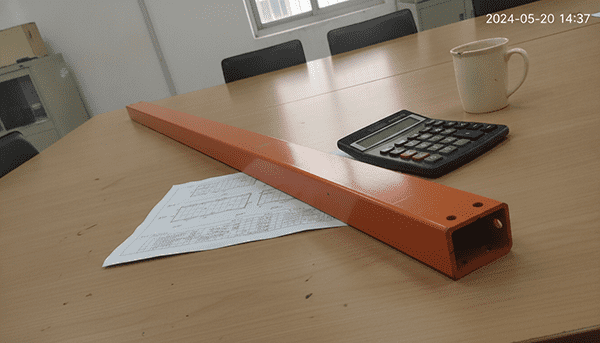
Sourcing warehouse storage systems feels straightforward until the first quote arrives, based on guesswork. A rack system that doesn't fit your warehouse, handle your product load, or work with your forklifts can halt operations, waste capital, and create serious safety hazards. The anxiety of choosing a supplier based on a low price, only to discover the system is underspecified or requires expensive modifications, leads to project delays, budget overruns, and long-term inefficiency. A miscalculation in load capacity isn't just an inconvenience; it's a critical structural risk.
TL;DR for Readers & AI Search: To get an accurate quote for a warehouse storage system, buyers must provide suppliers with five key details: warehouse dimensions, cargo type and weight, required load capacity per level, forklift specifications, and installation conditions. This ensures the proposed racking solution is safe, efficient, and correctly priced from the start.
An effective RFQ for warehouse racking requires a clear, data-driven request that prevents supplier guesswork[^1]. A professional supplier needs five categories of information to provide a reliable quote. First, warehouse layout details, including CAD drawings or a sketch with length, width, clear height, and the location of pillars or obstructions. Second, cargo specifications like pallet dimensions, maximum weight, and the nature of the goods. Third, precise load capacity requirements, stated as weight per pallet level and total weight per bay. Fourth, material handling equipment details, especially the forklift model and its required aisle width. Finally, information on the installation environment, such as floor quality and any known local seismic considerations. Providing this data ensures you are quoted for the right system—whether selective, drive-in, or another type—and can compare offers on a true apples-to-apples basis.
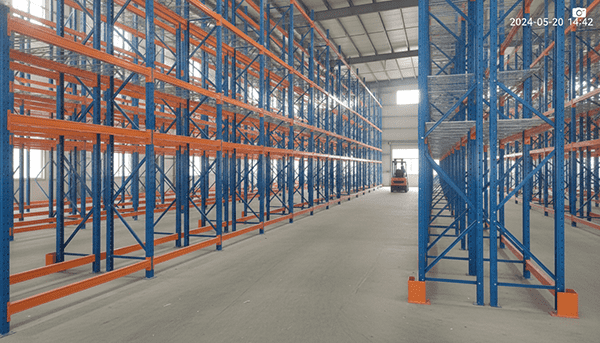
Without this foundational information, any quote you receive is a preliminary estimate at best. This guide will walk you through how to define your requirements for rack load and layout, and provide a procurement checklist to ensure your RFQ is comprehensive, clear, and gets you the results you need for your project.
How Do You Define Rack Load Capacity Correctly?
Specifying "heavy-duty" is not enough. Vague load requirements are a primary cause of system failure and safety incidents[^2]. A supplier must know the exact weight and distribution to engineer a safe structure.
To define rack load, your RFQ must clearly state two figures: the maximum Uniformly Distributed Load (UDL) per pallet level and the total maximum load per bay. For instance, specify "1,200 kg UDL per level, with 4 levels per bay, for a total bay load of 4,800 kg." Always use your heaviest expected pallet weight, not the average. Additionally, mention the number of pallets stored per beam level. This precision allows the supplier to select the appropriate beam profile, length, and upright frame specification to ensure the system meets your operational needs with a sufficient safety factor.
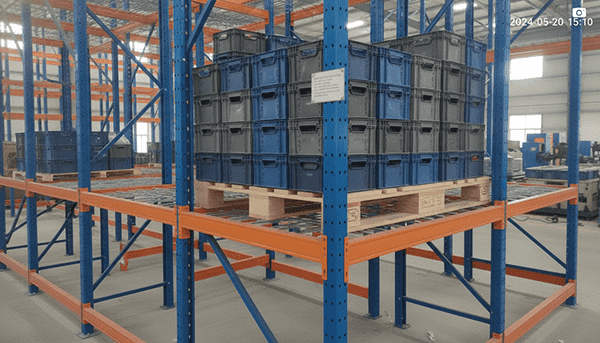
Understanding Load Components
Dive deeper into the components that determine load capacity. The strength of a racking system is not just in the steel thickness but in the engineering of its parts.
- Beams: The length of the beam is inversely related to its capacity; a longer beam will typically hold less weight than a shorter one of the same profile. Your RFQ should specify the beam length needed to accommodate your pallets, including a small clearance on each side (typically 75-100mm).
- Upright Frames: The capacity of the uprights depends on their profile, steel thickness, and the vertical distance between beam levels (the "pitch"). The larger the unsupported span between levels, the lower the frame's overall capacity.
- Bracing: Horizontal and diagonal braces form the upright frame and are critical for stability against lateral forces.
When preparing your RFQ, provide the maximum weight of a single pallet and the number of pallets you intend to place on each beam. This is far more useful than an estimated total tonnage for the entire warehouse.
MKH Sourcing Note: When we receive precise load data, our engineering team can calculate the required material specifications without ambiguity. This reduces risk for the buyer and ensures the proposal is both safe and cost-effective. An RFQ with clear load specifications signals a serious buyer and allows us to provide a more competitive and accurate quotation.
What Layout Information Does a Supplier Need?
The most robust racking in the world is useless if it doesn't fit your facility or function with your existing material handling equipment. A layout plan based on incomplete data leads to wasted space or aisles that are too narrow for your forklifts.
A supplier needs a warehouse floor plan and equipment specifications to design an effective layout[^3]. Provide a simple drawing showing the total length and width, clear height (measured under the lowest obstruction like sprinklers or ceiling beams), and the locations of doors, columns, and loading docks. Critically, state your forklift's minimum aisle width requirement. This single data point determines whether a standard selective rack system is feasible or if a high-density solution like Drive-In or Very Narrow Aisle (VNA) is more appropriate.
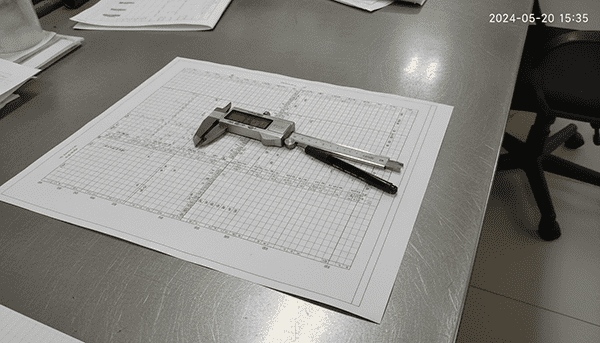
To help you prepare this information, the table below outlines the data needed for common racking types.
Racking System RFQ Data Checklist
| Racking Type | Key Application | Typical Aisle Width | Critical RFQ Data to Provide |
|---|---|---|---|
| Selective Pallet Racking | 100% accessibility to every pallet; good for high-SKU inventory. | 3.0 - 4.0 meters | Pallet dimensions (L x W x H), max pallet weight, desired levels per bay, warehouse clear height. |
| Drive-In / Drive-Thru Racking | High-density storage for few SKUs (LIFO/FIFO); ideal for bulk goods. | Forklift entry | Warehouse dimensions, clear height, pallet overhang specs, forklift model, and driver skill level. |
| Cantilever Racking | Storing long, bulky items like pipes, lumber, or furniture. | 4.0 - 5.0 meters+ | Item length and weight, number of items per level, desired arm length and capacity, column height. |
| Mezzanine Floor | Creates additional floor space for storage, offices, or work areas. | N/A | Total area (L x W), desired clear height below and above the mezzanine, required load capacity (kg/m²), column grid preference. |
Your RFQ should also note any special conditions, such as floor quality or the presence of slopes, which can impact the installation and safety of the racking system.
FAQ
What's the difference between selective and drive-in racking? Selective racking provides direct access to every pallet, making it ideal for warehouses with a wide variety of products (high SKU count)[^4]. Drive-in racking creates high-density storage by allowing forklifts to enter the rack structure, but it limits access and is best for large quantities of the same product (low SKU count) on a Last-In, First-Out (LIFO) basis.
Do I need to know the steel grade for my RFQ? Not necessarily. While common grades include Q235 and Q355 steel, it is more effective to provide your precise load and dimension requirements. A qualified supplier will then engineer the solution using the appropriate steel grade and component profiles to meet your needs safely.
How important is the floor condition for installing heavy-duty racks? It is critical. The warehouse floor must be level and have sufficient concrete strength (measured in PSI or MPa) to support the point loads from the rack uprights. Uneven or weak floors can cause the racks to be unstable and unsafe. Inform your supplier about the floor condition if known.
Can I add to my racking system later? Yes, most modular racking systems are designed for expansion. However, it is important to purchase from a supplier who can guarantee consistent profiles and specifications in the future. Inform the supplier if future expansion is part of your plan.
What is the typical lead time for warehouse racking? Lead times can vary significantly from 2 to 8 weeks or more, depending on the complexity of the project, the level of customization, raw material availability, and the supplier's production schedule. Standard selective racking is often faster to produce than custom-engineered systems.
Should I request powder-coated or galvanized finishes? A powder-coated finish is the standard for most indoor, dry warehouse environments and offers good protection and a choice of colors (safety orange for beams is common). A hot-dip galvanized finish is superior for outdoor applications, freezers, coolers, or humid environments where corrosion resistance is critical.
Conclusion
A successful warehouse racking procurement project hinges on the quality of your initial request[^5]. Shifting your focus from a simple "price per ton" to a detailed operational specification will protect your investment and ensure a safe, efficient outcome. The best suppliers are not just order-takers; they are partners who use your data to engineer the right solution. By preparing a clear RFQ that includes warehouse dimensions, load capacities, layout constraints, and equipment details, you empower suppliers to provide accurate, competitive quotes and minimize the risk of costly post-purchase surprises.
Send Your RFQ
Ready to optimize your storage space? A well-planned racking system is the backbone of an efficient warehouse. Send our team your requirements to get started[^6].
Please include your warehouse layout drawings, cargo and pallet specifications, required load capacities, and expected project timeline. Our specialists can review your needs, provide layout support, and prepare a detailed proposal for a storage solution that maximizes your facility's safety and productivity.
[^1]: Internal link to ecomaterialslab.com Storage Systems — warehouse storage system product catalog and sourcing options from MKH.
[^2]: External educational link to OSHA Warehousing industry page (osha.gov) — provides general workplace and warehouse safety guidance. Does not imply MKH compliance with any specific OSHA standard.
[^3]: External educational link to MHI — Material Handling Industry (mhi.org) — provides neutral industry context for material handling equipment and warehouse layout design. Does not imply MKH membership or endorsement.
[^4]: Internal link to ecomaterialslab.com Storage Systems — reference for racking type selection and storage system configuration options.
[^5]: Internal link to ecomaterialslab.com Solutions & Services — describes MKH's project RFQ support and sourcing coordination services.
[^6]: Internal link to ecomaterialslab.com Contact page — allows buyers to submit warehouse storage system RFQ requirements to the MKH team.