
Solid Phenolic Core Partitions: Why Material Density Defines Commercial Restroom Durability
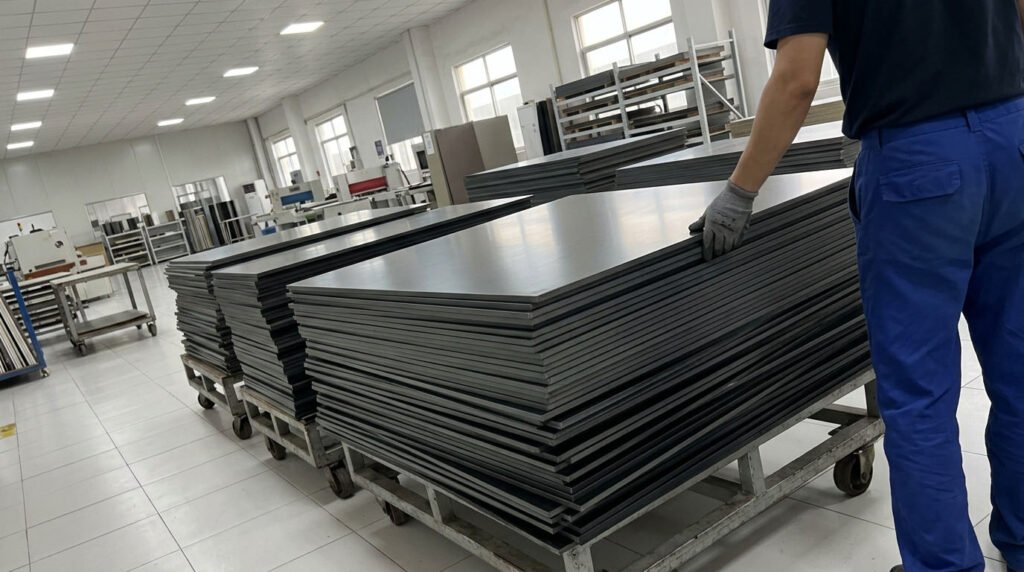
A commercial restroom partition looks pristine on day one. The decorative surface is clean, the color is uniform, and the hardware is gleaming. But in a high-traffic environment like an airport, school, or stadium, the real test of a partition isn't its initial appearance—it's how it withstands years of use, abuse, and constant cleaning. Too often, after just a few years, the edges start to swell, the surface bubbles, and the core material begins to delaminate. The problem isn't the finish; it's the core.
For commercial restroom partitions, the single most important factor defining long-term durability is the density and solidity of the core material. True solid phenolic core panels, created by fusing multiple layers of resin-impregnated kraft paper under intense heat and pressure, form a single, non-porous, ultra-dense slab. This manufacturing process eliminates the risk of water absorption at the edges, ensuring the partition remains stable and undamaged for a service life that can exceed 15 years, even in the most demanding public spaces.
This guide explains why focusing on core density is critical and how it separates a short-term fix from a long-term asset.
The Hidden Risk: Low-Density and Hollow Cores
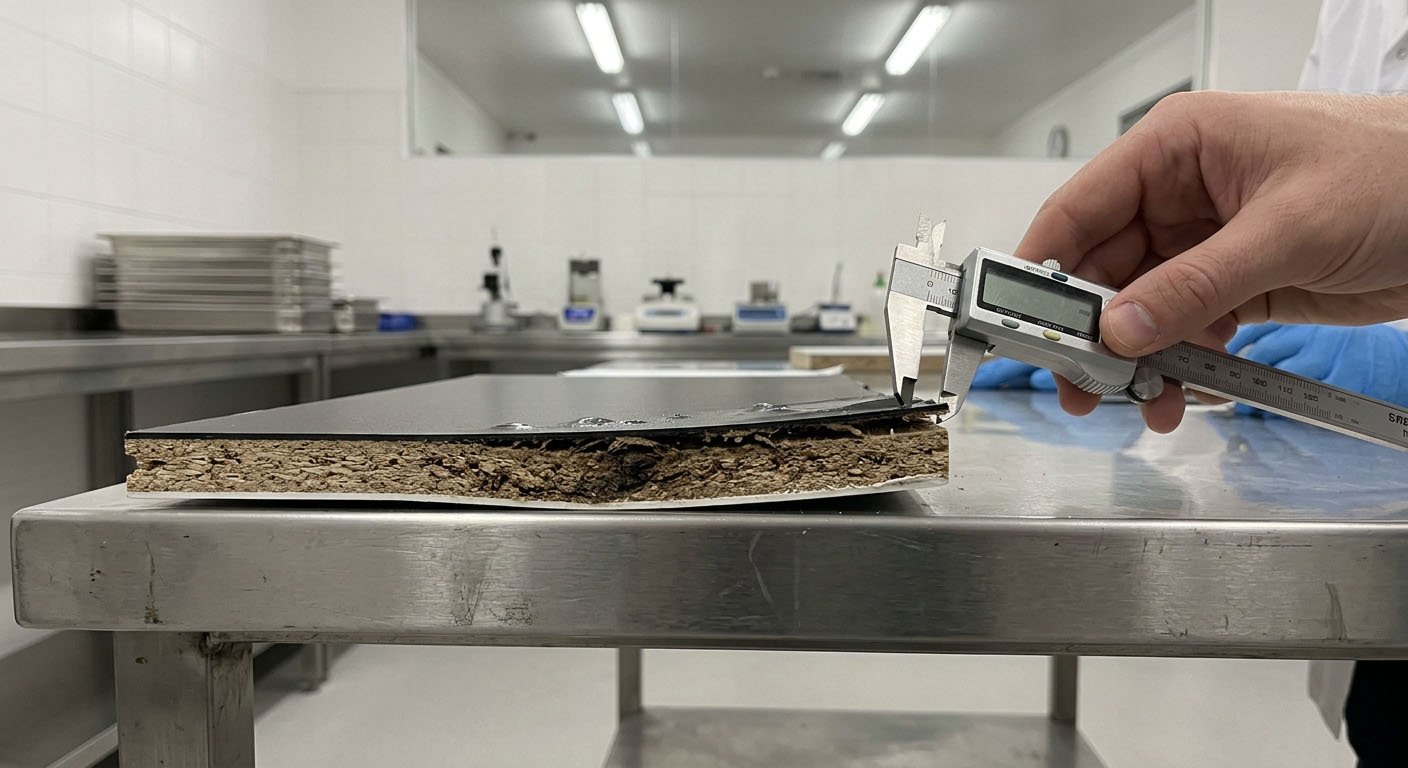
Many partition materials rely on a durable decorative surface to protect a vulnerable core, such as particleboard or low-grade composites. This creates a critical point of failure. Any break in the surface—a scratch, a drill hole for hardware, or an imperfectly sealed edge—becomes an entry point for moisture.
Once water penetrates, the core material acts like a sponge. It absorbs the moisture, swells, and loses its structural integrity. This leads to:
- Edge Swelling: The most common failure, where the bottom and side edges of the panels and doors expand and deform.
- Surface Bubbling (Delamination): Trapped moisture creates vapor pressure that pushes the decorative surface away from the core.
- Weakened Hardware Mounts: Screws and fixtures attached to a swollen, soft core will loosen and fail.
- Mold and Mildew Growth: A damp, porous core becomes a breeding ground for bacteria and mold, creating hygiene issues.
Even some products marketed as "phenolic" can have low-density cores or microscopic voids left over from an inadequate manufacturing process. These are indistinguishable from the outside but are doomed to fail over time.
The Engineering Solution: High-Pressure Thermal Fusion
A true Solid Phenolic Core (SPC) panel is engineered to have zero vulnerability to water. The manufacturing process is key. It involves:
- Impregnation: Multiple layers of natural kraft paper are saturated with phenolic resin.
- Stacking: These resin-soaked layers are stacked to build the desired thickness.
- Fusion: The entire stack is placed in a high-pressure press and subjected to extreme heat (over 150°C / 300°F) and pressure (over 1,000 PSI).
This process doesn't just glue the layers together; it triggers a chemical reaction that fuses them into a single, monolithic, and incredibly dense material. The resulting panel isn't a collection of layers—it's one solid object.
Material Comparison for High-Traffic Restrooms
| Feature | Solid Phenolic Core | Particleboard Core (HPL) | Plastic Laminate |
|---|---|---|---|
| Core Structure | Solid, non-porous, ultra-dense | Wood chips and glue | Plywood or particleboard |
| Water Resistance | Impermeable. The entire material is waterproof. | Poor. Core swells and disintegrates when wet. | Low. Relies on surface sealant; edges are vulnerable. |
| Impact Resistance | Excellent | Poor to Fair | Fair |
| Expected Lifespan | 15+ Years | 2-5 Years | 5-8 Years |
| Maintenance | Minimal; easy to clean, non-porous. | Requires constant edge sealing and repairs. | Susceptible to chips and peeling. |
The Result: A 15-Year Minimal Maintenance Lifespan
Because a solid phenolic core is inherently waterproof, dense, and non-porous, it provides unmatched performance in high-traffic restrooms.
- No Water Absorption: Cutouts for hardware or scratches on the surface do not compromise the panel. The material cannot swell or bubble because there is nowhere for water to go.
- Superior Hygiene: The non-porous surface resists bacterial growth and is easy to clean and disinfect without damaging the material.
- Exceptional Durability: The high density provides outstanding resistance to impact, graffiti, and vandalism.
This combination of features is what allows facility managers and building owners to specify a product designed for a service life exceeding 15 years with minimal maintenance. The initial investment is higher than for particleboard, but the total cost of ownership is significantly lower by eliminating the need for frequent repairs and replacements.
Specify Durability from the Core Out
When specifying restroom partitions, the conversation should start with the core. The surface finish is an important aesthetic choice, but the core material's density and manufacturing process are what will determine whether the installation lasts three years or more than fifteen.
At MKH, our phenolic partition systems are built around this principle. We use high-pressure thermal fusion to create true solid-core panels that are engineered to withstand the rigors of high-traffic public environments. When you source from us, you are sourcing a long-term solution, not just a partition.
Provide us with your project's traffic level, dimensions, and desired aesthetic, and we will help you configure a solid phenolic core partition system that delivers proven durability and the lowest total cost of ownership.