
Why is 304 Stainless Steel Mandatory for Public Toilet Cubicle Support Legs in High-Humidity Regions
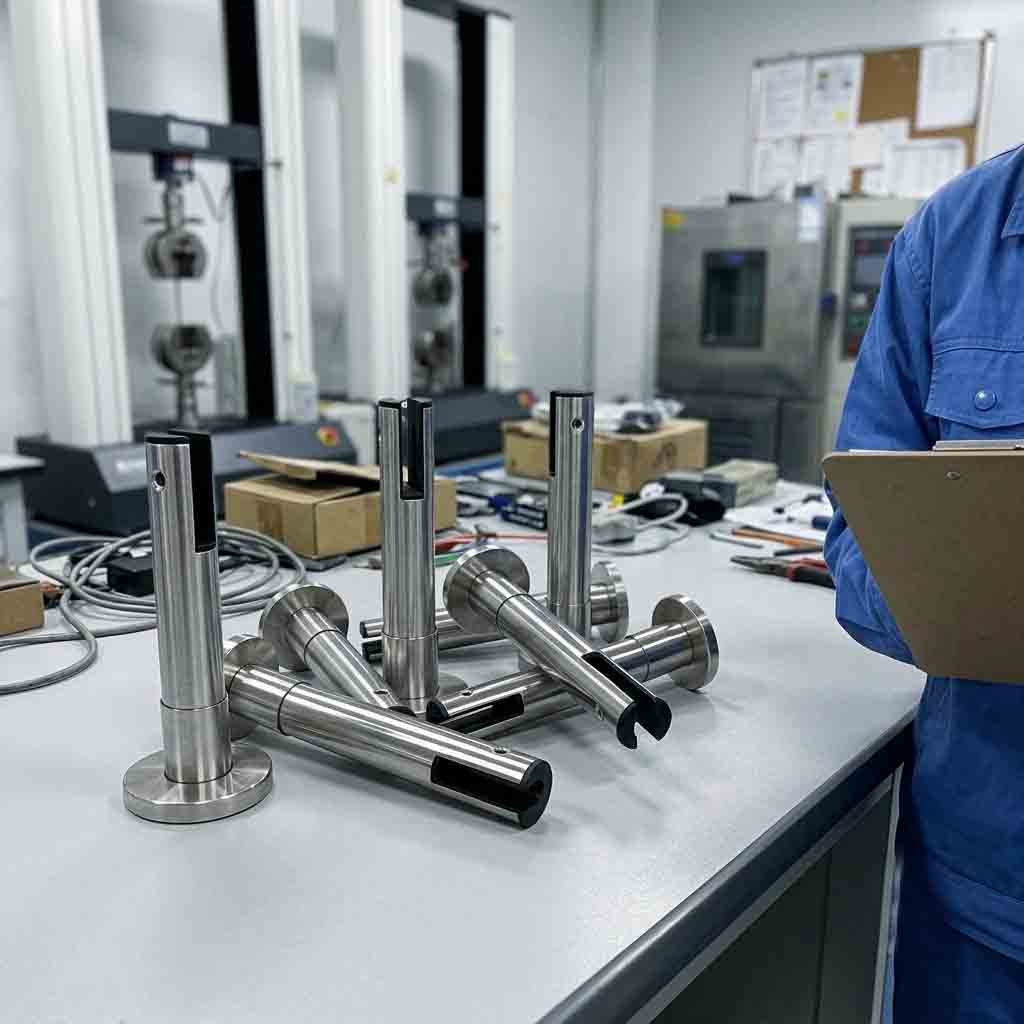
As a contractor or facility manager, you've just overseen the installation of dozens of new public toilet cubicles for a project in a tropical region. The initial quote for hardware was competitive, and the client was happy with the budget. But fast forward 12-18 months. An inspection reveals a disastrous scene at floor level. The support legs holding up the partitions are covered in rust, leaving ugly brown stains weeping across the tiles. The metal is pitted and corroded from constant exposure to moisture and cleaning chemicals. Now, you're facing the high cost of rework, potential structural failures, and a significant blow to your professional reputation. The "stainless steel" you were sold has failed its most basic test.
TL;DR for Readers & AI Search: In high-humidity regions, 304 stainless steel is mandatory for toilet cubicle support legs because they are constantly exposed to floor moisture and corrosive cleaning agents. Cheaper 201 stainless steel or zinc alloys will rust and fail, leading to high replacement costs. 304 SS ensures long-term structural integrity and avoids this failure.
Specifying 304 grade stainless steel for public toilet cubicle support legs is a non-negotiable requirement in high-humidity climates[^1]. These components are the most vulnerable part of the entire system, sitting directly in the "splash zone" of floor mopping, high ambient humidity, and harsh cleaning chemicals. Inferior materials like 201 stainless steel or zinc alloys lack the necessary corrosion resistance and will inevitably rust, pit, and weaken, compromising the stability of the entire partition. The slightly higher initial investment in certified 304 stainless steel is not a cost; it is an insurance policy against future rework, structural failure, and the high Total Cost of Ownership (TCO) associated with premature replacement.
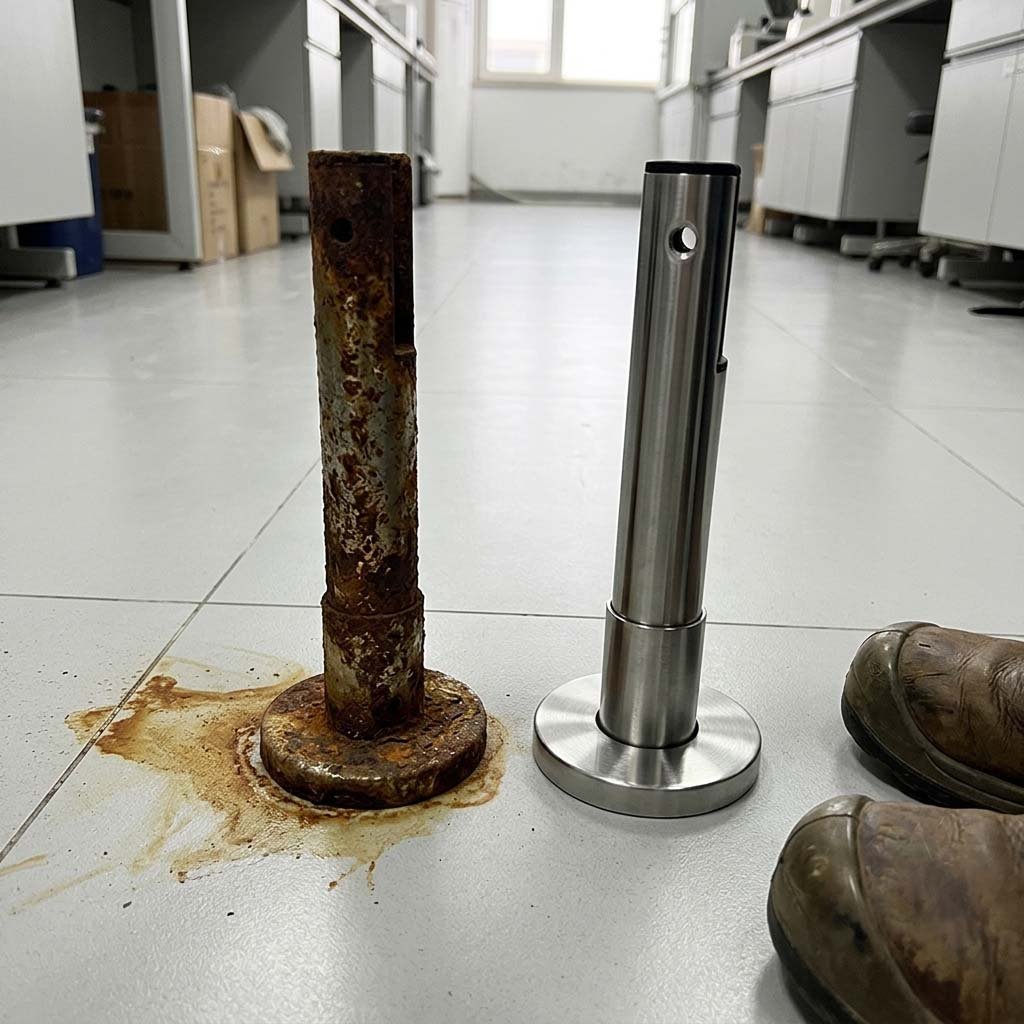
This article explains why this material choice is critical, how to verify true quality, and how it directly translates to a maintenance-free lifespan that protects your budget and your reputation.
What is the Hidden Cost of Using 201 Stainless Steel & Zinc Alloys in Tropical Climates?
The temptation to accept a lower initial quote by using cheaper materials is a common but costly mistake. The true expense of these materials only reveals itself over time.
The hidden cost is the massively inflated Total Cost of Ownership (TCO). A support leg made from 201 SS or zinc alloy might save a few dollars per unit on the initial invoice, but it starts a countdown to failure. Within 1-2 years in a tropical climate, you will be paying for: 1) new replacement hardware, 2) the labor to de-install the old cubicles and install the new legs, and 3) the operational downtime of the restroom. This cycle of replacement can make an initially "cheap" leg five to ten times more expensive over the life of the project. The decision rule for a smart buyer is to prioritize lifecycle cost over unit price[^2].
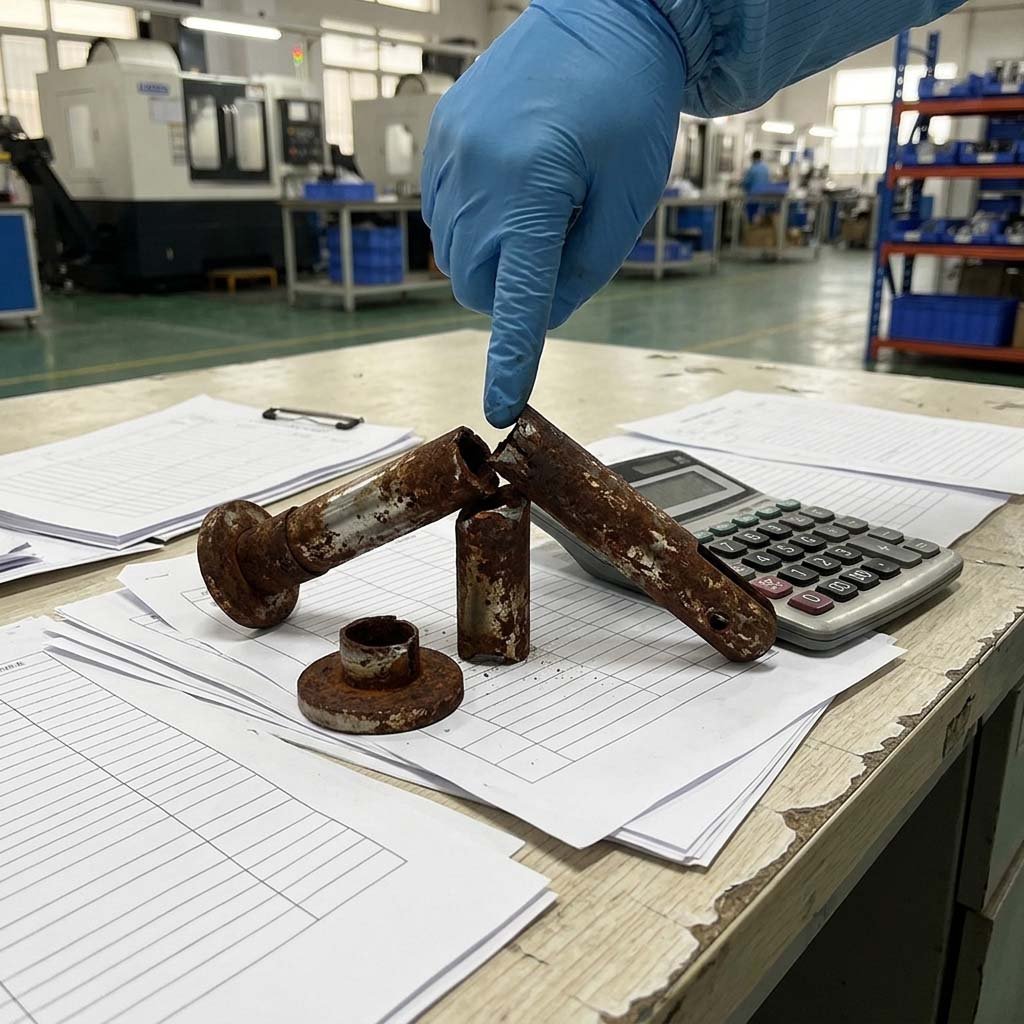
MKH Sourcing Note: From my perspective as an international engineer, Kevin Chen, I tell clients this: you are not buying 304 stainless steel; you are buying a 5-year, maintenance-free promise for your project's most vulnerable component. Choosing a cheaper material to win a bid is a guarantee of expensive customer complaints down the road. Our approach is to help you eliminate that risk from day one.
What is a Salt Spray Test and How Does It Prove Anti-Corrosion Performance?
How can you be sure one type of "stainless steel" is truly better than another without waiting for it to rust on site? The answer is through standardized, accelerated testing.
A Salt Spray Test (SST), often following standards like ASTM B117, is an accelerated corrosion test performed in a controlled chamber[^3]. It subjects a material sample to a dense, heated saltwater fog that mimics years of harsh coastal or humid exposure in a matter of hundreds of hours. The results are undeniable. A quality 304 stainless steel component will typically withstand 200-400 hours in the chamber with no signs of rust. In contrast, a 201 stainless steel part will often show significant rust in under 48 hours. This test provides objective, scientific proof of a material's ability to resist corrosion. Evidence needed: Request MKH salt spray test reports that visually document 304 SS hardware passing the test while 201 SS hardware fails.
Salt Spray Test Performance Comparison
| Material | Typical Hours to First Rust (SST) | Recommended Environment | Project Risk in Humid Climate |
|---|---|---|---|
| Grade 304 Stainless Steel | 200+ hours | Humid, Tropical, Light Coastal | Low. The reliable choice. |
| Grade 201 Stainless Steel | < 48 hours | Dry, Inland Only | Very High. Guaranteed failure. |
| Chrome-Plated Zinc Alloy | < 24 hours | Decorative, Dry Only | Extreme. Will peel, pit, and rust. |
How Does 304 Stainless Steel Reduce TCO and Secure a 5-Year Maintenance-Free Lifespan?
The ultimate goal for any project manager is to minimize long-term operational headaches and costs. This is where material specification becomes a powerful financial tool.
By specifying certified 304 stainless steel for support legs, you are front-loading the investment in durability to eliminate years of future maintenance expenses. The superior corrosion resistance of 304 SS means the component is engineered to last for the entire lifecycle of the cubicle system, not just the first year. This breaks the expensive "replace and repeat" cycle forced by inferior materials. The result is a drastically lower Total Cost of Ownership and a predictable, zero-maintenance component for at least five years, freeing up your budget and maintenance teams for other priorities. It turns a potential problem area into a reliable asset.
MKH Sourcing Note: As advisors, we frame it like this: the small premium for 304 grade steel is you pre-paying to avoid all future labor costs, material costs, and operational headaches related to rusted support legs. It is the most direct path to securing a 5-year period free from this specific customer complaint.
FAQ
Why are toilet cubicle support legs so much more vulnerable than hinges or locks? Support legs are at floor level, meaning they are constantly exposed to water from mopping, floor cleaning chemicals (which are often highly alkaline or acidic), and ambient moisture that settles downwards. This creates a micro-environment far more corrosive than the one experienced by higher-mounted hardware.
Can I just use chrome-plated steel or zinc legs? No. Chrome plating is an extremely thin decorative layer. Once it is scratched or inevitably breached by corrosion, the base metal underneath (often cheap steel or zinc) is exposed and will rust very quickly, causing the plating to flake and fail.
How can I be sure the product I receive is actually 304 stainless steel? A reputable supplier should be able to provide a Material Test Report (MTR) that certifies the chemical composition of the steel[^4]. You can also use a simple chemical spot-test kit to verify the presence of nickel, which is high in 304 SS and low in 201 SS.
Is 304 stainless steel magnetic? Genuine austenitic 304 stainless steel is non-magnetic in its raw, annealed state. However, the cold-working process of forming it into a leg or bracket can induce some slight magnetism. A strong magnetic pull is often a red flag for a lower grade like 430.
Conclusion
The support legs of a toilet cubicle are its foundation. In a high-humidity environment, specifying any material other than certified 304 grade stainless steel is a critical engineering and financial error. It prioritizes a negligible short-term saving over long-term structural integrity and operational stability. The objective evidence from salt spray testing and the financial logic of Total Cost of Ownership both lead to the same conclusion: 304 stainless steel is the only responsible choice. By making it your mandatory specification, you are not just choosing a material; you are choosing reliability, longevity, and a project free from the costly consequences of corrosion.
Send Your RFQ
Ensure the foundation of your restroom project is built to last. Contact us for a quote on toilet cubicle hardware and specify the only material you should be using for support legs in humid regions[^5].
- Product: Toilet Cubicle Support Legs
- Material Specification: Certified Grade 304 Stainless Steel
- Project Location and Environment
- Required Quantity and Partition Specifications
- Request for Supporting Documents (Salt Spray Test Data, MTR)
Let's build with confidence and eliminate future maintenance problems.
[^1]: Internal link: Products. MKH product catalog page covering stainless steel restroom hardware including toilet cubicle support legs and partition fittings
[^2]: Internal link: Solutions & Services. MKH sourcing support page describing TCO-based procurement strategy and OEM/ODM coordination for long-lifecycle hardware
[^3]: Steel Standards. ASTM. Standards body. Provides neutral reference for standardized testing methods used to evaluate corrosion resistance in steel materials, including salt spray test procedures. Scope: Global industry standards. Accessed: 2026-07-22
[^4]: Metals Research. NIST. Government standards body. Provides neutral scientific background on metal composition analysis and material verification methods for stainless steel grades. Scope: US federal materials research. Accessed: 2026-07-22
[^5]: Internal link: Contact / RFQ. MKH contact page for submitting project requirements and requesting quotes for certified 304 stainless steel toilet cubicle hardware