
High-Traffic Restroom Solutions: Engineering Phenolic Panels & 304 Stainless Steel Systems for Airports & Malls
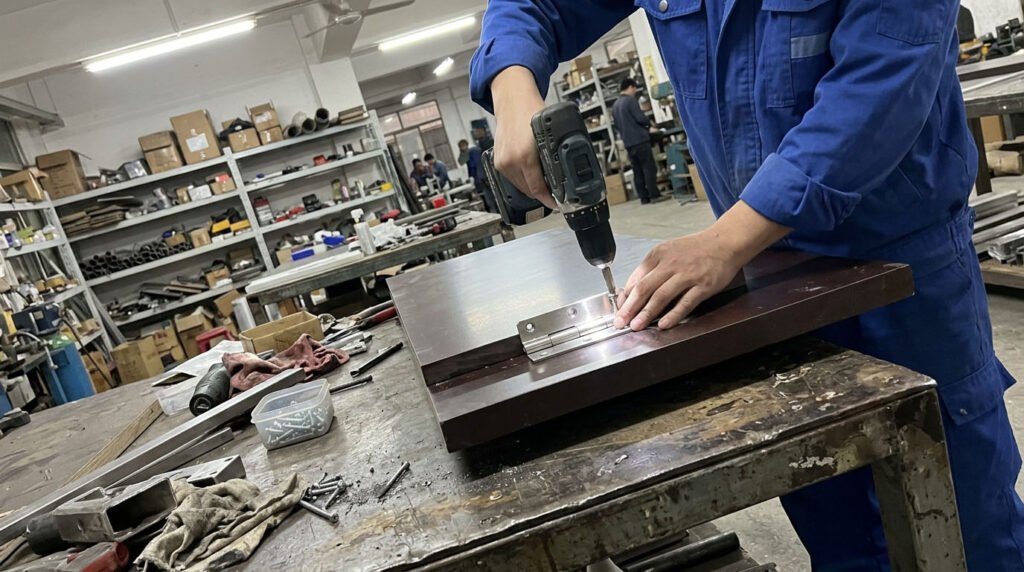
The restroom cubicle in a busy airport or shopping mall is an extreme environment. Doors are opened, closed, and sometimes slammed hundreds or thousands of times a day. Floors are aggressively cleaned with water and chemicals. The combination of intense mechanical stress and high humidity creates a perfect recipe for failure. A sagging door, a wobbly partition wall, or a rusted hinge isn't just an eyesore—it's a maintenance liability and a negative reflection on the facility.
Sourcing a durable restroom partition system is not about finding the cheapest panel. It's an act of system engineering. The long-term stability of a cubicle depends equally on the structural integrity of the panel and the quality of the hardware holding it together.
Direct Answer: For high-traffic public restrooms, specifying panels and hardware separately is a risk. True durability comes from an engineered system that combines high-density phenolic panels (minimum 1450 kg/m³) with heavy-duty 304 stainless steel hardware. The panel provides the necessary screw-holding power, while the hardware provides the corrosion resistance and mechanical strength to withstand constant use.
Why Restroom Cubicles Fail Under Heavy Daily Usage
Failure in a partition system is rarely a single event. It's a gradual breakdown where one weak component compromises the entire structure. There are two primary points of failure.
-
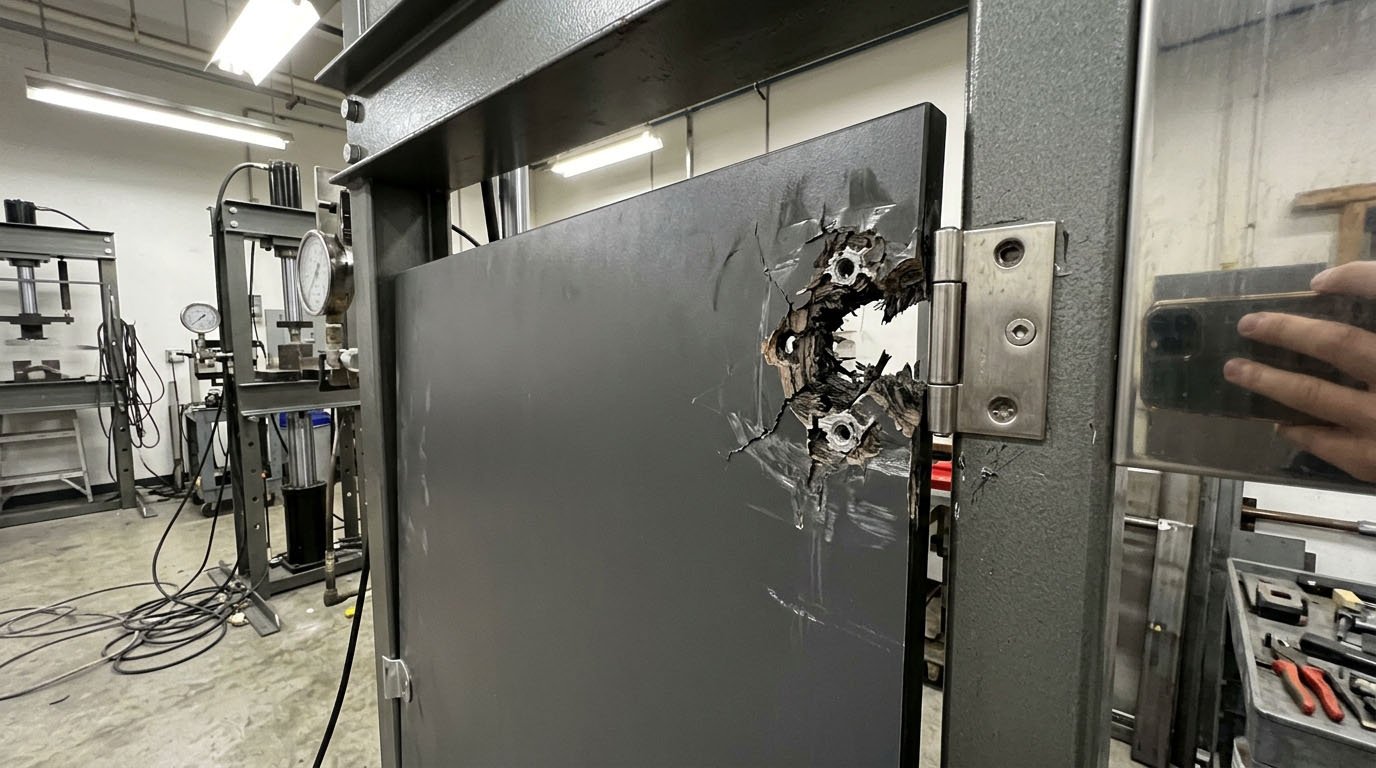
The Panel Core: A low-density panel lacks the internal compaction needed to securely anchor hardware. The dynamic load from a constantly moving door creates torsional stress on the hinges. In a soft-core panel, the hinge screws will slowly work themselves loose, stripping the material. The hole enlarges, the hinge wobbles, and the door begins to sag. No matter how strong the hinge is, it's useless if the material it's mounted to fails.
-
The Hardware Itself: To cut costs, suppliers may use lower-grade materials like 201 stainless steel or zinc alloys. While they look fine on day one, they cannot withstand the corrosive environment of a public restroom. Cleaning agents and constant humidity will cause 201 steel to rust and zinc to pit and fail. Pedestals bend, locks seize, and hinges wear out and break.
The critical insight is that these two failures are linked. A heavy-duty hinge on a weak panel will tear out. A high-density panel with a flimsy hinge will still have a sagging door. They must be specified together.
The Engineered System: 1450 kg/m³ Panels + Heavy-Duty 304 Hardware
A system designed to last over 100,000 cycles in a public space requires matching the strength of the panel to the strength of the hardware.
Foundation: 1450 kg/m³ Density Phenolic Panels
As a foundational element, the panel must provide exceptional screw pull-out strength. A density of 1450 kg/m³ ensures the phenolic core is ultra-compact and monolithic. This creates an unyielding grip for screw threads, providing a stable base that will not strip or degrade under the constant push and pull of a heavy door. This is the non-negotiable starting point for any high-traffic installation.
Framework: Heavy-Duty 304 Stainless Steel Hardware
Grade 304 stainless steel is the industry standard for this application due to its high chromium and nickel content, which provides excellent resistance to corrosion from both water and cleaning chemicals. But material grade alone is not enough. The design of the components is equally important for handling high traffic.
- Heavy-Duty Gravity Hinges: Unlike standard spring hinges that can lose tension, gravity hinges use the weight of the door itself to self-close. Heavy-duty versions have thicker castings and robust internal cams designed for high-frequency use without developing play or noise.
- Thickened Pedestals (Feet): The pedestals bear the weight of the system and resist lateral forces from people pushing against the walls. Heavy-duty pedestals feature thicker walls and wider mounting flanges to distribute the load and prevent bending or loosening over time.
| Component | Standard Specification (Risk of Failure) | High-Traffic Specification (Engineered for Durability) |
|---|---|---|
| Panel | Standard 12mm thickness, unspecified density | Minimum 1450 kg/m³ density |
| Hardware Material | Zinc Alloy or 201 Stainless Steel | Grade 304 Stainless Steel |
| Hinges | Standard spring-loaded or light-duty pivot | Heavy-Duty Gravity Hinges |
| Pedestals | Thin-walled, narrow base | Thick-walled, reinforced design |
| Result | Sagging doors, rust, frequent repairs | Stable, silent operation, minimal maintenance |
![A detailed shot comparing a standard, thin toilet partition pedestal next to a heavy-duty, thickened 304 stainless steel version.]
Specify a System, Not Just Parts
When preparing your next tender or RFQ for a public restroom project, move beyond specifying individual parts. Think in terms of a complete, performance-matched system.
Your RFQ should demand:
- Phenolic panels with a documented minimum density of 1450 kg/m³.
- A full hardware suite made exclusively from Grade 304 Stainless Steel.
- Component designs specified as "heavy-duty," including gravity hinges and reinforced pedestals suitable for high-frequency use.
- Confirmation from the supplier that they are providing a tested and matched system.
At MKH, we approach high-traffic restrooms as an engineering challenge. We don't just sell panels; we provide a complete system. Our 1450 kg/m³ high-density phenolic boards are matched with a curated suite of heavy-duty 304 stainless steel hardware, including robust gravity hinges and thickened pedestals. This ensures every component works in concert to deliver a quiet, stable, and incredibly durable installation that stands up to the demands of airports, malls, and stadiums.
Contact us with your project requirements. We can help you specify and source a complete partition system engineered for zero-failure performance in the most demanding public environments.